

Why You’re Here: Beyond the Candy Making Machine
A mesin pembuat permen isn’t a spontaneous purchase—it follows the decision to sell a candy, shaped by your recipe, target market, and those late-night capacity worries. If you’re reading this, you’re likely comparing suppliers, guessing output numbers, and wondering whether a gummy line and a hard candy line are the same. (They’re not—and we’ll explain why.) With two decades of building candy manufacturing equipment for factories in over 110 negara, from one-person kitchen brands to non-stop industrial lines, this guide shares the same frank talk we’d have on the factory floor—not from a brochure.
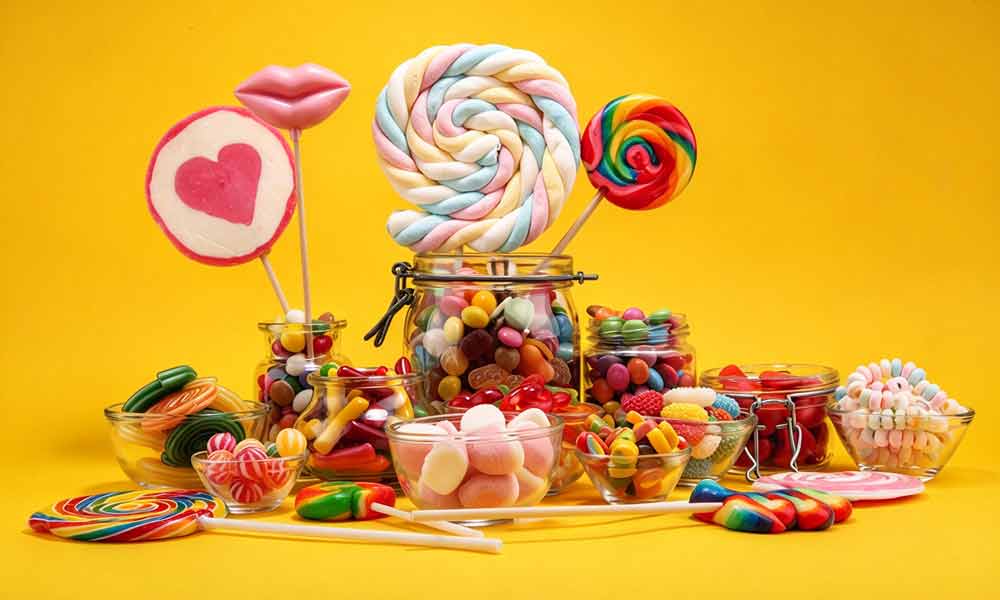
What a Candy Making Machine Actually Is
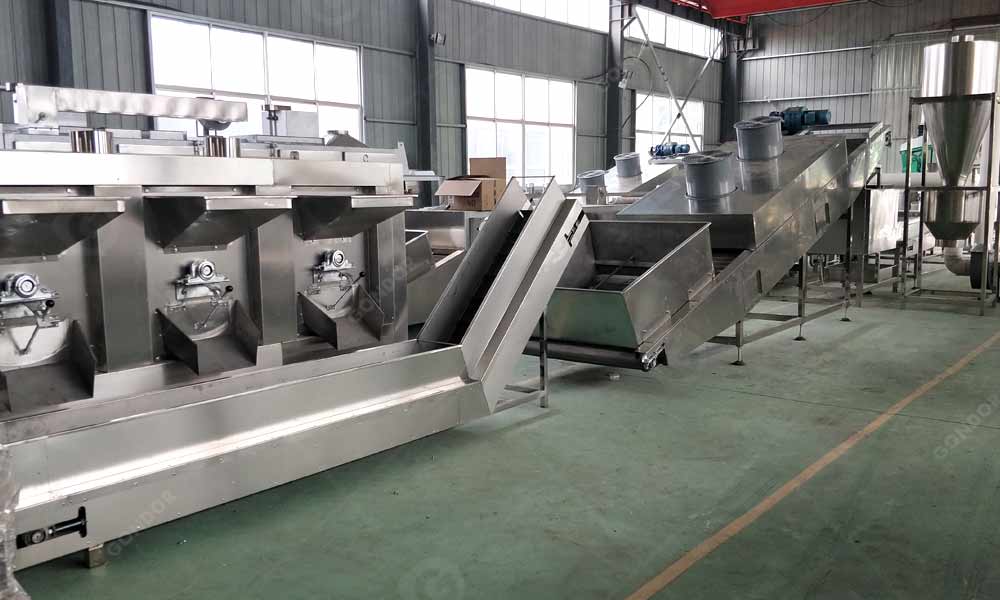
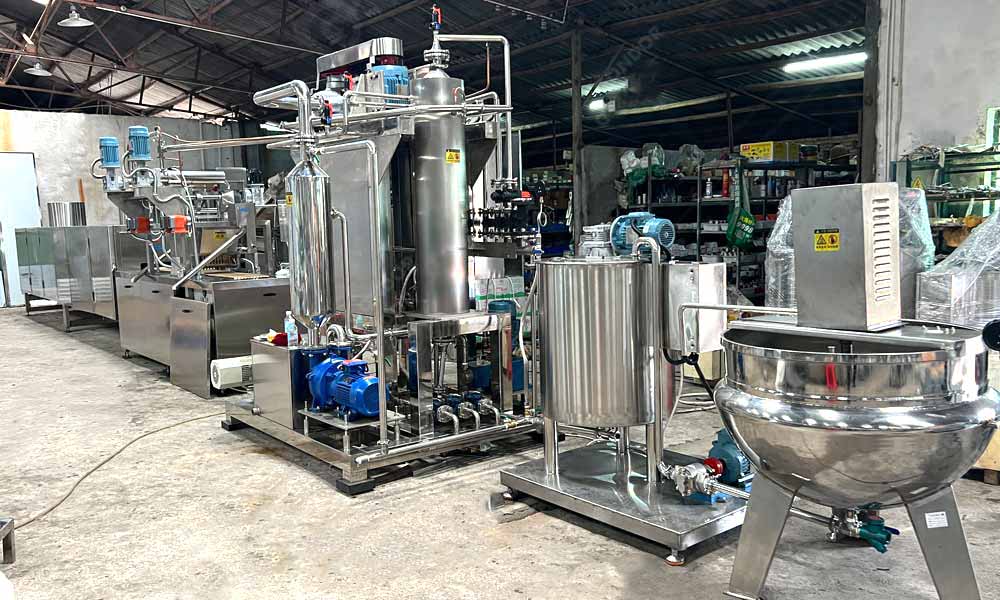
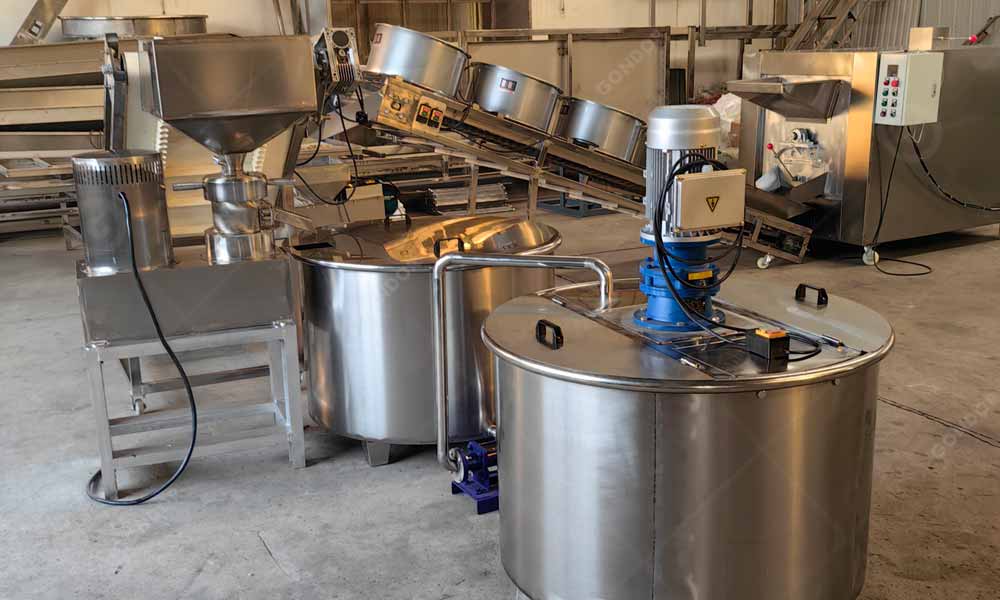
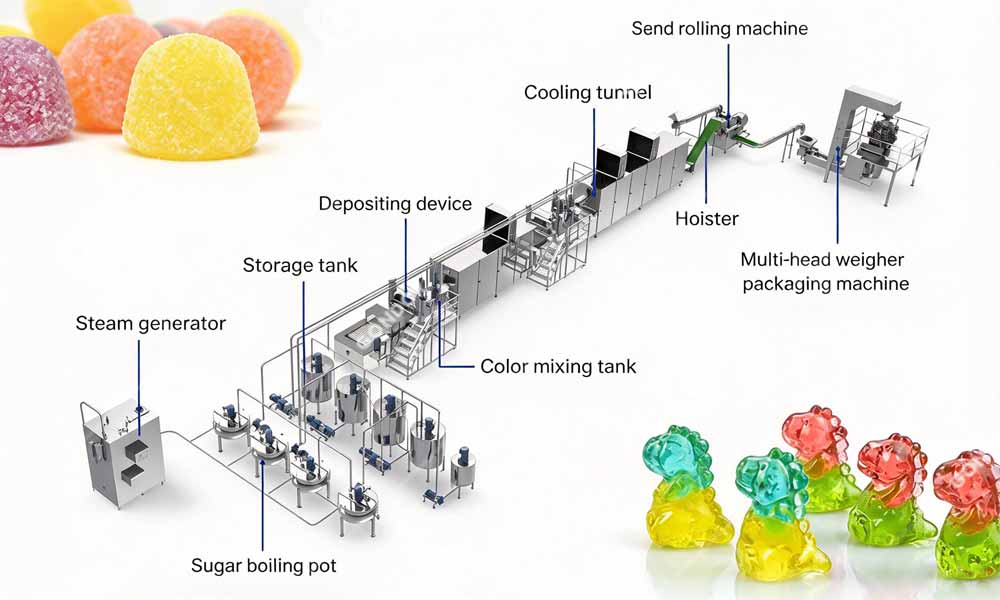
The phrase candy making machine sounds like one steel box. In real life, it is a chain. Sugar gets cooked, formed, didinginkan, demolded, and packed. Each step is its own candy manufacturing machine, and the line is the sum of them.
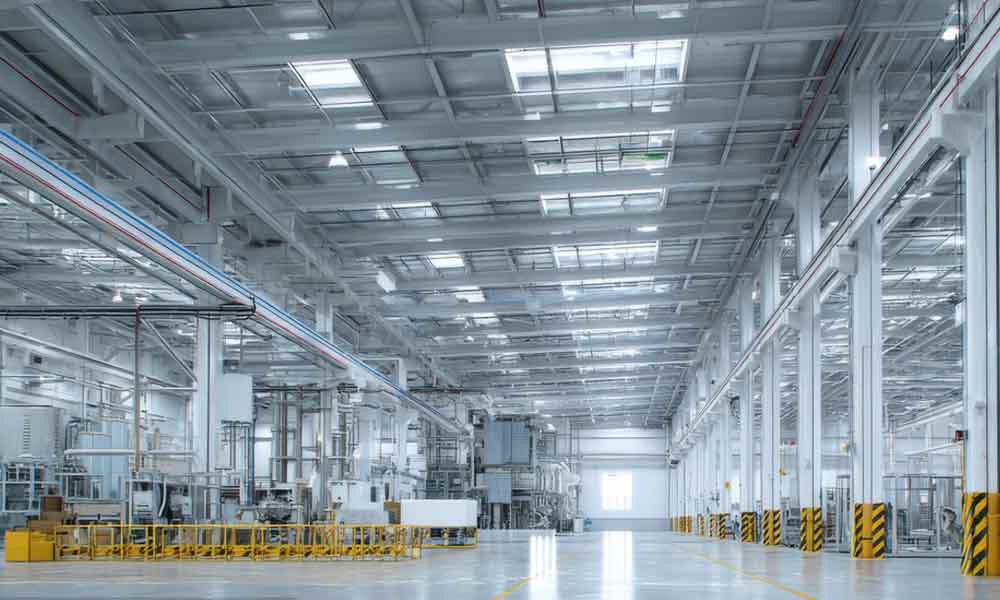
So when someone asks “what does a candy production machine cost,” the honest answer is “which step, and how much candy?” A tabletop depositor is a few thousand dollars. dollars. A turnkey candy production machine with a cooling tunnel and wrappers is a different universe. We will get to numbers later, but hold that thought.
Start With the Candy, Not the Machine
This is the pit that buyers often step on: first they are attracted by a shiny production line, and then they try their best to stuff their candy into it. Namun, the physical characteristics of candy never compromise: soft candy needs soft gel and slow drying, hard candy depends on almost anhydrous boiling and rapid cooling, and cotton candy needs to be pumped into the air in a warm state. Each is a completely different process logic. The appropriate candy manufacturing equipment should be tailored for your candy “personality”, not the one with the best photo. Order candy first, then choose the machine-the equipment is only the “middleman” who faithfully executes the process, and never let it define your product in turn.
The Main Families of Candy Manufacturing Equipment
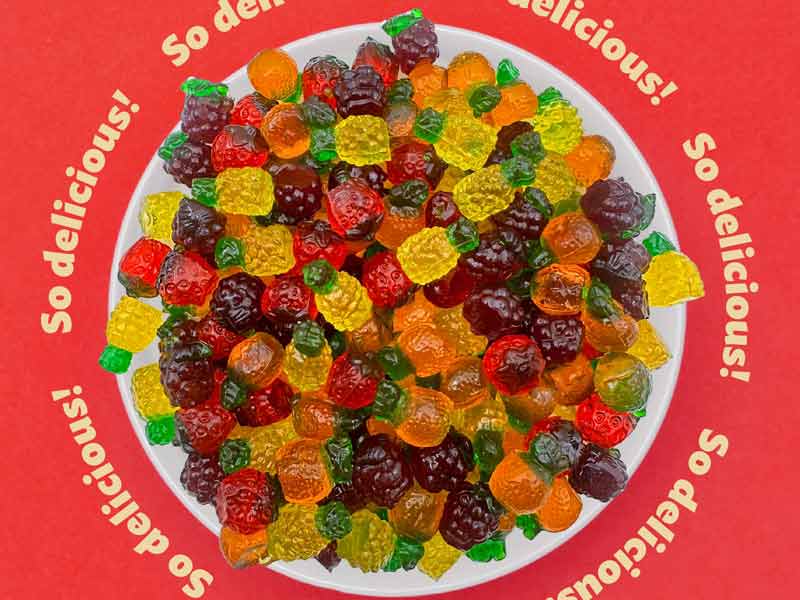
Most confectionery falls into a handful of groups. Each group maps to a type of candy production machine. The table below is the quick map we give new buyers.
| Candy type | How it is made | Core Machines |
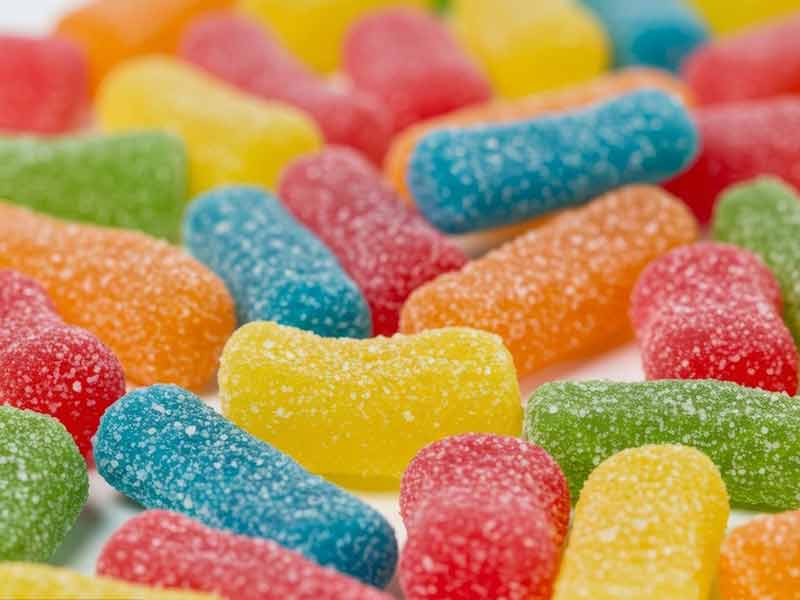
| Gummy/Jelly | Gel (agar-agar, pektin) deposited into molds, then dried | Gel cooker, servo depositor, terowongan pendingin, demolder, oiler |
| Permen | Boiled sugar mass formed hot, by depositing or die-pressing | Vacuum cooker, depositor or die-former, konveyor pendingin |
| Lolipop | Rope-sized, pressed or deposited, stick inserted | Batch roller, rope sizer, forming/wrapping unit |
| Toffee/caramel | Slow-cooked, pulled or aerated, cut and wrapped | Caramel cooker, pulling/aerator, cut-and-wrap |
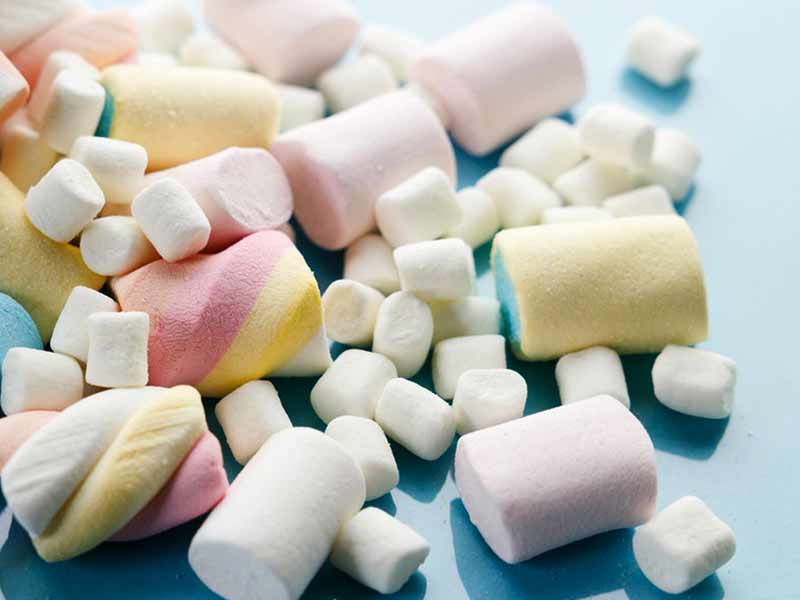
| Marshmallow candy | Sugar slurry whipped with air, then shaped or extruded | Continuous aerator, forming line, sieve and pack |
| Cube sugar | Soft sugar pressed and dried into blocks | Compacting, pengeringan, penyortiran |
| Chewing gum | Base blended, sheeted, extruded, memotong | Kneader, extruder, pemotong, wrapper |
Output ranges are model-dependent and shown for planning only. Your real number comes from recipe, mold size, and cooling conditions. Always confirm against a test run.
Menyetorkan, Die-Forming, or Extruding?
Three words decide everything. Get these right, and your line will feel calm. Get them wrong, and you will fight it daily.
Our Candy Production Lines, Up Close
Enough theory. Here is what we actually build and ship. These are the units behind the “we’ve done this 110 kali” claim.
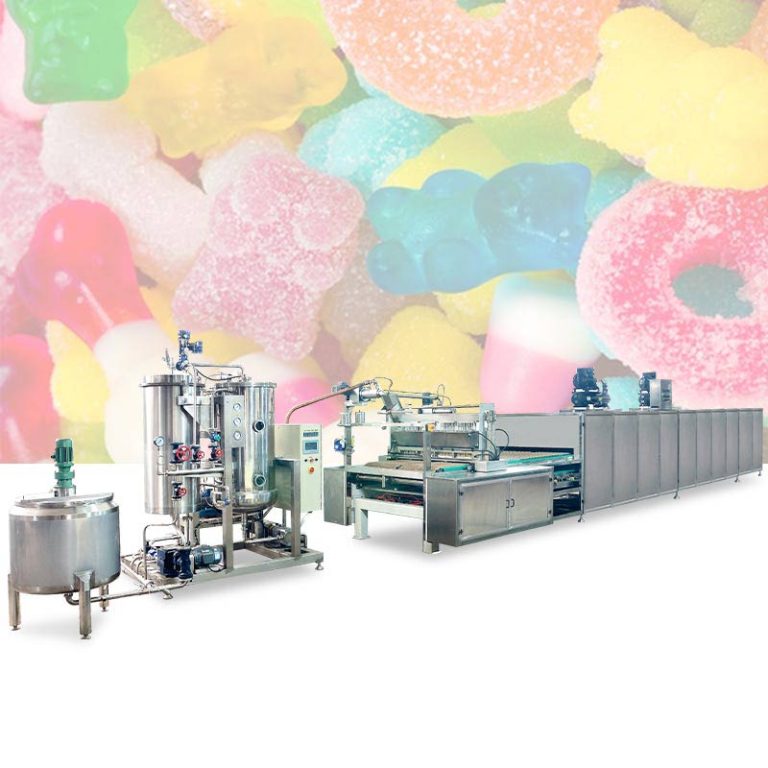
Gummy and Soft Candy Depositing Line
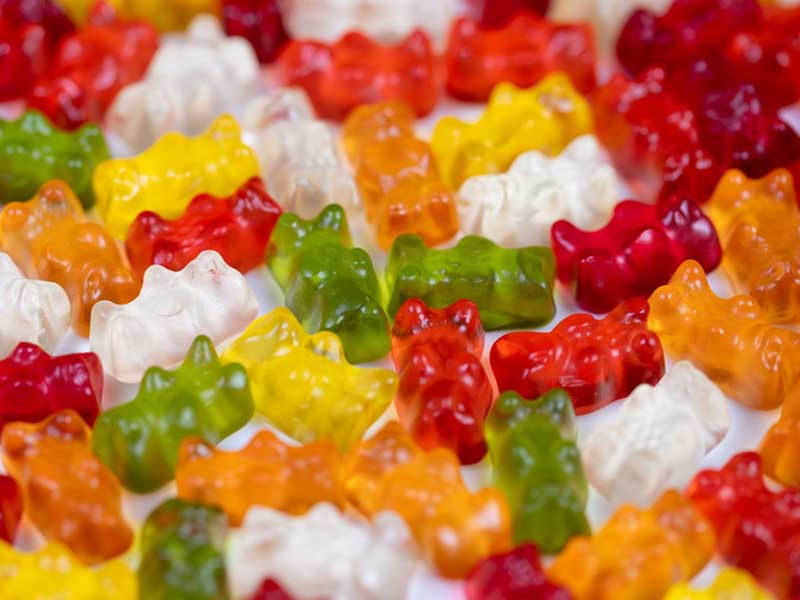
The GD and HQ series gummy bear production line offers standard capacities of 150, 300, 450, Dan 600 kg/jam, scalable to 3,000+ kg/h by adding depositor heads and extending the cooling tunnel. All product-contact parts are 316L stainless steel. Ini gummy bear production line handles single-color, two-color, beraneka warna, and center-filled gummies, plus functional formulas with vitamins or probiotics. Mold change takes 1–2 hours; recipe switch on the PLC takes about 30 menit. Minimum batch size is just 50 kg, ideal for small-batch trials.
Hard Candy Line (Depositing and Die-Forming)
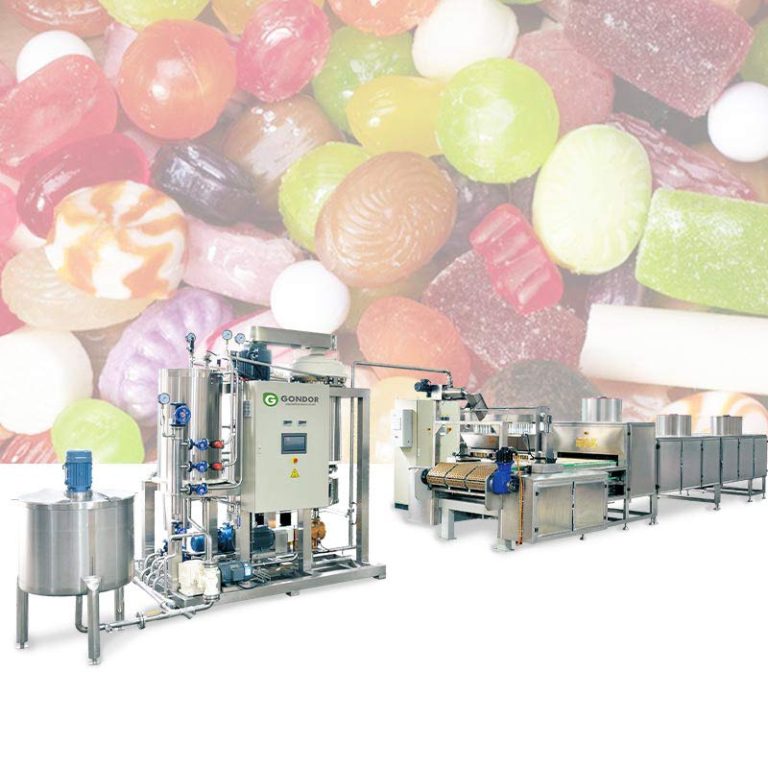
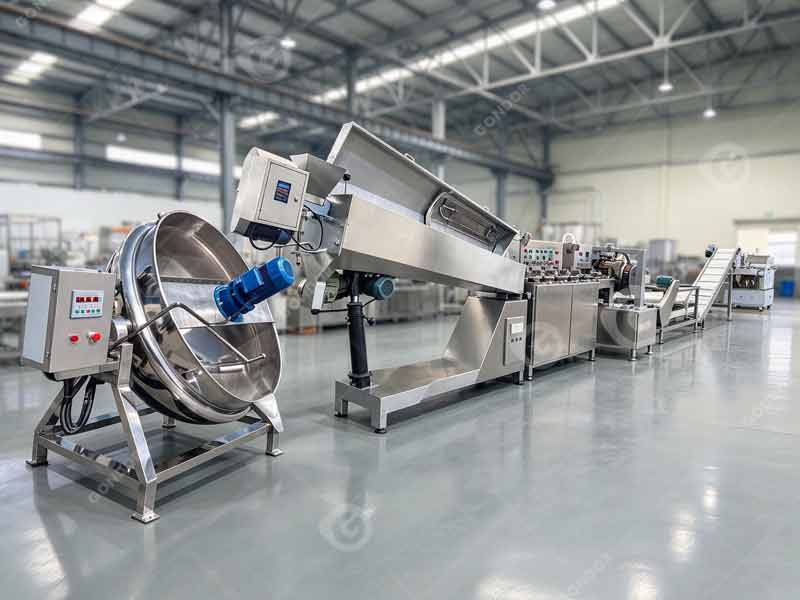
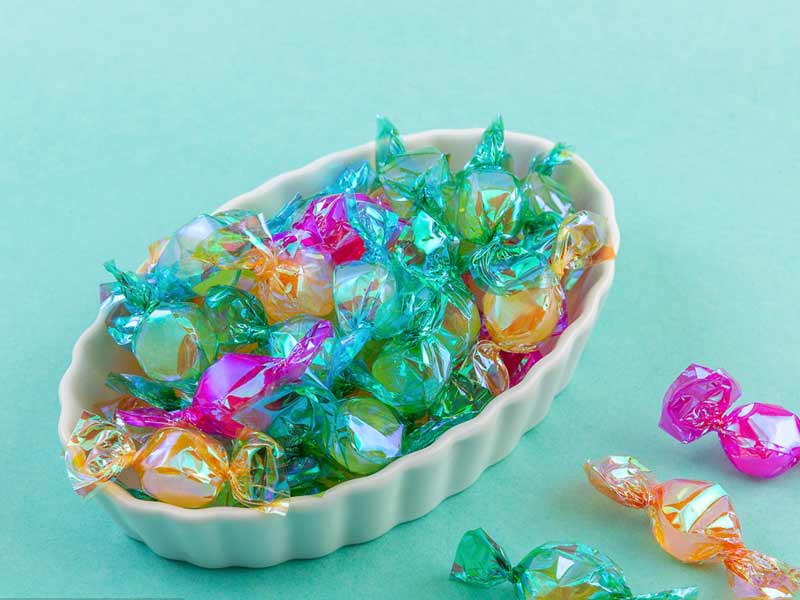
We handle both depositing and stamping processes. The depositing version uses continuous vacuum thin-film cooking for clear, glossy candy. The stamping version runs on a high-speed die formed candy production line, pressing out clean-edged, dimensionally stable pieces. Both use interchangeable molds, so switching from fruit hard candies in the morning to striped candies after lunch is quick and hassle-free.
Lollipop Forming and Depositing
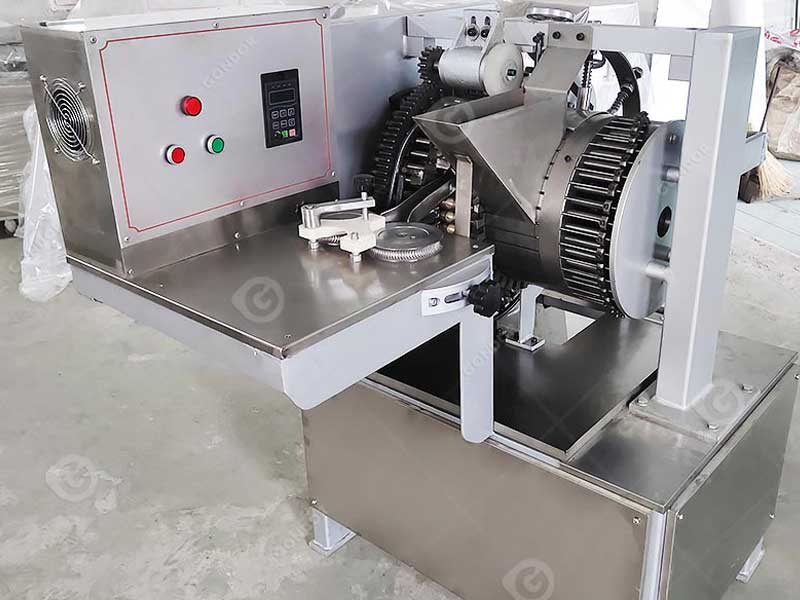
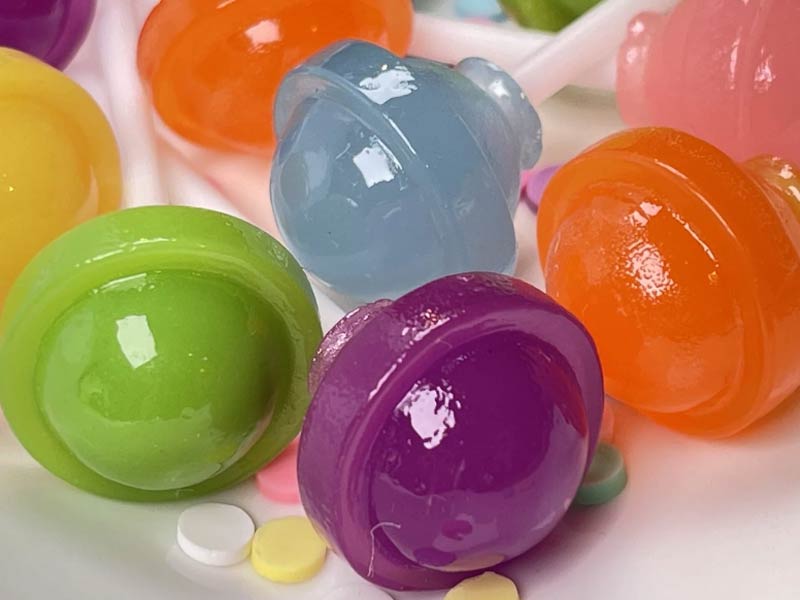
Kita mesin pembentuk lolipop uses a top-press die system with precise mold alignment. Weight stays uniform, edges stay clean. It handles spherical, datar, berbentuk silinder, and animal shapes. The depositing version adds stick insertion for ball pops. Either way, the stick goes in straight, which matters more than you’d think when a child grabs it.
Toffee and Caramel Line
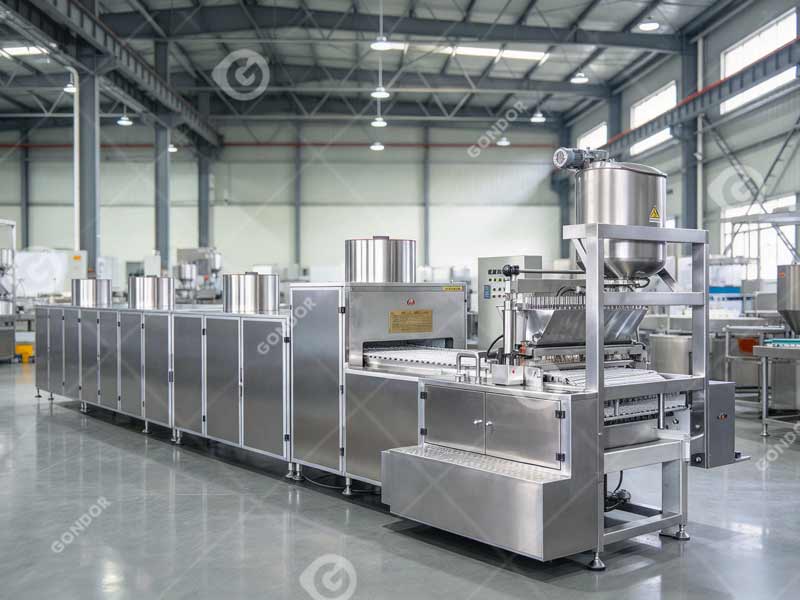
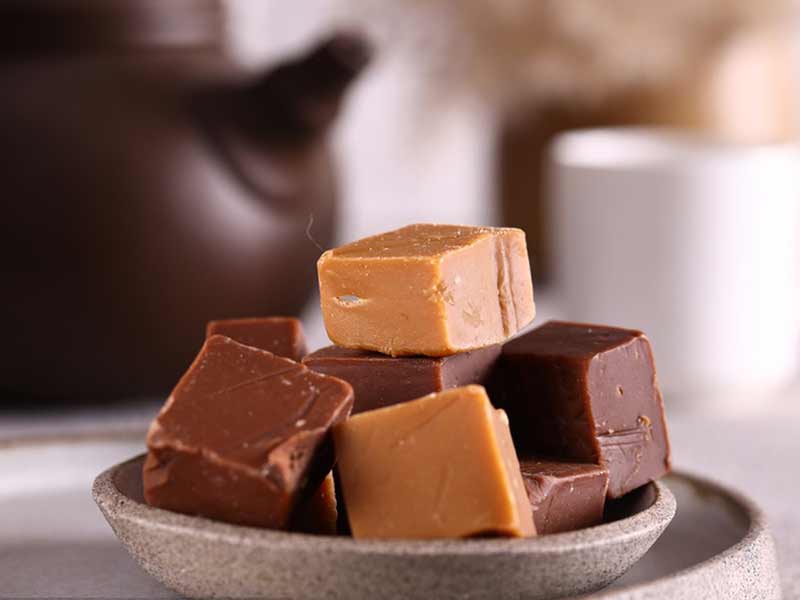
Toffee is patient. The mass cooks slowly, then gets pulled or aerated to build texture. Our depositing toffee line keeps temperature tight so you don’t scorch a whole batch. Cut-and-wrap finishes it.
Marshmallow Candy
The output of the continuous aerator (GDS series) ranges from 100kg/h to 1,000 kg/jam, with low noise and 304 steel throughout. Itu jalur produksi marshmallow (GD-150, 100–150kg/jam) forms two-color bars, kubus, bentuk semangka, and twists, then cuts, sieves, and packs them on its own. We have watched first-time buyers stare at the twist former like it was magic. It isn’t. It’s just air and timing.
Candy Cooking and Depositing Machine
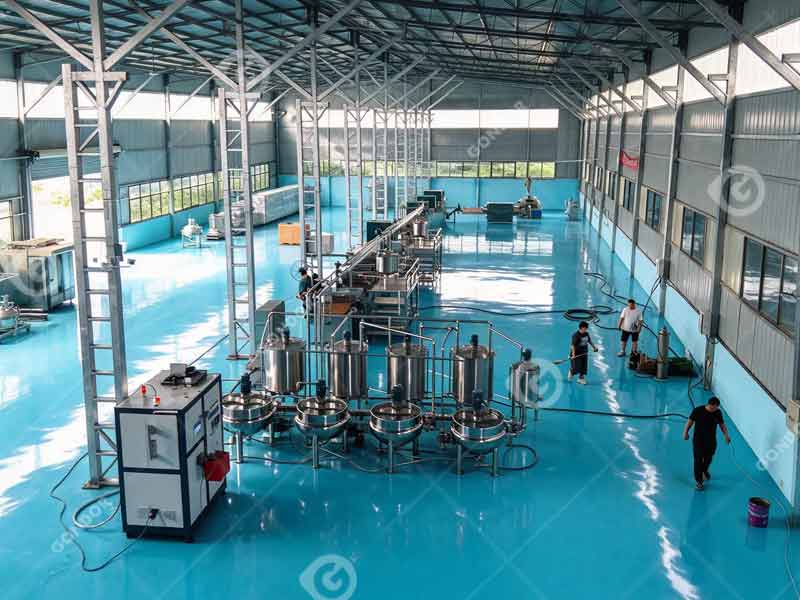
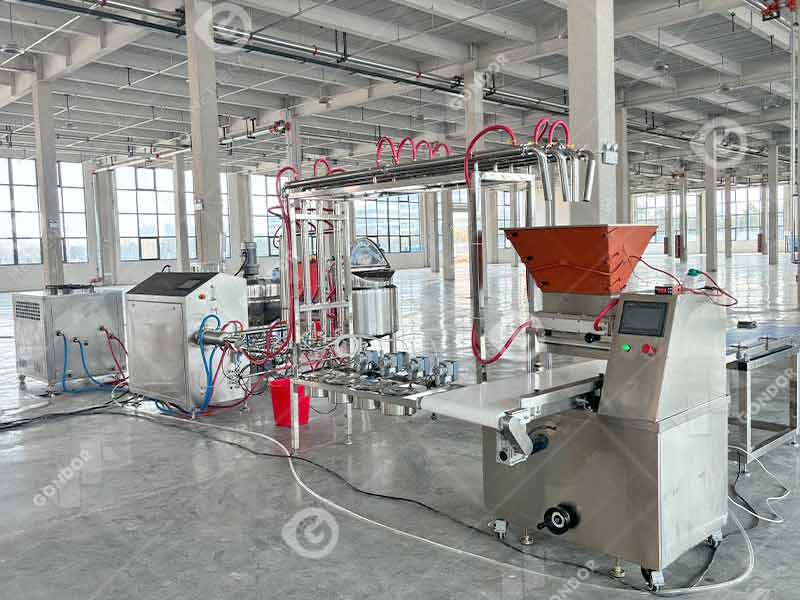
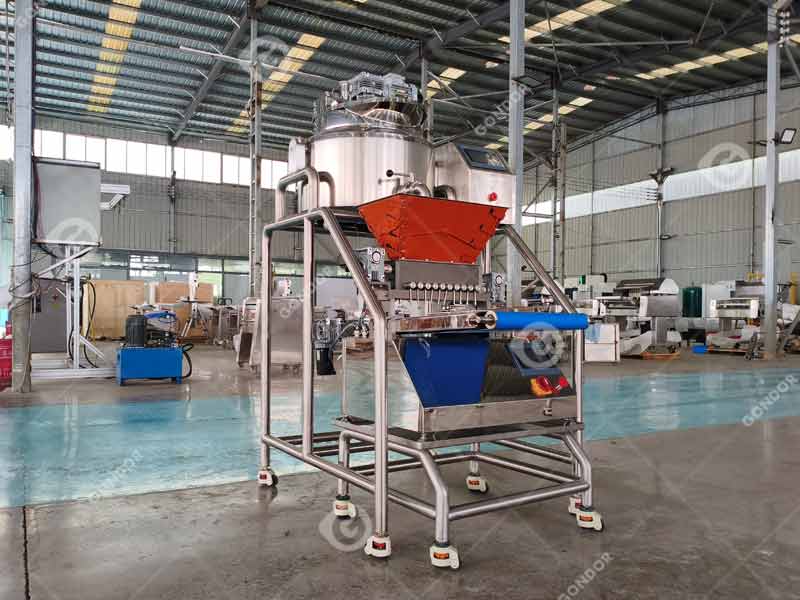
Every line starts with a cooker. Our jacketed sugar pots use steam or electric heat. Itu candy cooking and depositing machine merges boiling and pouring in one frame, which saves floor space for small shops. Steam heats faster and steadier than electric, in our experience, so we lean that way when utilities allow.
Tabletop Depositor for Small Batches and Labs
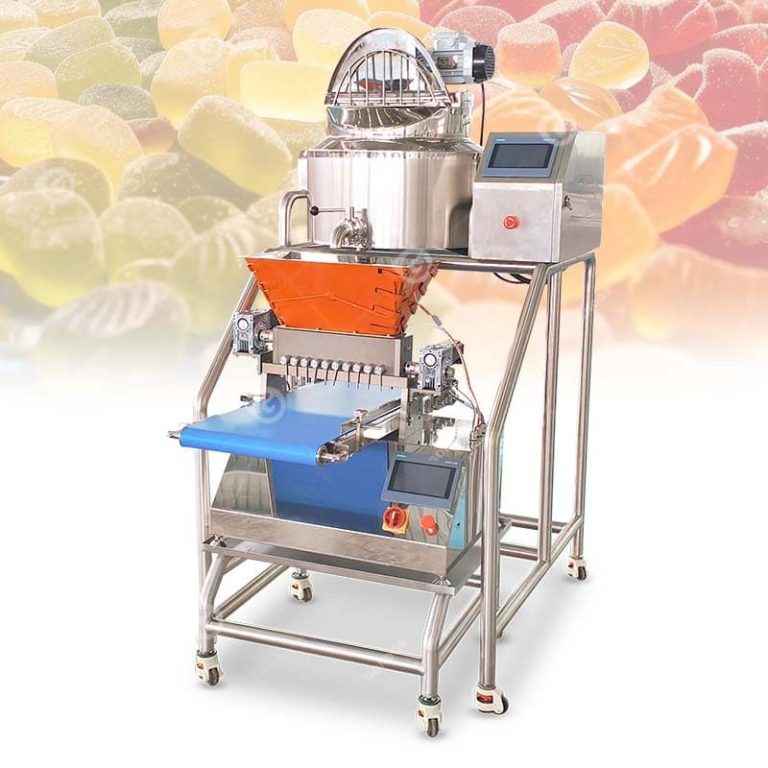
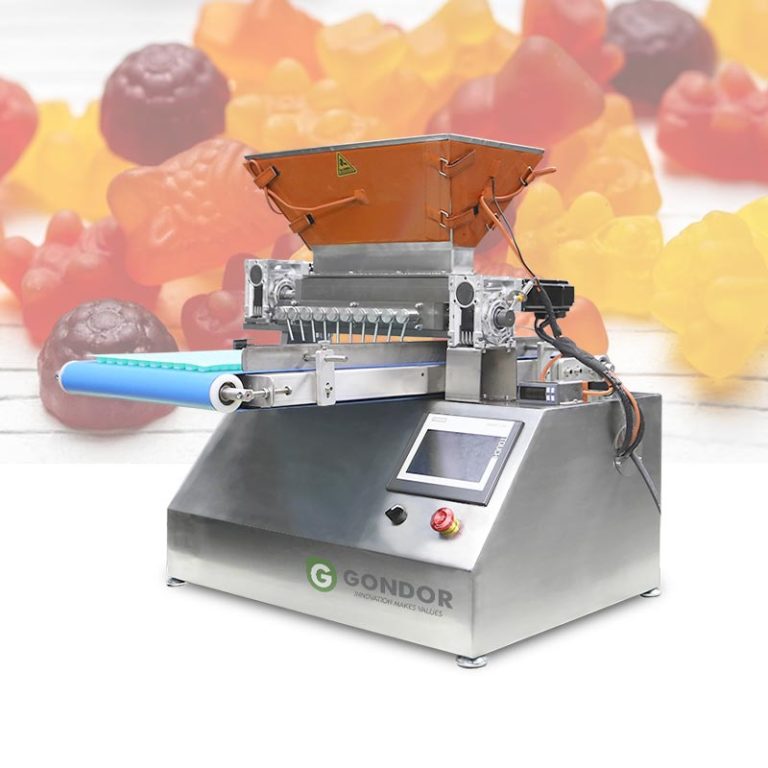
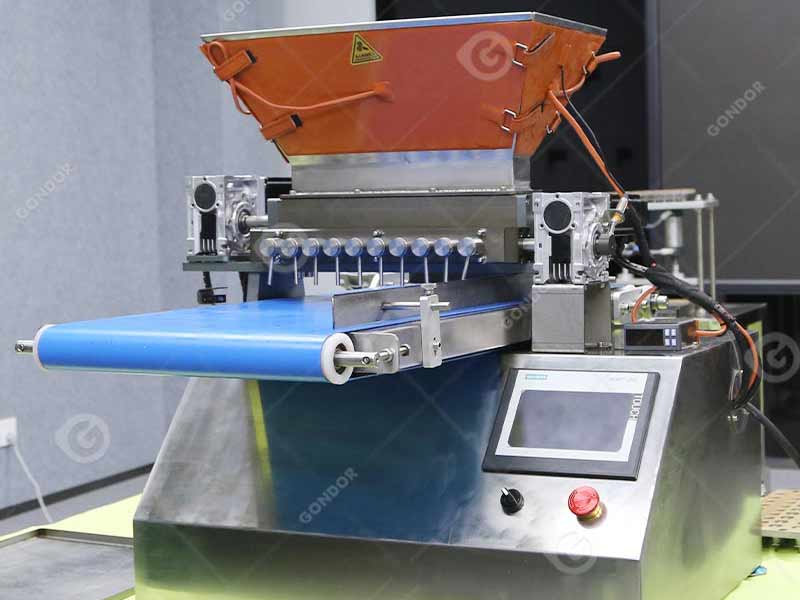
This one deserves a spotlight. Itu penyimpan permen meja pours 15–20 times a minute, weighs 65 kg, runs on 110/220V, and fits a lab or a micro brand. It does hard candy, permen lembut, and toffee with the right mold. Ten litres of hopper, ten nozzles, PLC plus HMI. If you are proving a recipe before betting the farm, start here.
Packing and Counting
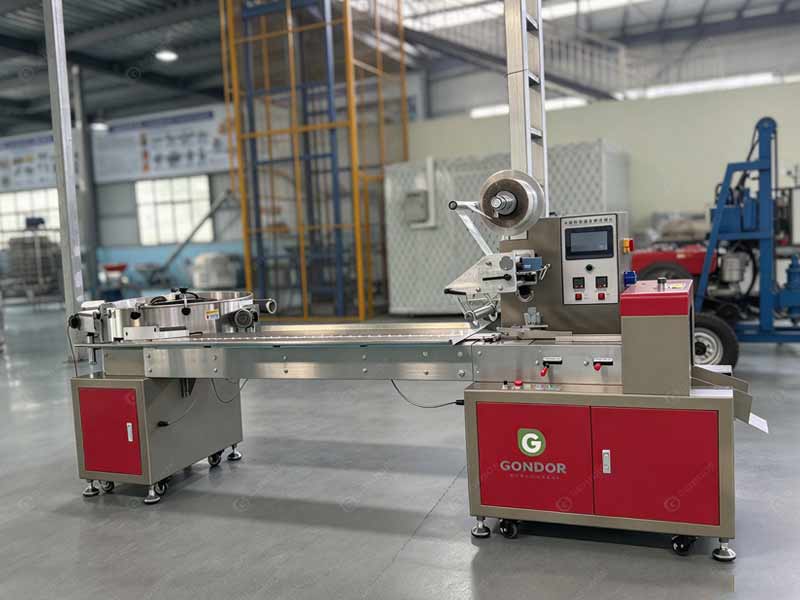
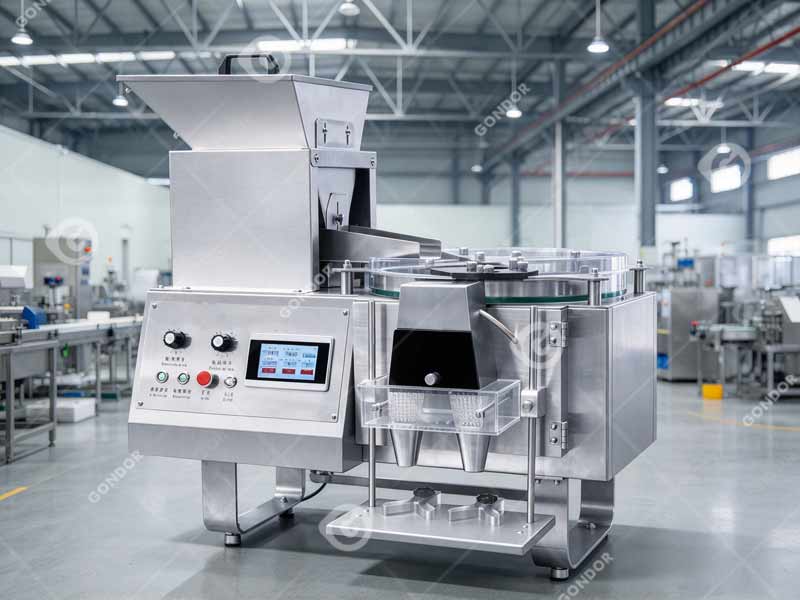
A candy nobody can pack stays in the bin. Kita high-speed candy pillow packing machine wraps pieces cleanly, dan itu mesin penghitung permen handles tablet-style candies by the piece. Packaging is where many lines quietly die, so we treat it as part of the peralatan pembuatan permen, not an afterthought.
Small Batch vs Industrial: Which Candy Production Machine Fits You?
The question we hear most on Quora is “what’s the best candy machine for a beginner?” Our honest answer:
- Home or Micro Brand: A tabletop depositor plus a kettle. Low risk, fast learning, mudah dibersihkan.
- Small Factory: A semi-auto line, 150–300 kg/h, with manual help at packing.
- Growing Brand: A PLC depositing line with auto demold and wrapper, 300–600 kg/h.
- Industri: Continuous cooker, multi-head servo, vision check, high-speed wrap, 1,000+ kg/jam.
Buy one step above where you are now. A line sized exactly to today’s orders forces a second purchase in a year. A line with 20–30% headroom grows with you. We have watched micro brands outgrow a tabletop unit in nine months, and industrial teams buy too big and park half the line idle. Both waste money, just differently.
Utilities and Floor Space
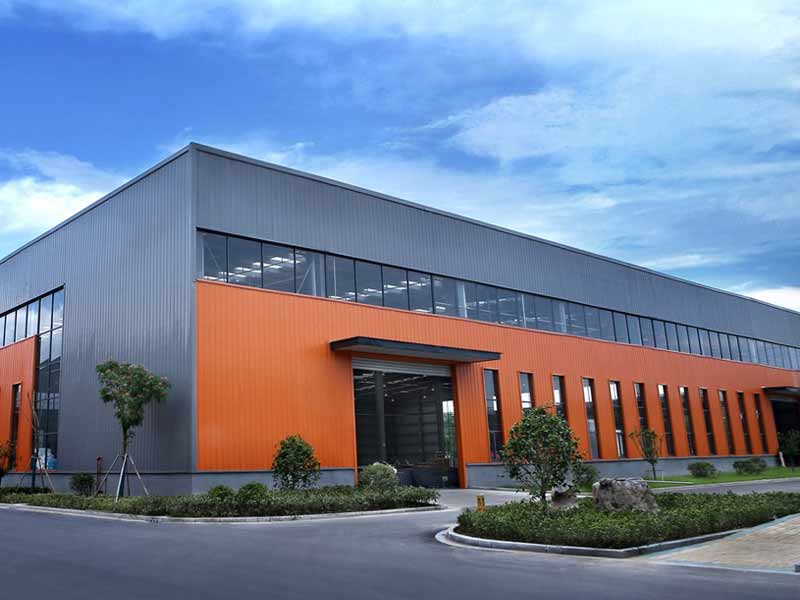
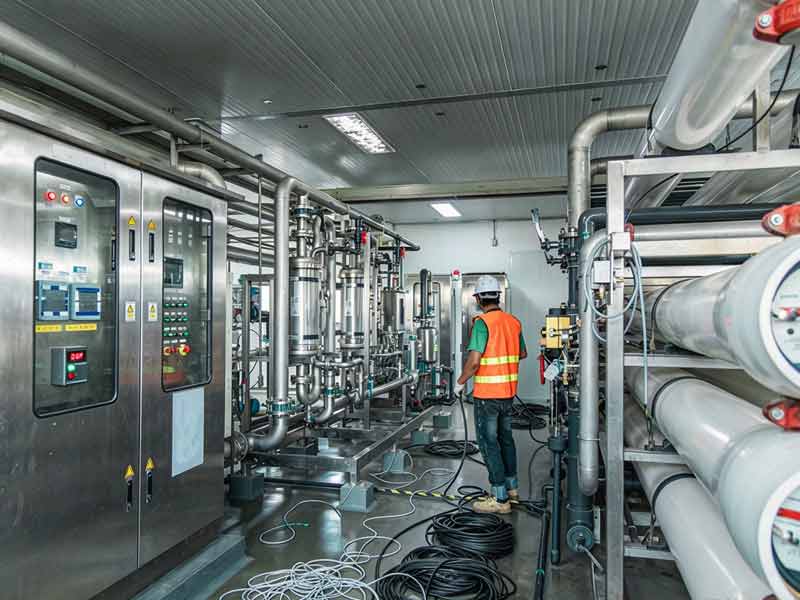
The line you can actually run is the line your building can feed. Before you fall for a spec sheet, check three things. Kekuatan: our tabletop units happily take 110/220V, but most production lines want 380V three-phase.
- Uap: vacuum cookers love steam for fast, stable boiling; if your site has none, we switch to electric, though it cooks slower.
- Udara: depositors and demolders run on compressed air.
Orang Juga Bertanya
A 6-Step Buyer Checklist
- Write down the exact candy (and the next two you might launch).
- Estimate real weekly kg, not hopeful monthly kg.
- Pick the process: depositing, die-forming, or extruding.
- Confirm utilities: kekuatan, uap, compressed air, air.
- Ask for a test run on your recipe before paying.
- Check the supplier: certs, suku cadang, response time, references.
Why Teams Choose Gondor
We are Henan Gondor Machinery Co., Ltd., focusing on food machinery for more than 20 bertahun-tahun. Our equipment is exported to more than 110 countries and holds ISO 9001, ISO 14001, ISO 45001, CE, Sertifikasi BSCI dan ETL. We provide OEM and ODM services, have a self-built laboratory and QC team, and respond to customer needs around the clock. We also insist on not over-selling. If you only need a bench pouring machine for your stage, we will tell you the truth. Our goal is to help you build a production line that can really run stably, rather than selling the biggest equipment we can send.
Ready to Spec Your Line?
Tell us your candy category, the target hourly output (kg/jam), and the water, listrik, and gas conditions in the workshop. We will provide you with a customized layout, model configuration list, and transparent quotation. There is no hard selling, no water injection parameters, only a plan that can really land.
Want to know more about our qualifications and global service cases? Selamat datang untuk mengunjungi kami Tentang Kami page to fill in the demand form, and our engineers will reply to you within 24 jam.