


Industrial Production of Premium Cookies
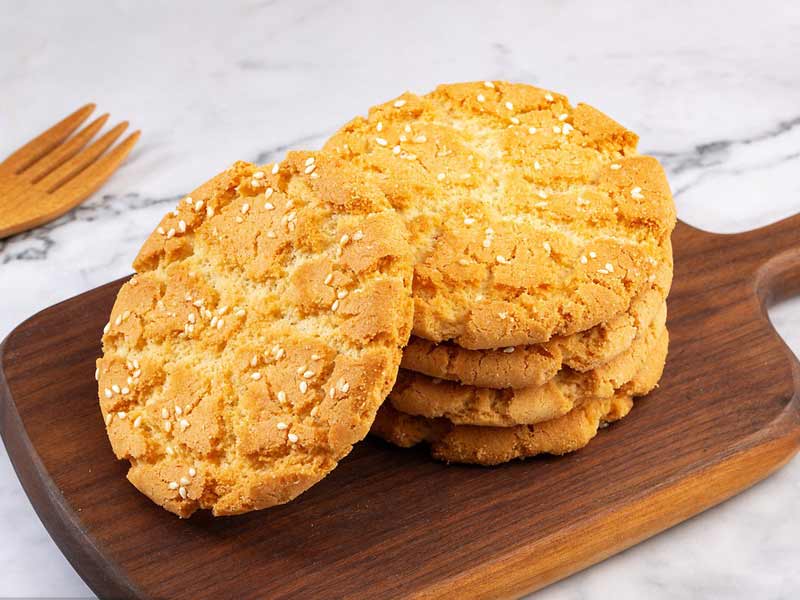
In the traditional point of view, a cookie is a classic of taste and flavor-it has achieved a wonderful balance between the extreme crispness of “melting in the mouth” and the rich aroma of nuts. For global food manufacturers seeking large-scale production, the core challenge is how to transform this recipe with “handmade soul” into efficient and stable industrial production without sacrificing its unique texture and flavor. This requires a deep understanding of the precise coordination between raw material characteristics and processing machinery. 다음, let’s discuss the key process details needed to realize the industrialized production of high-quality peach crisp.

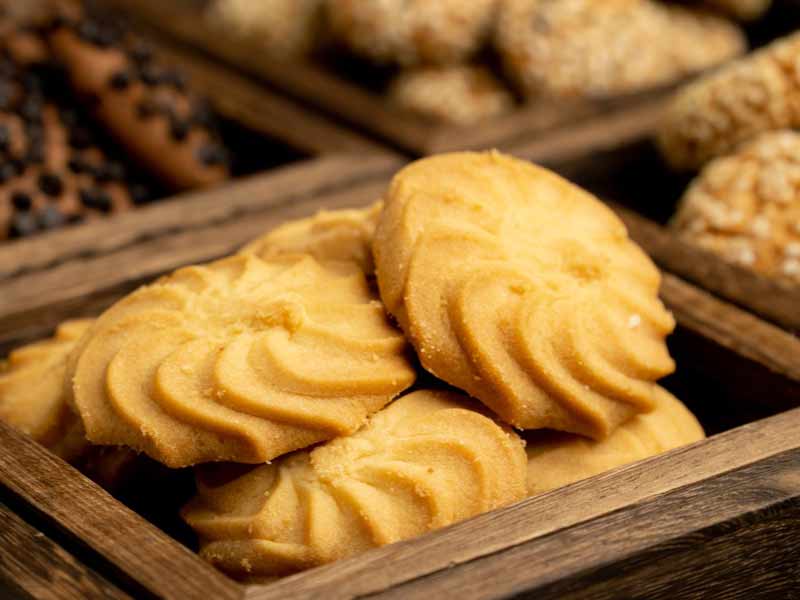
Five Core Technological Factors of Industrialized Production of Cookies
From manual formula to large-scale and standardized industrial production, the production of high-quality peach crisp is a systematic project that combines raw material science, precision technology, and advanced equipment. To reproduce its iconic “sandy” 맛, uniform crack, golden yellow color, and crisp texture, and realize stable batch output, it is necessary to finely control the following five key links:
- The Pro Tip: Always use high-quality vegetable shortening or traditional lard with a specific melting point. In industrial settings, the temperature of the oil when it hits the flour determines the final “scale” of the cookie’s surface cracks.
- 그만큼 “Folding” Technique: In our experience, over-mixing is the enemy. Once the flour is added, the mixing time must be strictly controlled. You want to coat the flour particles with fat to inhibit gluten, creating that signature sandy mouthfeel.
- Optimum Dough Temperature: Keep it between 22°C and 26 C.
- Logic: If the dough is too cold, it will become brittle and hard, and it cannot be formed correctly in the mold; If it is too hot, cookies will lose their crispness after baking.
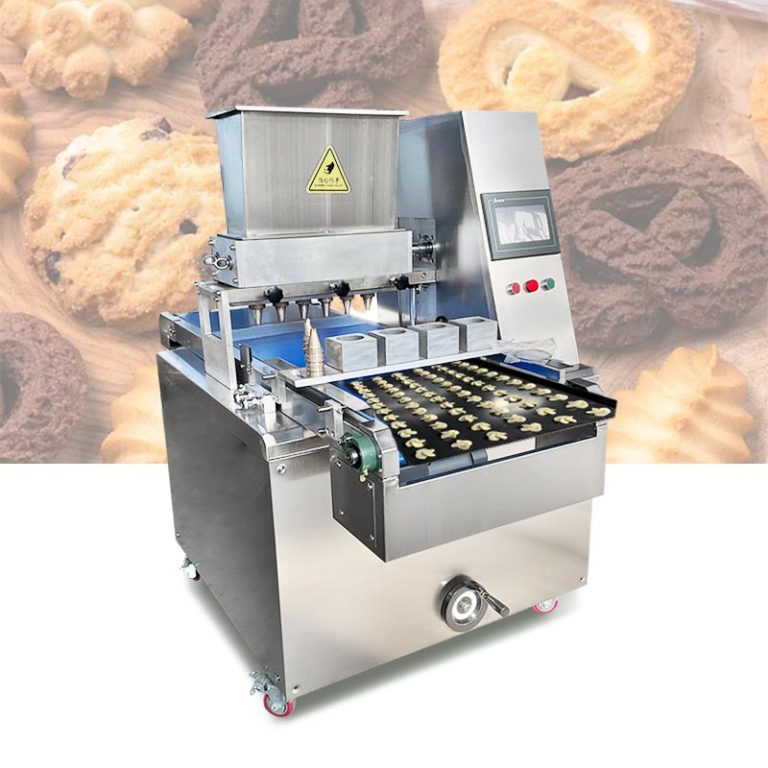
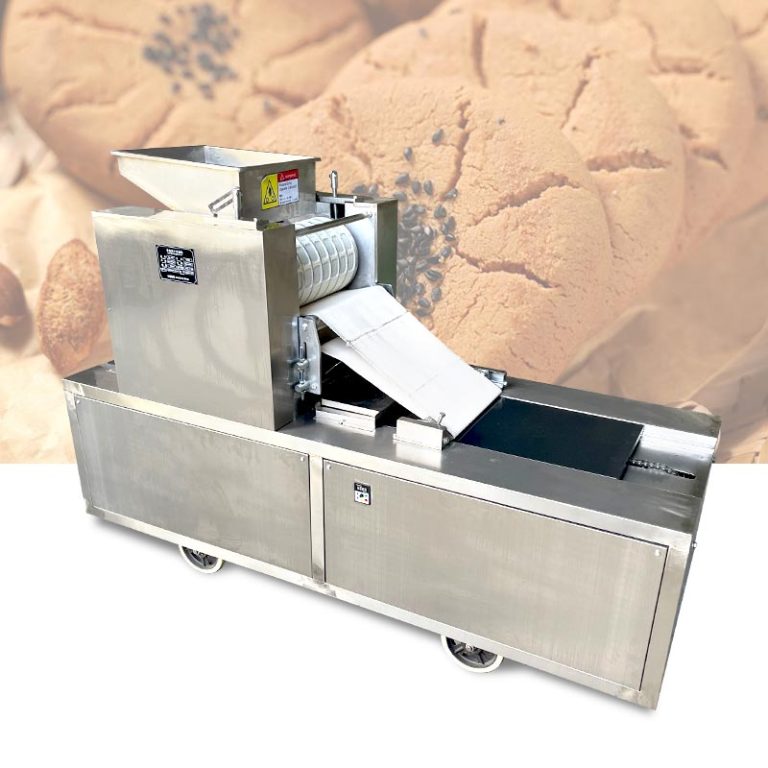
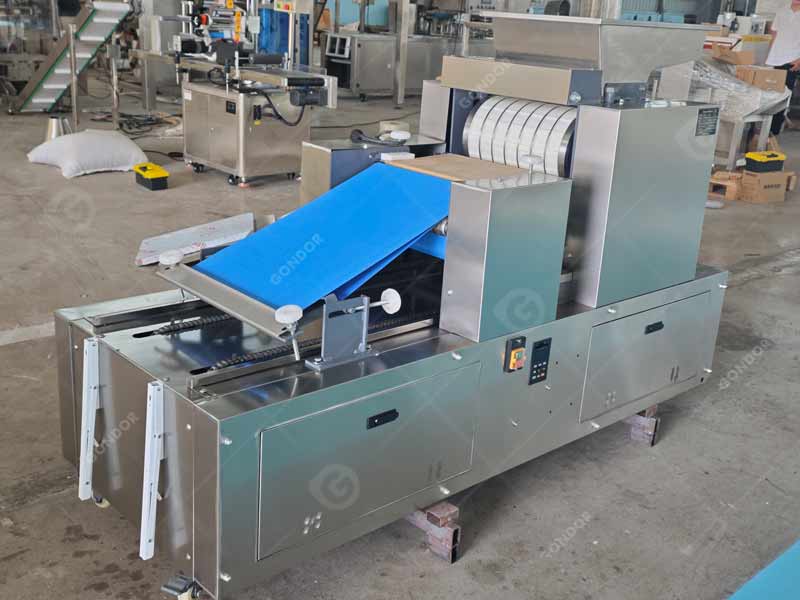
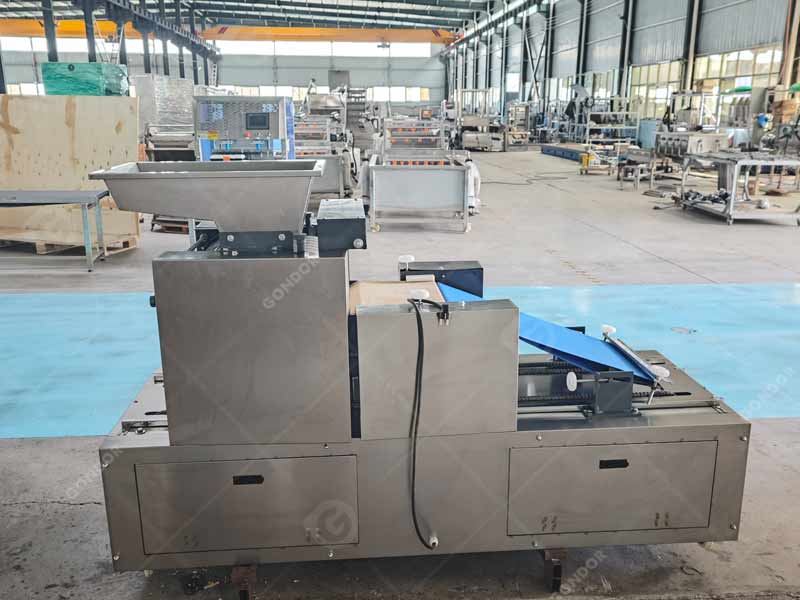
- Molding Versatility: A high-quality machine should allow for quick mold swaps. Whether you want the traditional round shape with a center indent or a modern flat disk, the release mechanism must be seamless.
- Consistency Is The Key: The weight of each biscuit must be the same to ensure uniform baking. In this respect, the peach crisp machine driven by a servo motor is superior to the traditional mechanical linkage system and can provide sub-gram accuracy.
- Personal Insight: I often see manufacturers over-rely on chemical leaveners to get a bigger “lift.” 하지만, 그만큼 “soapy” aftertaste of too much ammonium is a deal-breaker for high-end international markets. The secret lies in the synergy with oven humidity—the crackle happens when the surface dries just before the interior expands.
- Zone 1 (Drying/Setting): High surface fire makes the top surface quickly set.
- Zone 2 (Expansion): Control the primer so that the biscuit rises without burning the bottom.
- Zone 3 (Coloring/Dehydration): The lower temperature slowly takes away water to ensure long shelf life and golden yellow color.
FAQ: Solving Your Production Bottlenecks
Humanistic Care in the Mechanical World
Our core idea is that even the most advanced food machinery is only a tool to amplify the intention of the baker. When we help our customers set up a cookie production line, we not only look at the “hourly output”, but also pay attention to the color and crispness of the first batch of products.
If you are seeking to upgrade production or start a new line, please remember that the machine should adapt to your formula, not the formula to the machine. Our new generation of cookie forming machine is dedicated to preserving the fine dough structure that defines this ancient, delicious food. Do you need me to recommend a specific equipment configuration scheme for your specific annual output demand? Please fill in the inquiry box below and contact us!