Gereelde vrae oor die proses van sjokoladeproduksie
Datum:2025-2-11Skrywer:Yolanda
Soos ons weet, few people truly understand the intricate process required to transform raw cacao into the smooth, rich chocolate we consume. And the process of chocolate production requires precision, kundigheid, and high-quality equipment to ensure efficiency and consistency. Every stage, from harvesting cacao beans to tempering and molding, directly impacts the texture, smaak, and appearance of the final product. As 'n professionele vervaardiger, Gondor specializes in providing advanced food processing machinery that enhances the process of producing chocolate, ensuring precision, konsekwentheid, en doeltreffendheid. Hieronder, we answer frequently asked questions about the cacao process to chocolate, which covers essential production steps, equipment recommendations, and expert insights to help chocolate manufacturers enhance their operations.
The Cacao Process to Chocolate: Key Steps in Production
What are the main steps in the process of chocolate production? From cacao tree to chocolate bar, the transformation of cacao beans into rich, flavorful chocolate involves several crucial steps. Each stage in the chocolate-making process plays a vital role in defining texture, smaak, en kwaliteit. Let’s explore the key steps in chocolate production.
Cacao pods are harvested in tropical regions like Ghana and Ecuador. The beans inside undergo fermentation to reduce bitterness and develop rich chocolate flavors.
Roasting enhances aroma and taste. The beans are then ground into cocoa liquor, the base for all chocolate products.
Cocoa liquor is pressed to extract cocoa butter (used in chocolate) and cocoa powder (gebruik in bak).
Cocoa liquor is blended with sugar, melkpoeier, and other ingredients. Tempering stabilizes cocoa butter, verseker 'n gladde, glansende afwerking.
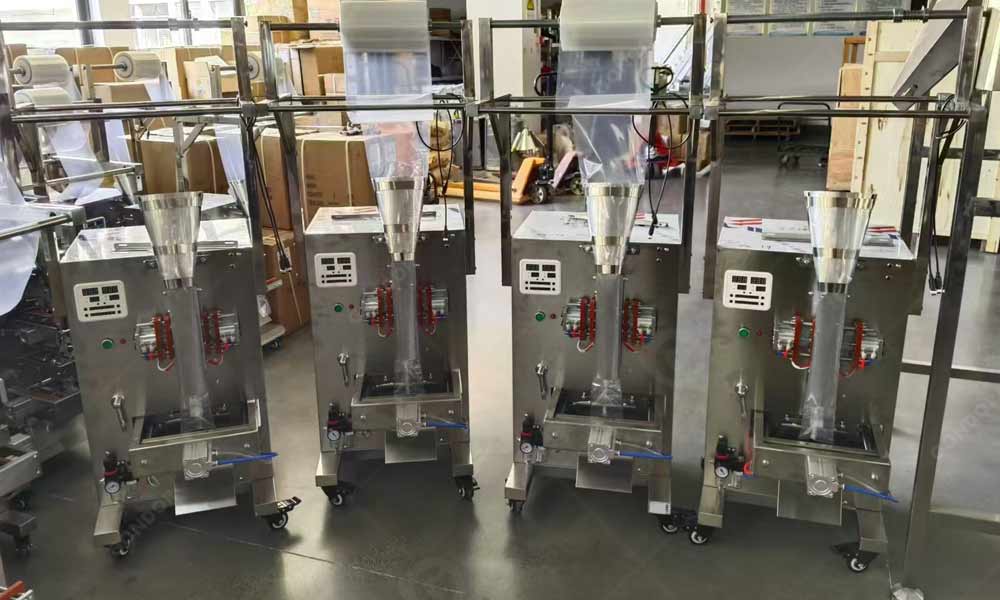
Chocolate is shaped into bars or pralines, then packaged to preserve freshness and protect against humidity and temperature changes.
Grondstowwe & Chocolate Types
How do different cacao bean varieties affect chocolate flavor?
Cacao beans come in three main varieties, each with unique characteristics:
Forastero: The most widely used variety, known for its strong, bold flavor.
Criollo: Rare and prized for its fine aroma and delicate taste, often used in premium chocolates.
Trinitario: A hybrid of Forastero and Criollo, offering a balance of flavor and resilience.
What are the differences between dark, melk, en witsjokolade?
Dark chocolate: High in cocoa solids, with less sugar and no milk, resulting in an intense flavor.
Milk chocolate: Contains milk powder for a creamier, smoother texture.
White chocolate: Made from cocoa butter without cocoa solids, giving it a sweet, rich taste.
The Process of Producing Chocolate: Key Production Factors
Why is tempering important in chocolate production?
Tempering stabilizes cocoa butter crystals, ensuring a glossy finish, gladde tekstuur, en verlengde raklewe. Sonder behoorlike tempering, chocolate can develop fat bloom, which creates an unattractive whitish coating.
How can manufacturers control chocolate viscosity?
Chocolate viscosity depends on cocoa butter content and refining techniques. Using high-quality refining machines, such as ball mills and five-roll refiners, helps achieve the desired consistency for different applications.
How is smooth chocolate texture achieved?
Industrial chocolate manufacturers use advanced grinding and refining machines to reduce particle size to a micrometer level, ensuring a luxuriously smooth texture.
What role does the cocoa butter-to-cocoa powder ratio play?
A higher cocoa butter content results in smoother, melt-in-the-mouth chocolate, while more cocoa powder increases intensity and bitterness.
What equipment is essential in the process of chocolate production?
Chocolate manufacturing requires specialized machines to ensure efficiency and consistency:
Roasting machines: Develop cacao bean flavor.
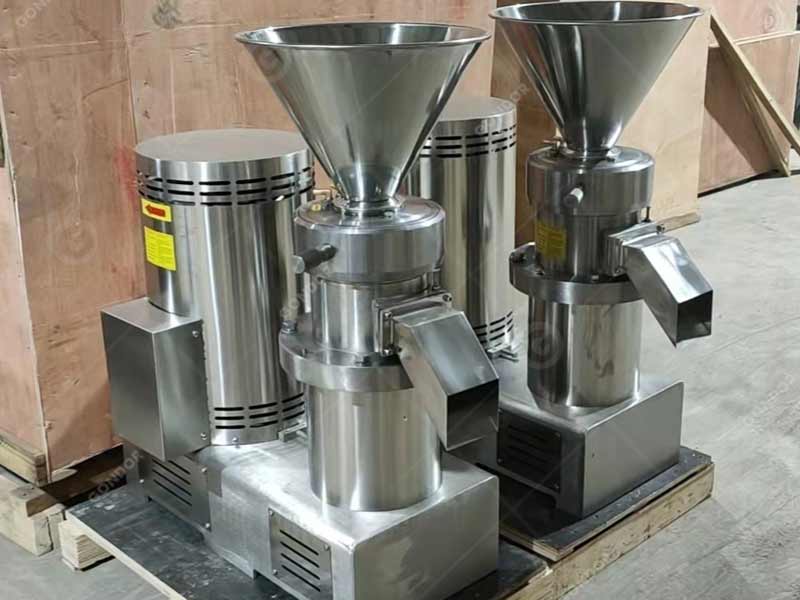
Grinding machines: Convert beans into cocoa liquor.
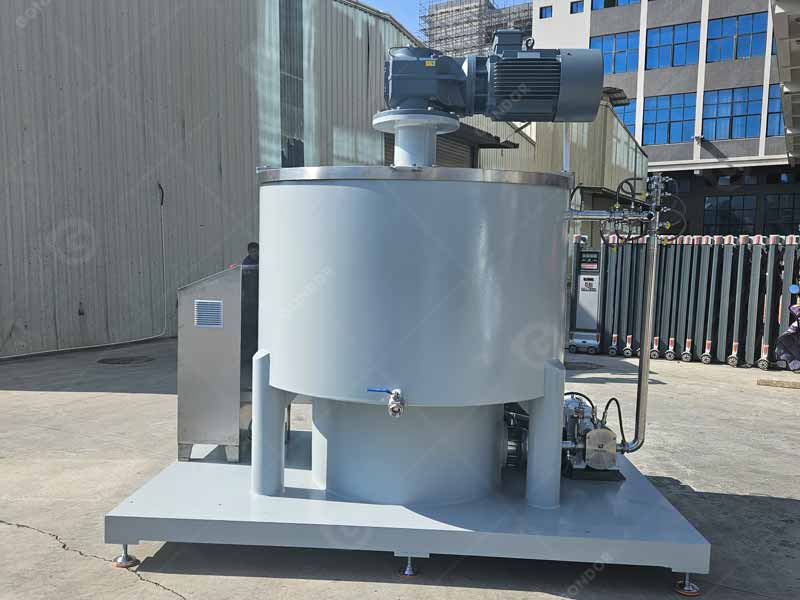
Refining machines: Reduce particle size and improve texture.
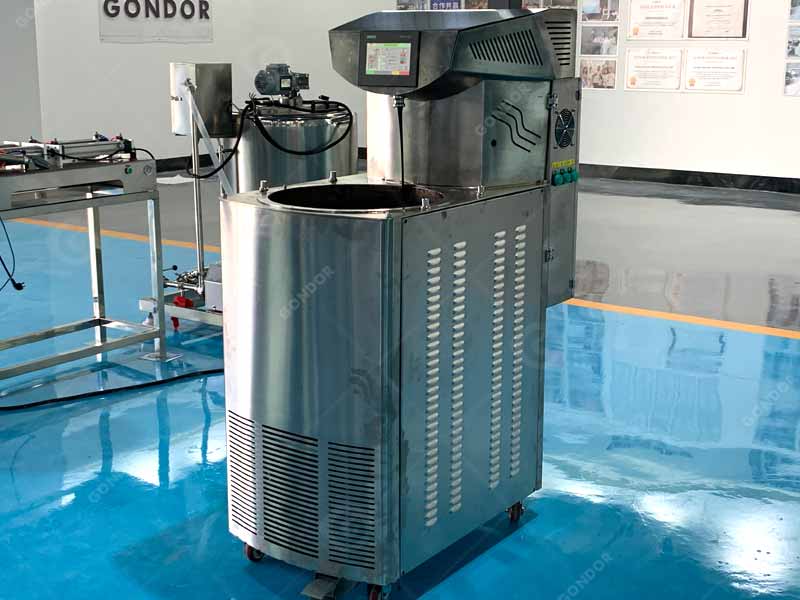
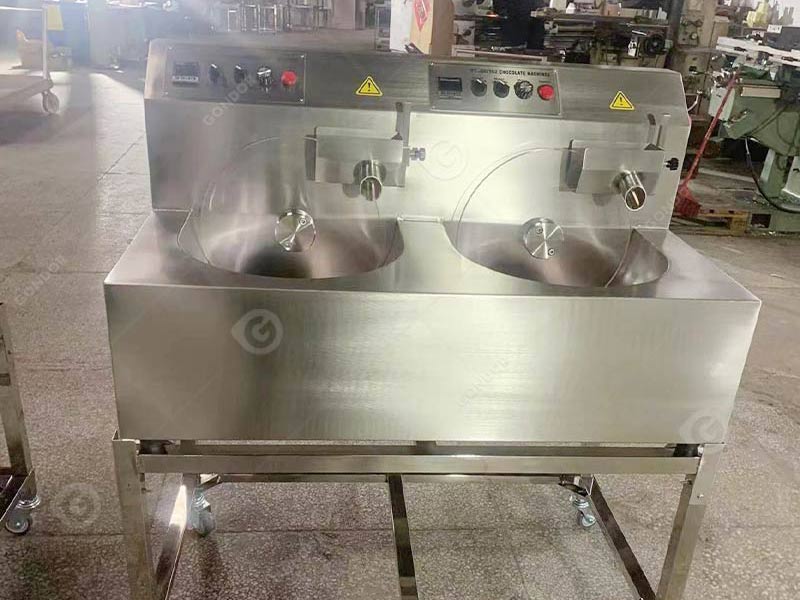
Tempering machines: Stabilize chocolate structure.
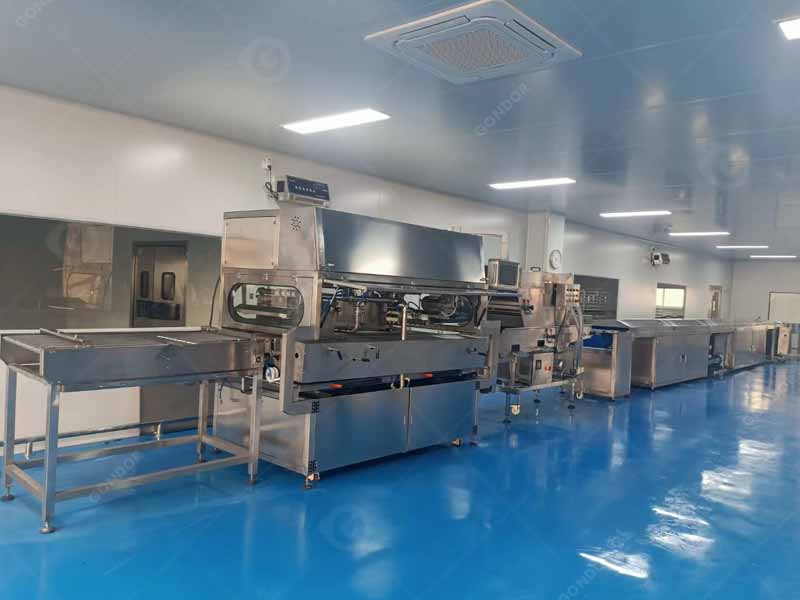
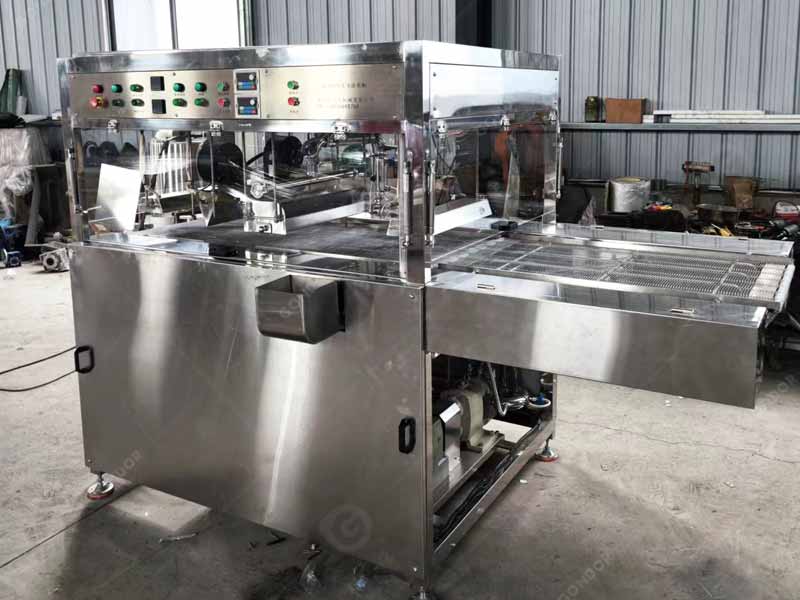
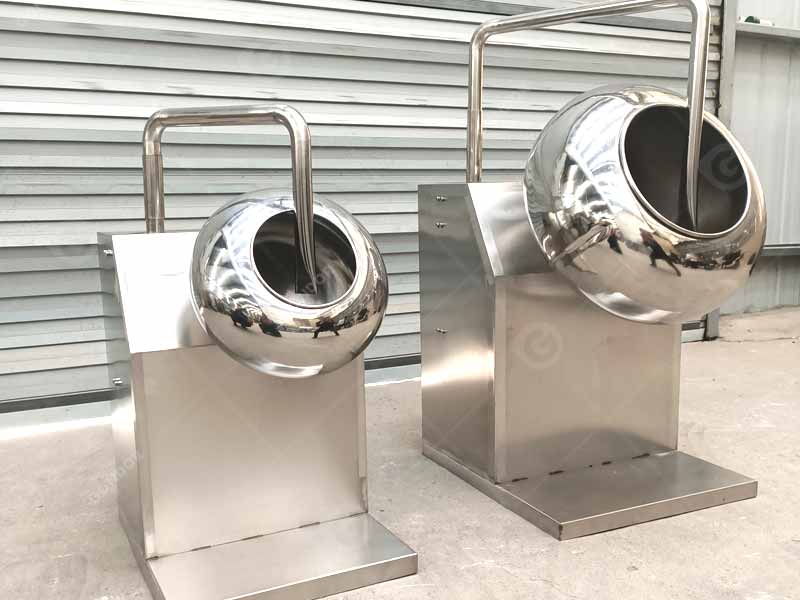
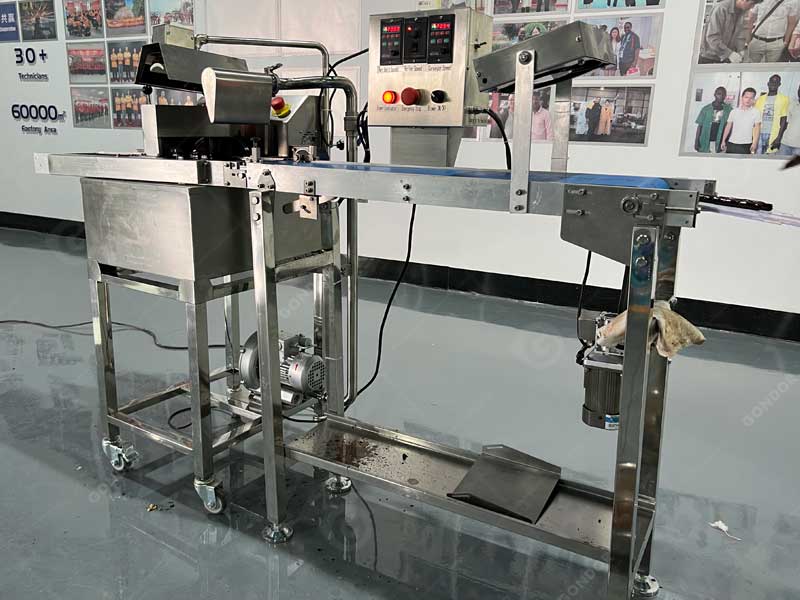
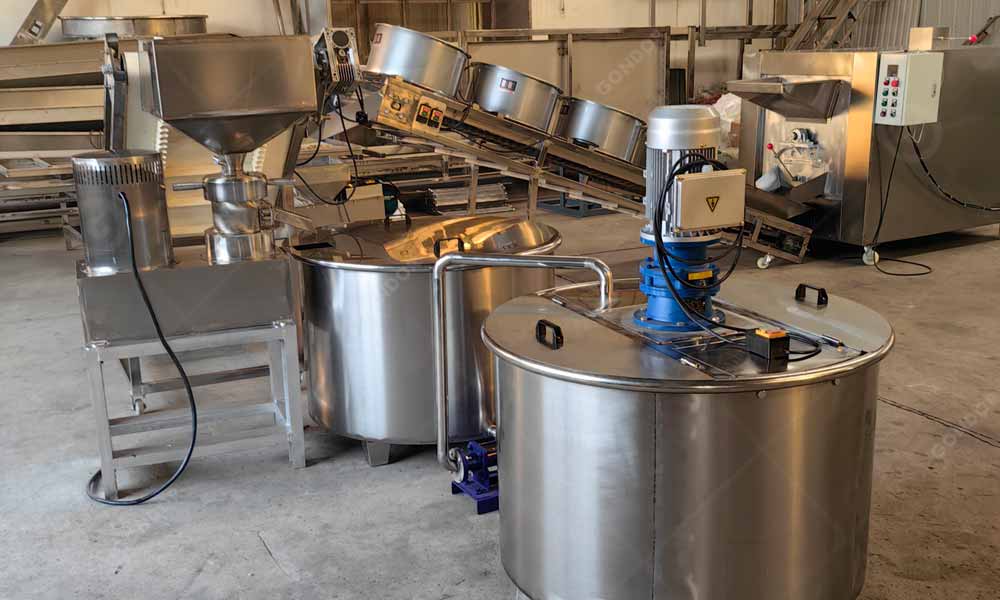
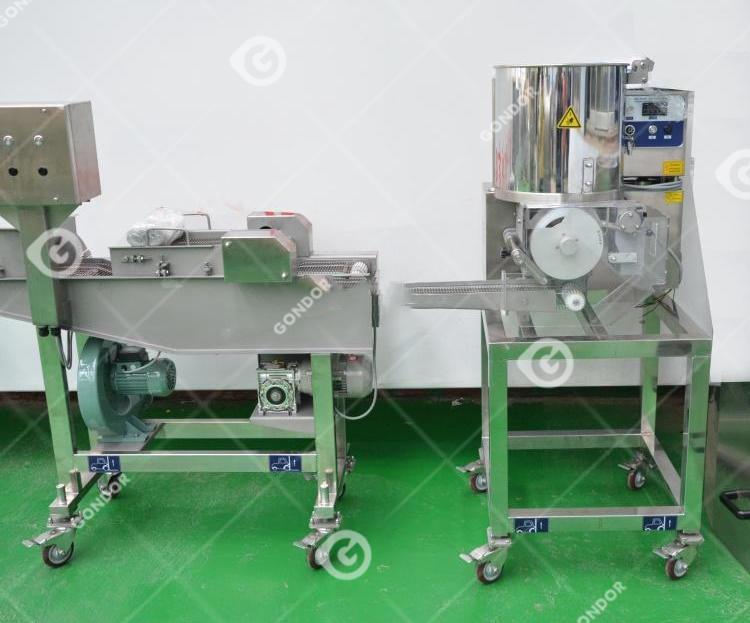
Molding machines: Shape chocolate into bars, sjokolade, or coatings.
How can advanced machinery improve the process of producing chocolate?
High-quality equipment ensures efficiency, konsekwentheid, en voortreflike kwaliteit van die produk. Gondor Machinery’s solutions include:
Precision grinding and refining machines for ultra-smooth textures.
Intelligent tempering systems for perfect cocoa butter crystallization.
Automated production lines to improve efficiency and maintain quality.
How can Gondor Machinery help optimize my chocolate production?
By Gondor Masjinerie, we provide tailored solutions for chocolate manufacturers, whether you’re a small artisan chocolatier or a large-scale producer. Our expert team is ready to help you optimize the process of producing chocolate with the latest technology. Looking to enhance your chocolate production? Contact Gondor Machinery today and discover how our advanced equipment can take your business to the next level!
Ons tegniese span bied 24 uur per dag (24/7) ondersteuning met vinnige reaksietye, verseker dat jy omvattende advies oor ons produkte ontvang en voordeel trek uit ons uitgebreide ingenieurskundigheid. Ons is daartoe verbind om jou besigheid te ondersteun, ongeag of jy 'n bestelling by ons plaas.
Om die beste ervarings te bied, ons gebruik tegnologieë soos koekies om toestelinligting te stoor en/of toegang te verkry. Toestemming tot hierdie tegnologieë sal ons in staat stel om data soos blaaigedrag of unieke ID's op hierdie webwerf te verwerk. Nie toestemming gee of terugtrek nie, kan sekere kenmerke en funksies nadelig beïnvloed.
Funksioneel
Altyd aktief
Die tegniese berging of toegang is streng nodig vir die wettige doel om die gebruik van 'n spesifieke diens moontlik te maak wat uitdruklik deur die intekenaar of gebruiker versoek word., of vir die uitsluitlike doel om die oordrag van 'n kommunikasie oor 'n elektroniese kommunikasienetwerk uit te voer.
Voorkeure
Die tegniese berging of toegang is nodig vir die wettige doel om voorkeure te stoor wat nie deur die intekenaar of gebruiker versoek word nie.
Statistiek
Die tegniese berging of toegang wat uitsluitlik vir statistiese doeleindes gebruik word.Die tegniese berging of toegang wat uitsluitlik vir anonieme statistiese doeleindes gebruik word. Sonder dagvaarding, vrywillige nakoming aan die kant van jou internetdiensverskaffer, of bykomende rekords van 'n derde party, inligting wat vir hierdie doel alleen gestoor of opgespoor word, kan gewoonlik nie gebruik word om jou te identifiseer nie.
Bemarking
Die tegniese berging of toegang word vereis om gebruikersprofiele te skep om advertensies te stuur, of om die gebruiker op 'n webwerf of oor verskeie webwerwe vir soortgelyke bemarkingsdoeleindes na te spoor.