

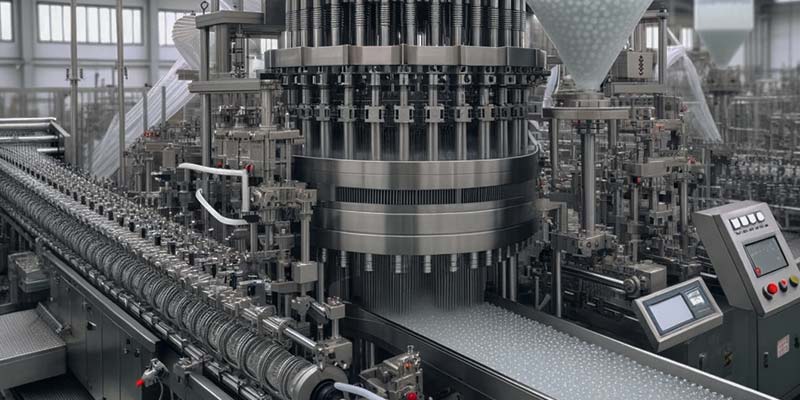
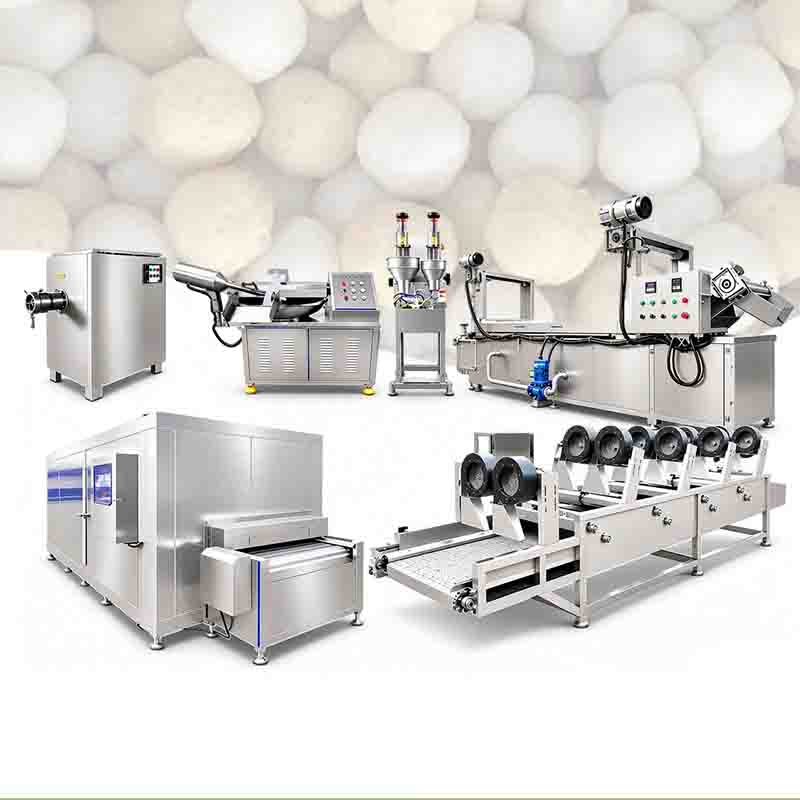
GD-MMPL Automatic Meatball Production Line
Automatic meatball production line answers those points by linking raw material handling, mixing, forming, thermal processing, cooling and freezing into one continuous operation.
Core steps run inside enclosed or semi-enclosed stainless steel equipment. Work that once depended on an operator’s judgment is transferred to machine settings.
Meatball making looks straightforward until the batch changes. The same recipe can produce a firm, springy ball in the morning and a loose one in the afternoon if the paste temperature drifts a few degrees or the portion weight shifts by a couple of grams. In a manual or semi-automatic workshop, that difference is usually caught by an experienced operator. The judgment is real, but it lives with the person, not with the process.
How the Meatball Production Line Works
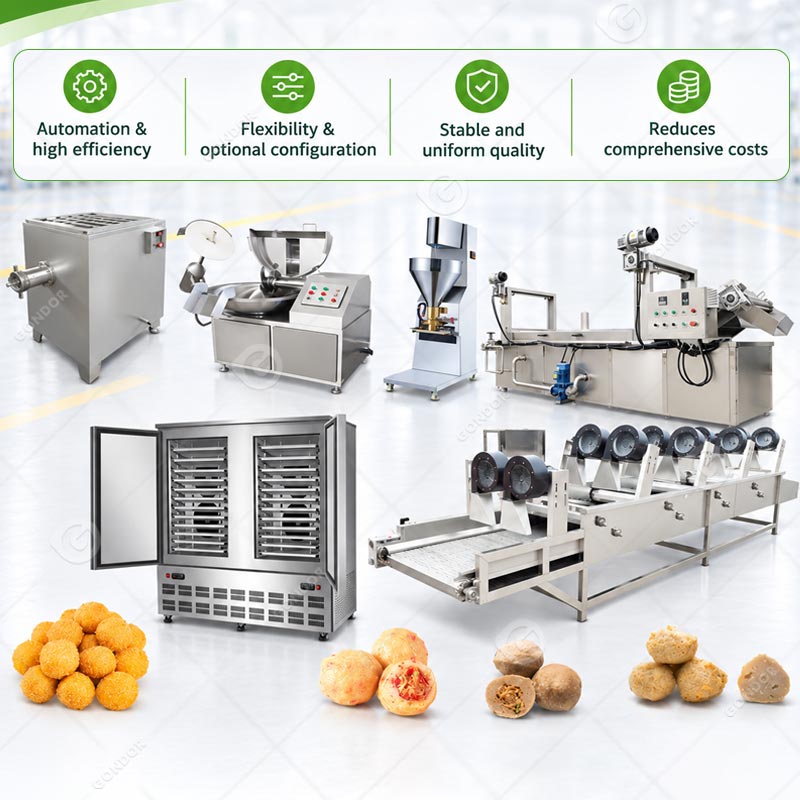
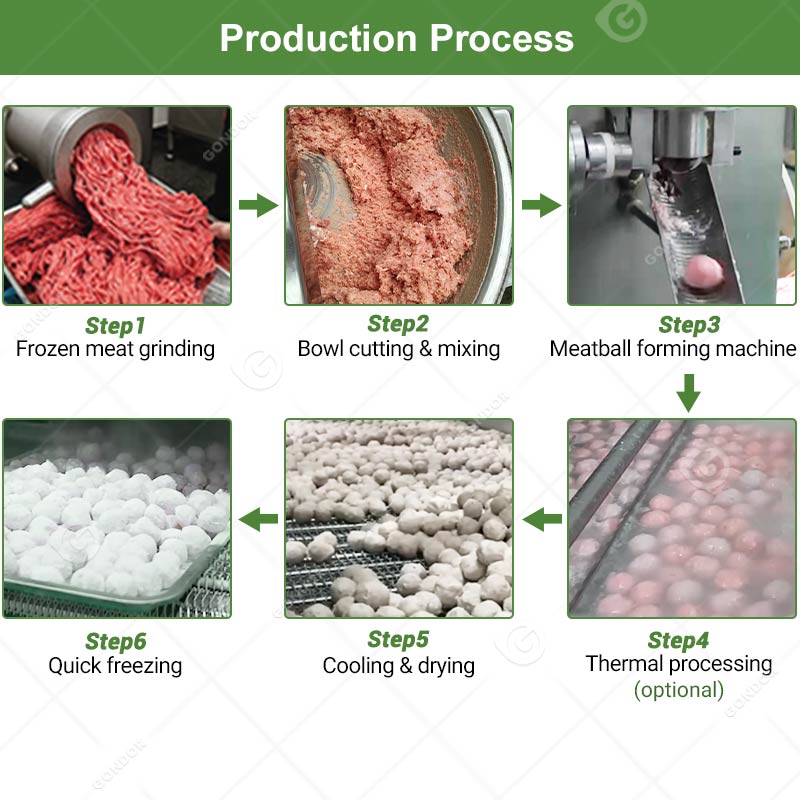
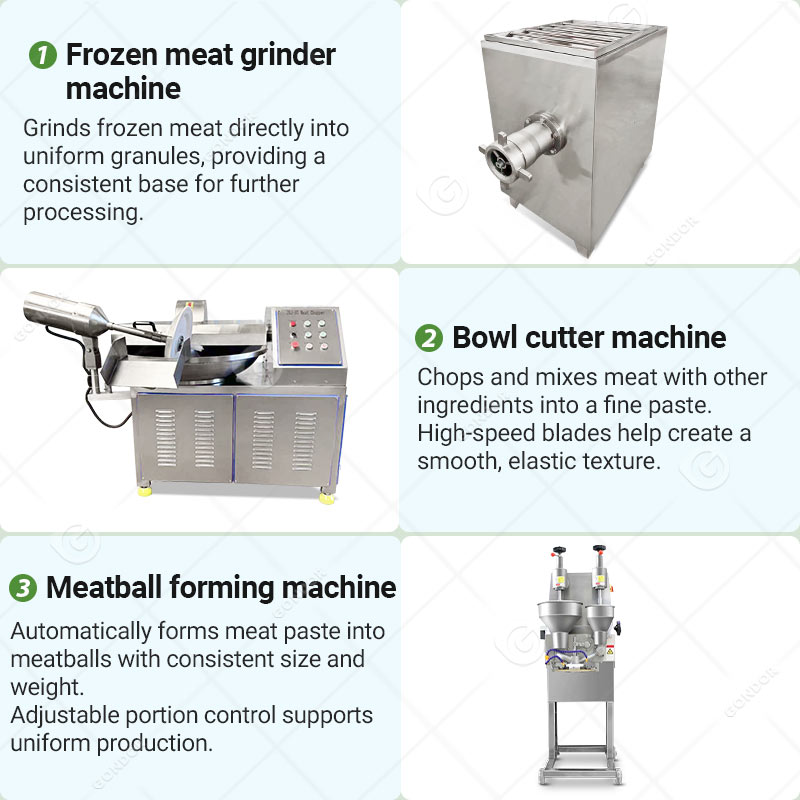
The process runs in six stages: frozen meat grinding, bowl cutting and mixing, forming, thermal processing, cooling and drying, then tunnel freezing.
Configure the Line Around Your Meatball Product
| Product | Typical configuration | What to check in a product trial |
|---|---|---|
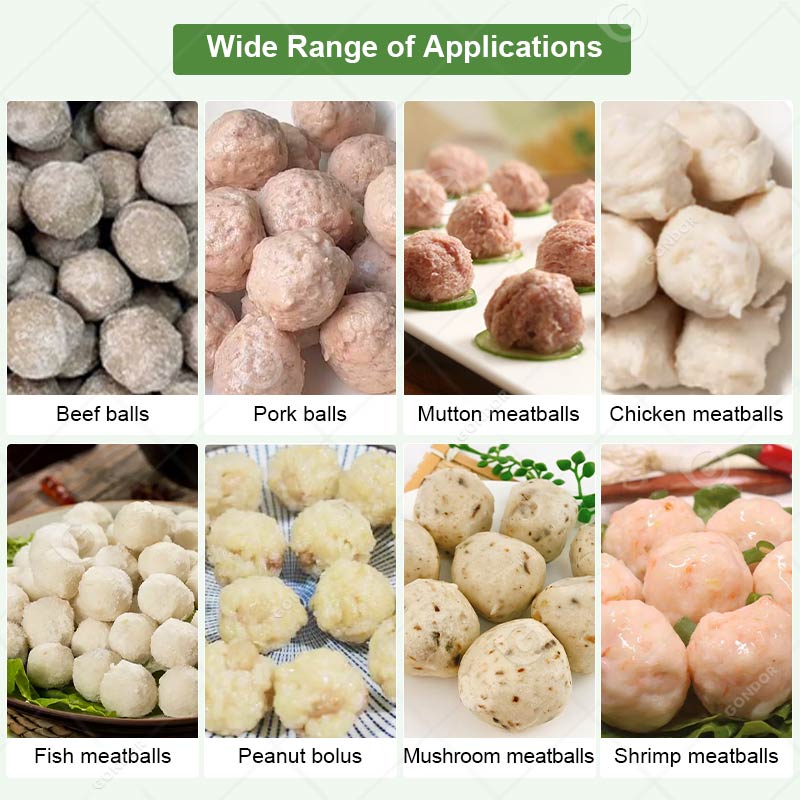
| Solid beef, pork, or chicken meatballs | Grinding and mixture preparation, solid-ball forming, water cooking, and cooling. Add a freezer when the line needs to deliver frozen product. | Diameter and weight variation, shape after cooking, and appearance after cooling or freezing. |
| Fried meatballs | Mixture preparation and solid-ball forming followed by a continuous fryer and cooling. Confirm any drainage, oil removal, or freezing equipment required. | Surface color, deformation during transfer, and product condition as it leaves the cooler. |
| Fish balls | Feed deboned fish mince or prepared fish paste to the appropriate preparation and forming stations. Choose the cooking route for the finished product. | Paste consistency and temperature at the former, roundness, and finished texture. Whole-fish preparation is specified separately when needed. |
| Stuffed meatballs | Specify a dedicated stuffed-ball former or forming setup for the outer mixture and the center filling. | Filling position, shell coverage, and leakage after cooking. Confirm the output using the actual filling and outer mixture. |
D-MMPL Reference Station Specifications
| Station | Reference electrical rating | Reference capacity or selection basis |
|---|---|---|
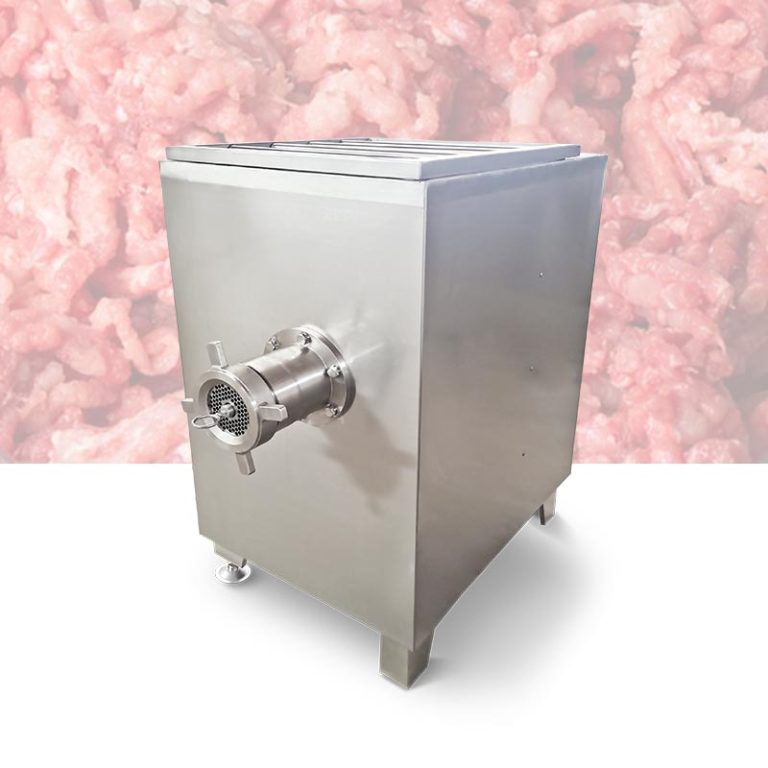
| Frozen meat grinder | 380 V, 5.5 kW | 500 kg/h |
| Bowl cutter | 380 V, 4.1 kW | 15 kg per batch |
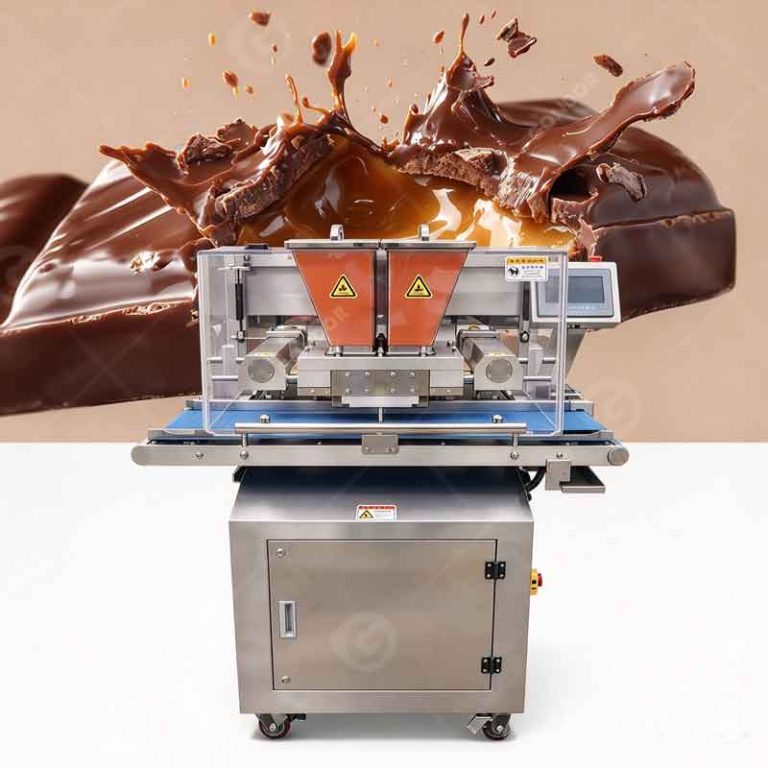
| Meatball former | 220 V, 1.1 kW | Approx. 280 pieces/min for the reference station |
| Hot-water cooking module | 380 V, 40 kW | Selected for the cooking process and required output |
| Continuous fryer | 380 V, 48 kW | Selected for the frying process and required output |
| Cooling and surface drying | 380 V, 3.5 kW | Matched to product temperature and downstream handling |
| Tunnel freezer | 380 V, 20 kW | 100 kg/h for the published reference unit |
These figures describe individual reference stations. The former rate is in pieces per minute, the bowl cutter is rated per batch, and the grinder and freezer are rated by mass per hour. Ask for the proposed equipment list and station-by-station capacities, along with a layout, the electrical supply requirements, and the total connected load for that configuration.
Engineering and Equipment
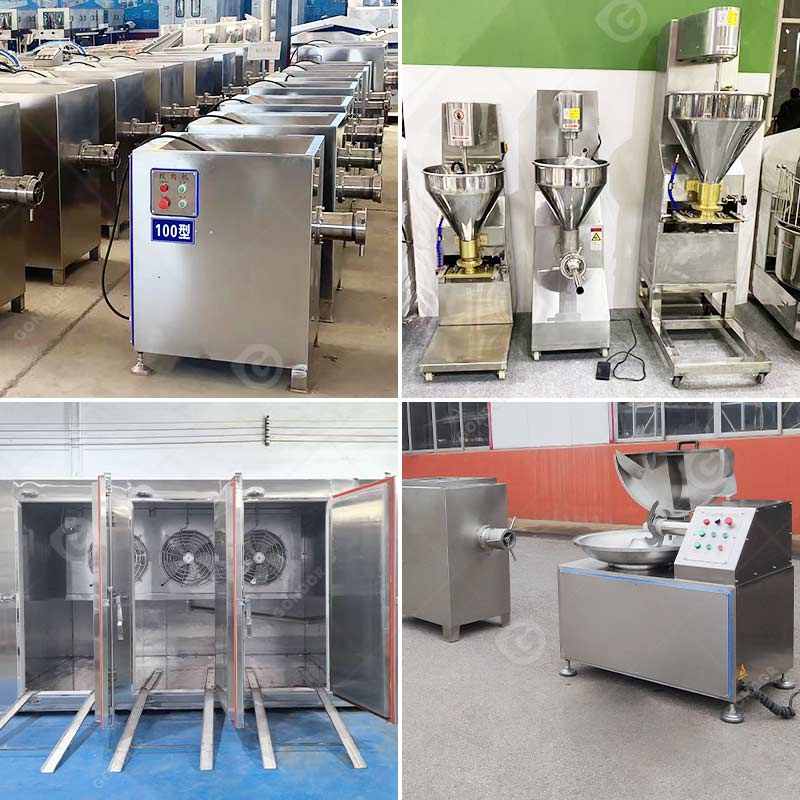
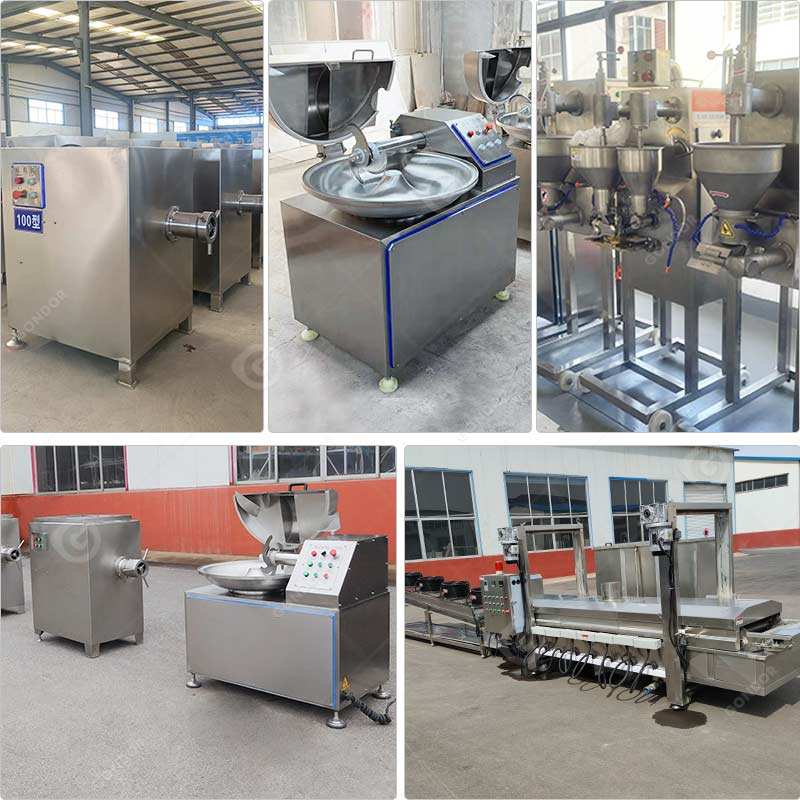
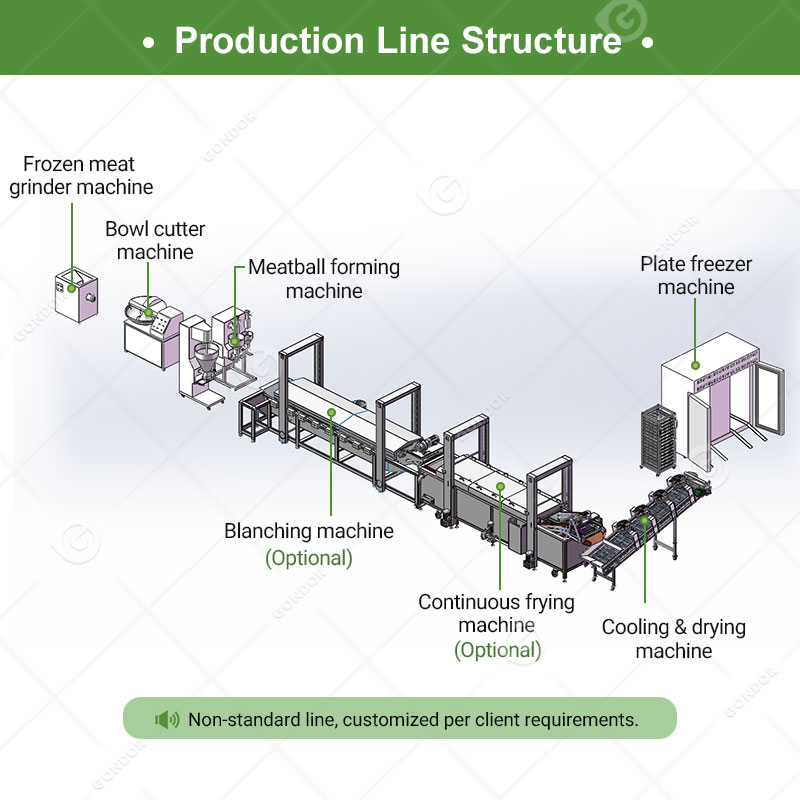
The line is made up of the following units. Each can be configured on its own or combined into a route that suits the product.
Frozen meat grinder. Takes frozen material directly and delivers uniform granules as feed for the bowl cutter. It also works as a standalone unit for other meat preparation steps.
Bowl cutter.
The core unit of the line. High-speed blades cut, mix and emulsify, and every food-contact part is made of food-grade stainless steel. Blade condition determines paste fineness and protein extraction, so tooling should be reviewed as part of routine maintenance.
Forming machine.
Receives the prepared paste and forms balls continuously. Weight and size are adjustable, and mould changes switch the shape and specification. Wear parts and blades are consumables and are worth including in the first spare parts order.
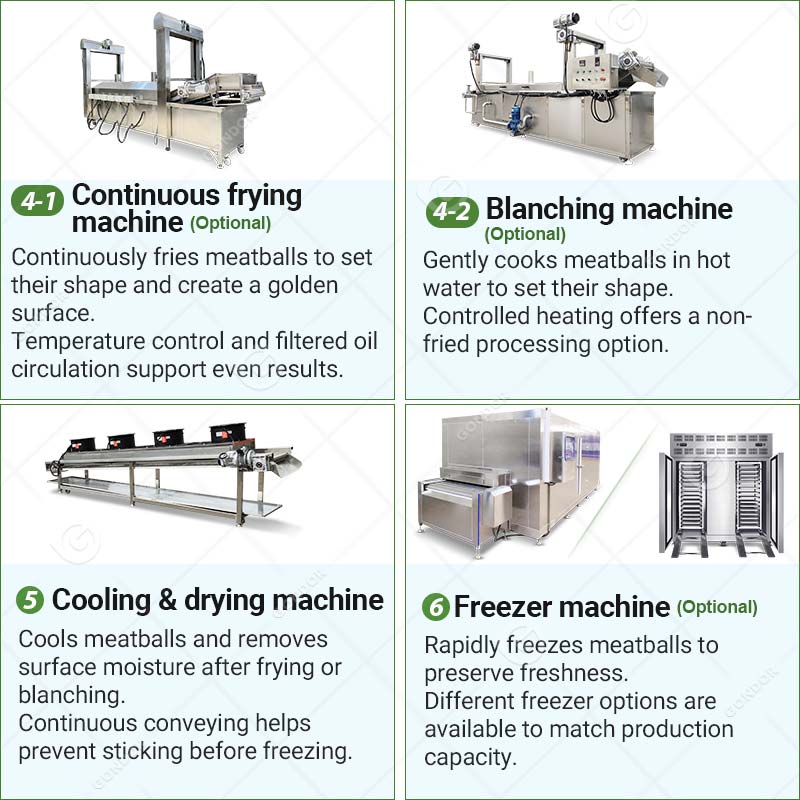
Continuous frying machine, optional.
The control cabinet and feed inlet support section-based temperature control. Oil circulation and filtration even out the colour and limit consumption. This unit suits products that need a fried flavour and golden surface.
Blanching machine, optional.
A temperature-controlled hot water tank carries out low-temperature cooking. It suits a low-fat or non-fried positioning for meatballs and fish balls.
Cooling and drying machine.
Drops the temperature quickly and removes surface water, stopping balls from sticking and easing the load on the freezer.
Tunnel freezer.
Fast freezing with strong cold airflow takes the core below minus 18 C and keeps the line running without a bottleneck at the final stage.
The line is built with food-grade stainless steel, and the core processes run enclosed or semi-enclosed. Units are laid out in process order to cut down on material transfer. The line connects to a frozen meat grinder at the front and a ten-head weighing packer at the back, and it can also join existing mixing, seasoning or packing systems. Voltage is specified to match site conditions, and OEM and ODM service is available.
In what scenarios can a meatball processing production line be used?
Frequently Asked Questions
Can we keep our existing mixer, cooker, or freezer?
Yes, when the existing equipment can handle the required rate and connect to the proposed line. Send the machine models, inlet and outlet heights, available floor space, and expected transfer method. The quotation can then identify the new equipment and any transfer or controls work needed to connect it.
Can one configuration make both solid and stuffed meatballs?
Specify both products when requesting a proposal. The supplier can evaluate the forming setup and tooling for each recipe, along with the changeover steps. Confirm the weight and diameter range, center-fill performance, and rate for each product using representative samples.
Are cooking, freezing, and packaging included?
The included stages are listed in the quotation. Specify hot-water cooking or frying if the line will cook the product, and state whether it needs to discharge chilled, frozen, or ready for a separate process. If weighing or packing is part of the project, provide the pack weight and format so that equipment can be scoped separately.
Request a Meatball Production Line Quote
Send the following details so Gondor can recommend a forming setup and match the upstream and downstream equipment to your product.
- Raw material and texture. Meat type, frozen blocks or prepared mixture, approximate particle size, and the texture you want after cooking.
- Ball specification. Target diameter and weight, solid or stuffed format, and a sample or product photo if available.
- Output and discharge condition. Target kg/h or kg per shift, available running hours, and whether the target is measured after forming, cooling, or freezing.
- Processing and packing route. Water cooking or frying, required cooling or freezing, pack format, and the equipment you plan to keep.
- Installation details. Workshop layout, installation country, electrical supply, and available water, drainage, steam, or refrigeration utilities as applicable.