

Oorsig van die ysblokmasjienverkrygingsprojek
In die vinnig ontwikkelende gasvryheid en kos & drank sektore, die strewe na hoë-end estetika het 'n massiewe vraag na premium gedryf, helder ys van kunsmatige gehalte.
Die kliënt vir hierdie projek is in Raipur gebaseer, Indië, en bedryf tans suksesvolle hotel- en troubeplanningsondernemings.
Erkenning van 'n markgeleentheid, die kliënt het beplan om 'n nuwe onderneming te loods: vervaardiging en verskaffing van spesialiteit, hoë-helder ys na ander luukse hotelle, tralies, en geleentheidslokale in die streek.
Die aanvanklike konsultasie het gefokus op die verkryging van industriële toerusting wat in staat is om 'n daaglikse produksiedoelwit van te bereik 2,500 kg. Die kerndoelwit was om 'n fasiliteit te vestig wat in staat is om 'n verskeidenheid kunsmatige ysvorms te vervaardig—soos spiese, groot blokkies, sfere, lang blokkies, en klippie-ys—wat almal baie gesog is deur kroegmanne en premium spyseniers.
Hierdie verkrygingsvoorstel gee besonderhede oor die komplekse evalueringsproses, beklemtoon hoe tegniese konsultasie 'n aanvanklike konsep in 'n hoogs haalbare omskep het, pasgemaakte toerustingkonfigurasie aangepas by die praktiese vereistes van kommersiële ysblokmasjien.
Kliëntvereistes vir ysmaaktoerusting
Tydens die aanvanklike konsultasie, die kliënt het 'n omvattende stel vereistes uiteengesit gebaseer op hul visie vir die nuwe besigheid. Behalwe om hul bestaande hotelbedrywighede te ondersteun, die primêre doelwit was om 'n sentrale verskaffer te word, vereis toerusting wat beide robuust en betroubaar is.
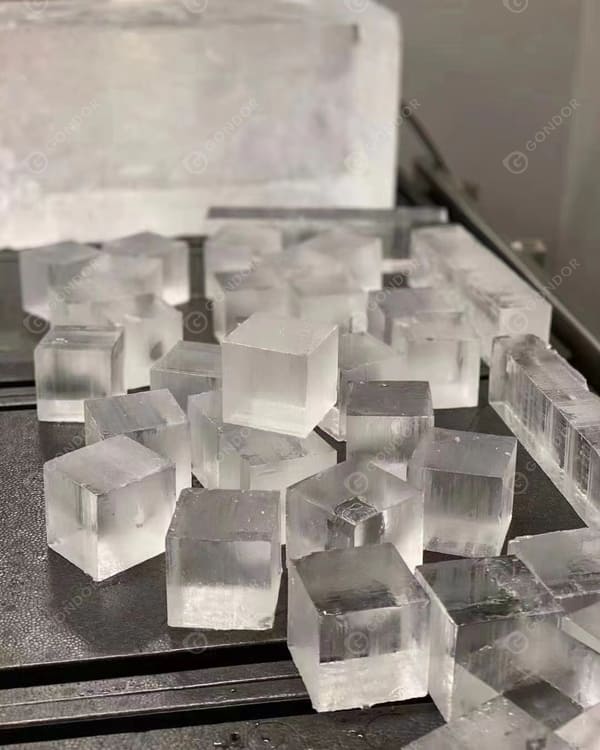
Produksiekapasiteit was 'n sleutelfokus van die bespreking. Die kliënt het aanvanklik 'n daaglikse uitset van 2,500 kg om 'n voldoende toevoer vir hul hotelnetwerk te verseker. Egter, hulle het ook streng standaarde gehad ten opsigte van die voorkoms van die finale produk. Die ys moes heeltemal helder wees, vry van die bewolkte onsuiwerhede wat dikwels in ys van standaardmasjiene voorkom; dit het 'n gespesialiseerde vriesproses vereis wat opgeloste gasse uit die water laat ontsnap.
Produkverskeidenheid was ook deurslaggewend. Die kliënt het visuele verwysings verskaf wat ses afsonderlike ysvorms vir hul produkkatalogus spesifiseer: lang spiese vir hoëbalbrille, groot blokkies om spiritus netjies te bedien, perfek ronde sfere, standaard deursigtige blokkies, lang blokkies, en kleiner klippie-ys. Hy het vereis dat die ysblokkies aan die standaardafmetings voldoen wat in die wêreldwye kroegbedryf gebruik word.
Derde, aangesien dit 'n nuwe sake-onderneming is, striking a balance between initial capital investment and operational feasibility is crucial. Although no strict budget limits were set at the outset, the client required a solution that would neither occupy excessive space nor incur high labor costs; gevolglik, strategic considerations regarding equipment selection were essential.
Challenges in Ice Block Machine Production
While evaluating the client’s requirements, our technical team identified several noteworthy challenges and common misconceptions—issues typical of entrepreneurs entering the specialized food processing machinery sector.
The most significant challenge stemmed from a fundamental misunderstanding of commercial ice-molding technology. The client initially envisioned using a single high-capacity machine—swapping molds as needed—to mass-produce (teen 'n koers van 2,500 kg per dag) al ses soorte spesialiteit-vormige ys.
Egter, industriële toerusting wat ontwerp is vir grootskaalse helder ysproduksie lewer tipies massiewe soliede blokke eerder as verfyn, vooraf gevormde vorms.
Verder, terwyl masjiene in staat is om spesiale vorms direk te vorm (soos sfere of lang stawe) bestaan, hul uitset word beperk deur die stadige rigtingvriesproses wat nodig is om absolute helderheid te verkry. 'n Enkele direkte gieteenheid kan slegs ongeveer oplewer 15 kg per bondel. Ontmoeting met die 2,500 kg daaglikse teiken met behulp van hierdie tegnologie sal 'n onprakties groot aantal persoonlike eenhede vereis, lei tot ernstige ruimtebeperkings en begrotingsoorskryding.
Nog 'n uitdaging was om 'n realistiese produksieskaal te bepaal. Nadat u die fisiese beperkings en die hoë koste - meer as $70 000 - van 'n enkele 3-ton industriële ysmasjien verstaan het, die kliënt het die markvraag op die kort termyn herevalueer. Hulle het dit uiteindelik besef vir 'n beginverskaffer in hul streek, 'n aanvanklike kapasiteit van 100 aan 200 kg vir spesifieke vorms was 'n meer pragmatiese doelwit.
Ons Tegniese Aanbevelings
Om die kliënt se komplekse vereistes te balanseer met die fisiese realiteite van termodinamika en meganiese ontwerp, ons projekbestuurder het twee afsonderlike fasiliteitkonfigurasies voorgestel, uiteindelik sterk aanbeveel 'n meer pragmatiese, modulêre benadering.
Hierdie pasgemaakte oplossing stel operateurs in staat om groot blokke in presiese afmetings te sny, wat die produksie van yspilare moontlik maak, ekstra groot blokkies, en standaardblokkies van dieselfde rou blok. Aangesien klippie-ys nie doeltreffend geproduseer kan word deur groot blokke te sny nie, ons beveel aan om 'n toegewyde kommersiële klippie-ysmasjien by te voeg.
Vir sferiese ys met gladde, afgeronde rande, ons stel voor om voorafgesnyde ekstragroot blokkies saam met 'n aluminium-ysbalpers te gebruik. Hierdie konfigurasie verminder die fasiliteit se voetspoor en algehele toerustingkoste aansienlik, terwyl dit groot buigsaamheid bied om voorraad aan te pas op grond van hotelvereistes.
Toerusting Oplossing
Gebaseer op die aanvaarde strategie (Opsie 2), ons het 'n voorlopige toerustingpakket ontwerp wat aangepas is vir die kliënt se hersiene teiken van ongeveer 100–200 kg per vorm.
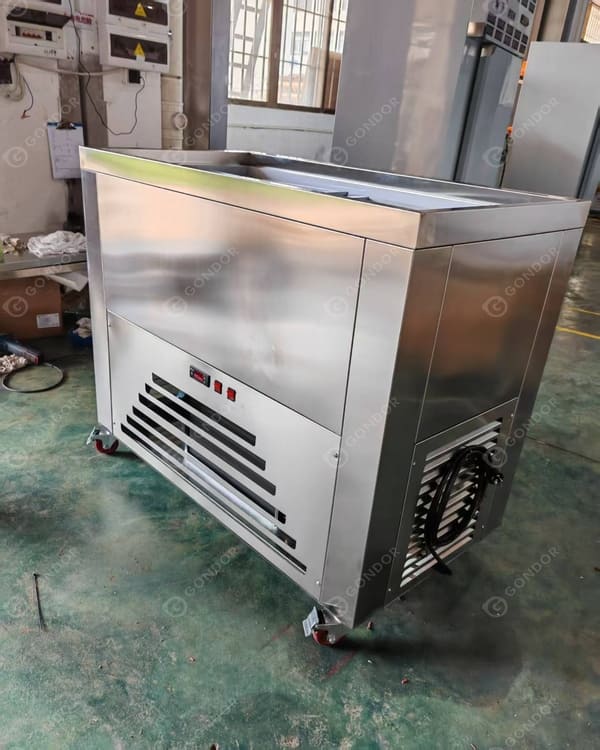
1. Kommersiële deursigtige ysblokmasjien
Dit is die kern van die produksielyn. Gebruik 'n gesofistikeerde sirkulerende waterstelsel, dit vries water in lae, lugborrels uitstoot om te verseker 100% deursigtigheid.
| Spesifikasie | Besonderhede |
|---|---|
| Geskatte kapasiteit | 200 – 500 kg / 24 ure (Aangepas vir opstartfase) |
| Materiaal | SUS304 Voedselgraad-vlekvrye staal |
| Gewig van ysblok | Standaard 5kg of 10kg blokke |
| Verkoelingsmetode | Lugverkoeling / Water Verkoeling opsies |
2. Presisie ys snymasjien (Bandsaag)
'n gespesialiseerde, operateur-veilige snytafel wat spesifiek ontwerp is vir bevrore materiaal, skoon te verseker, breukvrye snye.
| Spesifikasie | Besonderhede |
|---|---|
| Materiaal | SUS304 vlekvrye staal tafel en lem |
| Verstelbaarheid | Multi-as verstelbare gidse vir verskillende kubus-/spiesafmetings |
| Veiligheidskenmerke | Bladbeskermer, noodstop, waterdigte motor |
3. Kommersiële Pebble Ice Maker
'n Selfstandige eenheid wat uitsluitlik toegewy is aan die vervaardiging van die koubare, vinnig afkoelende klippie-ys benodig vir sekere skemerkelkies en gebeurtenisuitstallings.
| Spesifikasie | Besonderhede |
|---|---|
| Daaglikse Uitset | 150 kg / 24 ure |
| Bergingsbak | Geïntegreerde hoë-digtheid poliuretaan geïsoleerde bak |
Konsultasie met ons spesialis
Aan die begin van die bespreking, die kliënt het 'n massiewe daaglikse produksievereiste van gespesifiseer 2,500 kg. Toe gevra vir verwysingsbeelde, ons projekbestuurder, Renee, foto's ontvang wat pragtig vertoon, ambagsmatige ysvorms.
Renee het vinnig 'n gaping in begrip tussen industriële-skaal blok ys produksie en ambagsvorm-gebaseerde produksie geïdentifiseer, haar aangespoor om in te tree en leiding te gee.
Sy het 'n reeks verhelderende vrae gevra oor die kliënt se sakemodel. Toe die kliënt planne onthul het om as 'n sentrale verskaffer vir ander hotelle op te tree, Renee het verduidelik dat standaard 3-ton kapasiteit toerusting (geprys tussen $70,000 en $80,000) produseer massiewe 10 kg blokke elke 48 ure - baie anders as die klein, esteties aangename ysvorms wat die kliënt in die vooruitsig gestel het.
Gevolglik, die kliënt het hul vereistes hersien, versoek om 'n produksie volume van 100 aan 200 kg vir elke spesifieke ysvorm en spreek 'n begeerte uit om 'n enkele stuk toerusting vir gietwerk te gebruik.
Renee het geduldig visuele bewyse verskaf - foto's en video's direk vanaf die fabrieksvloer gestuur - om te demonstreer dat vorms vaste afmetings het, daardeur illustreer dat die vervaardiging van 'n enkele, universele masjien wat in staat was om veelvuldige vorms gelyktydig te produseer, was fisies onuitvoerbaar.
Teen die einde van die konsultasie, die kliënt het 'n behoefte vir een week aangedui om dit hoogs prakties aan te bied, pasgemaakte toerusting oplossing vir hul fabriek konsultante en personeel.
Waarom hierdie oplossing die beste keuse vir die kliënt is
Vir 'n groeiende verskaffer in die gasvryheidsbedryf, hierdie fabrieksgraad oplossing is die optimale keuse vir verskeie belangrike redes. Eerstens, dit bied ongeëwenaarde buigsaamheid. As 'n hotelkliënt skielik 5-duim-ysspiese in plaas van 2-duimblokkies versoek, die verskaffer hoef nie nuwe toerusting of pasgemaakte vorms te bestel nie; 'n eenvoudige aanpassing aan die yssnyer se gidse is voldoende. Hierdie veelsydigheid maksimeer die opbrengs op belegging (ROI).
Tweedens, die verhouding van voetspoor tot uitset is hoogs voordelig. In plaas daarvan om ses gespesialiseerde ysmasjiene met verskillende funksies te huisves, die opstelling vereis slegs een duidelike ysmasjien, een snyer, en een klippie-ysmasjien, aansienlike besparings in fabrieksvloerspasie tot gevolg het. Dit verminder die bedryfskoste vir die nuwe besigheid aansienlik.
Verder, dit verseker produkkonsekwentheid. Duidelike ysmasjiene waarborg 'n ongerepte, foutlose voorkoms in die kern van die ys, terwyl presisiesnyers eenvormige afmetings verseker. Vir verskaffers wat luukse troues en top-vlak hotelkroeë bedien, hierdie bestendige kwaliteit is 'n sleutelaandrywer van besigheidsgroei.
Watter faktore moet oorweeg word voordat 'n deursigtige ysmasjien gekoop word?
Wanneer kopers in industriële toerusting vir die voedsel- en drankbedryf belê—spesifiek in ysproduksie—moet kopers onderskei tussen standaardverkoelingstegnologie en duidelike ysvervaardigingstegnologie. Standaard ysmasjiene vries gewoonlik van buite na binne, lug en minerale in die middel vasvang en bewolkte ys tot gevolg hê; daarteenoor, hoë-end toerusting gebruik directional vries tegnologie (vries dikwels van onder af terwyl water geroer word). Kopers moet ook plaaslike watergehalte in ag neem; as mineraalinhoud buitensporig hoog is, voorbehandeling of tru-osmose stelsels mag nodig wees vir die watertoevoer.
How should production capacity be selected?
Overestimating capacity is a common pitfall. Buyers should calculate maximum daily demand and account for fluctuations during peak event periods. Egter, since ice is a consumable and storage requires significant energy, a more cost-effective approach is usually to select equipment with a capacity slightly above average daily needs and utilize well-insulated cold storage to handle peak demand, rather than purchasing an oversized unit that operates at an inefficient 30% load for most of the year.
Why must food processing equipment be made of stainless steel?
For any food processing equipment—including ice machines—the use of SUS304 or SUS316 stainless steel is a non-negotiable standard. From a regulatory standpoint, ice is classified as a food product. Vlekvrye staal verhoed nie net korrosie as gevolg van langdurige blootstelling aan vog en inhibeer bakteriese groei nie, maar voldoen ook aan internasionale voedselveiligheidsregulasies. Daarbenewens, dit verseker dat die toerusting 'n lang lewensduur in die vog behou, strawwe omgewings tipies van produksiefasiliteite.
Gereelde vrae
Hoe kies ek die regte kapasiteit vir 'n kommersiële ysmasjien?
Bereken jou gemiddelde daaglikse verbruik en voeg 'n by 20% buffer vir spitsvraag. Oorweeg jou koelbergingsvermoëns; om massiewe hoeveelhede ys te produseer, verg ewe massiewe vrieskasspasie om dit te stoor voor verspreiding.
Kan die masjien vir spesifieke spannings aangepas word?
Ja. As 'n ervare vervaardiger van toerusting, ons kan elektriese komponente opstel om by die plaaslike netwerkvereistes van enige land te pas, soos 220V/50Hz, 110V/60Hz, of 3-fase industriële krag.
Watter sertifisering is beskikbaar vir u industriële toerusting?
Ons masjiene kom tipies met CE-sertifisering vir die Europese mark en gebruik materiaal van voedselgraad (soos SUS304 vlekvrye staal) wat voldoen aan globale gesondheid- en sanitasiestandaarde vir voedselverwerkingsmasjinerie.
Hoe lank is die produksietyd vir 'n pasgemaakte masjien?
Standaardmodelle neem dikwels 15 aan 30 dae om te vervaardig, terwyl hoogs pasgemaakte fabrieksoplossings of industriële lyne met groot kapasiteit vereis 45 aan 60 dae om streng gehaltebeheer en toetsing te verseker.
Kan die masjien ooreenstem met bestaande produksielyne?
Absoluut. Ons ingenieurspan ontwerp modulêre toerusting wat naatloos met jou bestaande waterfiltrasiestelsels kan integreer, koelkamers, en verpakkingslyne.
Watter na-verkope ondersteuning word verskaf?
Ons bied omvattende ondersteuning insluitend operasionele handleidings, foutopsporing van video-oproepe, en 'n bestendige voorraad onderdele. Tegniese bystand is regdeur die leeftyd van die masjien beskikbaar.
Verskaf jy installasie leiding?
Ja. Terwyl baie van ons kleiner kommersiële eenhede plug-and-play is, groter fabrieksoplossings kom met gedetailleerde installasiediagramme, video-tutoriale, en afgeleë ingenieursondersteuning om u plaaslike tegnici te lei.
Hoe kan ek 'n kwotasie aanvra?
Jy kan 'n gedetailleerde kwotasie aanvra deur ons verkoopspan te kontak met jou teiken daaglikse kapasiteit, benodigde ysvorms, plaaslike spanning, en enige spesifieke ruimtelike beperkings binne jou fasiliteit.