


ompound chocolate bloom is the white haze, streaks, or spots that appear on molded bars and coated products after cooling or storage. Fat bloom develops when fats move or recrystallize at the surface. Sugar bloom develops when moisture dissolves surface sugar and leaves crystals behind as it evaporates. If a batch looked glossy at packing and turned white in the carton, start by finding where the defect first appeared. That helps you decide which records to check before changing the recipe or the cooling tunnel settings.
How to tell fat bloom from sugar bloom
| Defect | Typical appearance | What to check first |
|---|---|---|
| Fat bloom | A dull white or gray film, pale streaks, or patches that can feel slightly greasy | Fat grade and compatibility, filling oils, cooling settings, and temperature swings in storage or transit |
| Sugar bloom | শুষ্ক, rough, or grainy white marks, often where moisture collected | Product temperature at tunnel exit, packing-room dew point, surface moisture, and seal integrity |
Use appearance and texture as clues. Compare samples taken at the tunnel exit, after packing, and during storage. Marks that follow one lane of the belt give you a reason to check airflow and loading across the tunnel. A defect that appears only after delivery calls for a review of warehouse and transport temperatures as well as the packaging.
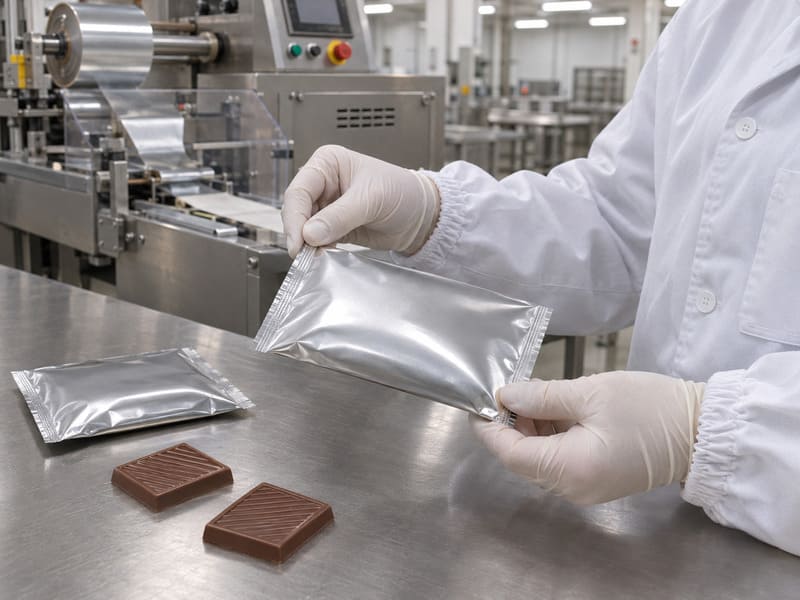
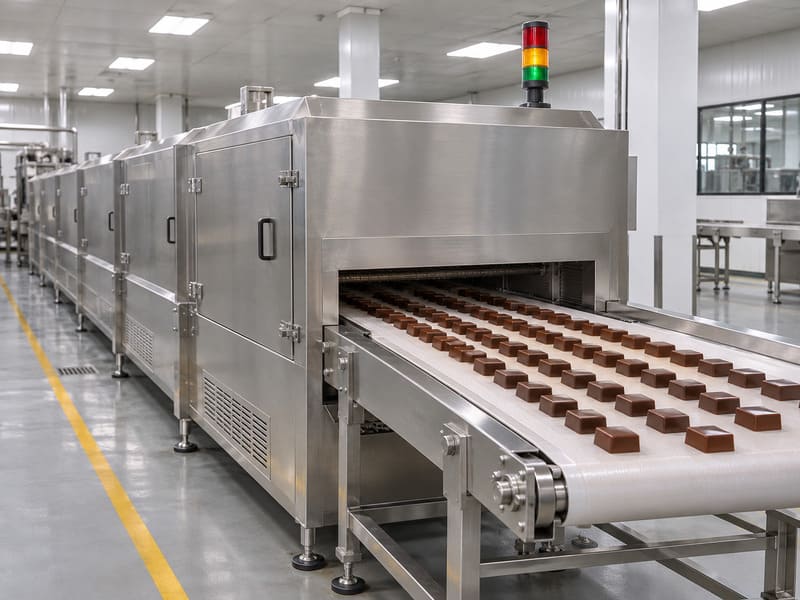
Four process controls that help prevent compound chocolate bloom
1. Check fat compatibility before adjusting the formula
Compound chocolate uses an alternative fat as its main fat. Confirm the grade in use and get its handling and cooling guidance from the supplier. If you use a lauric cocoa butter substitute, account for cocoa butter contributed by cocoa liquor or other ingredients. Also review the fats in fillings, inclusions, and rework. A change in the fat blend can soften a coating or alter how it sets at the same tunnel settings. Compare a small batch of the new blend with a batch made to the current formula. Research on cocoa butter and lauric fat compatibility
Lecithin and PGPR (polyglycerol polyricinoleate) can help tune flow for depositing or enrobing. Evaluate changes by measuring flow and checking coating thickness, mold release, and appearance during storage. A coating that flows well on the line still needs a shelf-life check for bloom.
2. Set the cooling tunnel for the product and line speed
Use the fat supplier’s recommended profile as the starting point. In a multi-zone tunnel, the entry and main cooling zones remove heat and set the coating. The exit zone helps bring the product to a temperature suitable for the packing room. Some fractionated-fat compounds benefit from a colder entry zone, so choose the cooling profile for the specific fat, product thickness, and line load. Record the air temperature in each zone and the actual temperature of the product at exit. Blommer’s cooling tunnel parameters for chocolate and compounds
Check time in the tunnel when throughput changes. Divide the effective cooled belt length by belt speed. ক 12 m cooled section at 1.5 m/min gives the product about 8 minutes in the tunnel. এ 3 মি/আমার, that drops to 4 মিনিট. After a speed change, check firmness, release from the mold or belt, and exit temperature at the center and edges of the belt.
3. Prevent condensation before wrapping and during storage
Measure the product’s surface temperature at tunnel exit and compare it with the packing-room dew point. যেমন, a bar leaving at 14 °C can collect condensation in a room with a dew point of 17 °সে. In that situation, review the exit zone or packing-room humidity. Once the product has set and the surface is dry, use suitable moisture-barrier packaging and check the seals.
Keep finished product in a cool, dry environment with a stable temperature. Around 15–20 °C can be a starting point for storage trials when it suits the formulation. Log temperatures through dispatch and delivery as well as in the warehouse, especially when investigating complaints tied to hot weather or a particular route.
4. Test a food-grade glaze when the product calls for one
If a panned or coated product needs a glossy finish, trial a food-grade glaze that is permitted for the product category and destination market. Compare glazed and unglazed pieces from the same batch. Assess shine, tackiness, স্বাদ, and bloom after storage. Use the same recipe, cooling profile, and packaging for both samples so you can see what the glaze itself changes.
How to confirm that a process change reduced bloom
Keep a control batch and change one factor at a time. For each batch, record the fat grade, piece weight or coating thickness, tunnel temperatures, বেল্ট গতি, exit surface temperature, and packing-room dew point. Photograph samples under the same light at fixed intervals. Calculate bloom rate by dividing the number of visibly affected pieces by the number inspected, then multiplying by 100. Record when the first marks appeared as well as how many pieces were affected.
Include the normal conditions the product will face in storage and distribution. If you use a heat or temperature-cycling test to compare two batches sooner, confirm the result with samples stored under the conditions expected in routine distribution.
Does compound chocolate need tempering?
Many compound coatings are formulated to set after melting and cooling without a conventional cocoa butter tempering cycle. The handling requirements depend on the specific fat system. Follow the supplier’s recommended melting, working, and cooling temperatures for the grade you use.
Cooling and coating equipment for your line
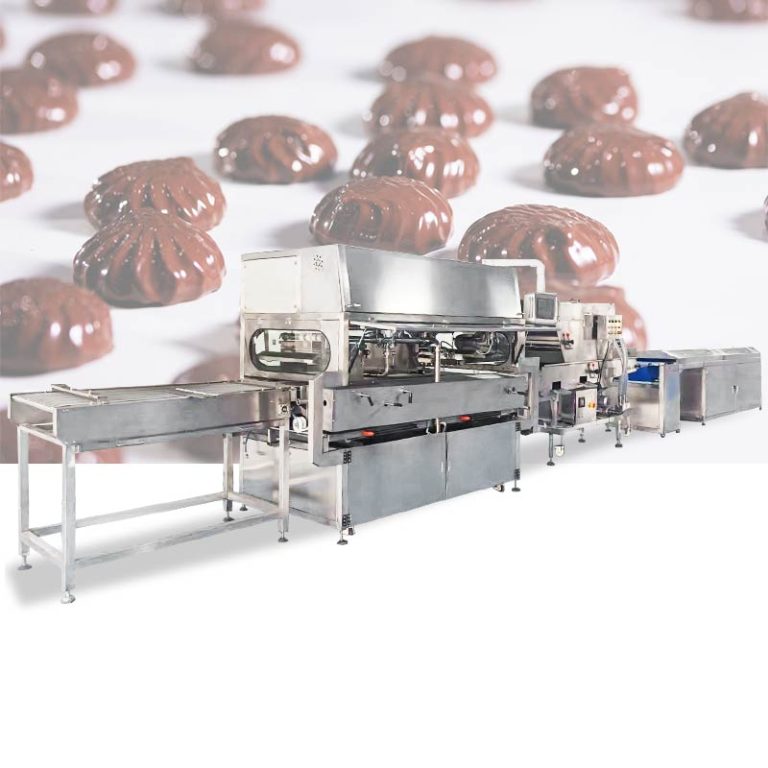
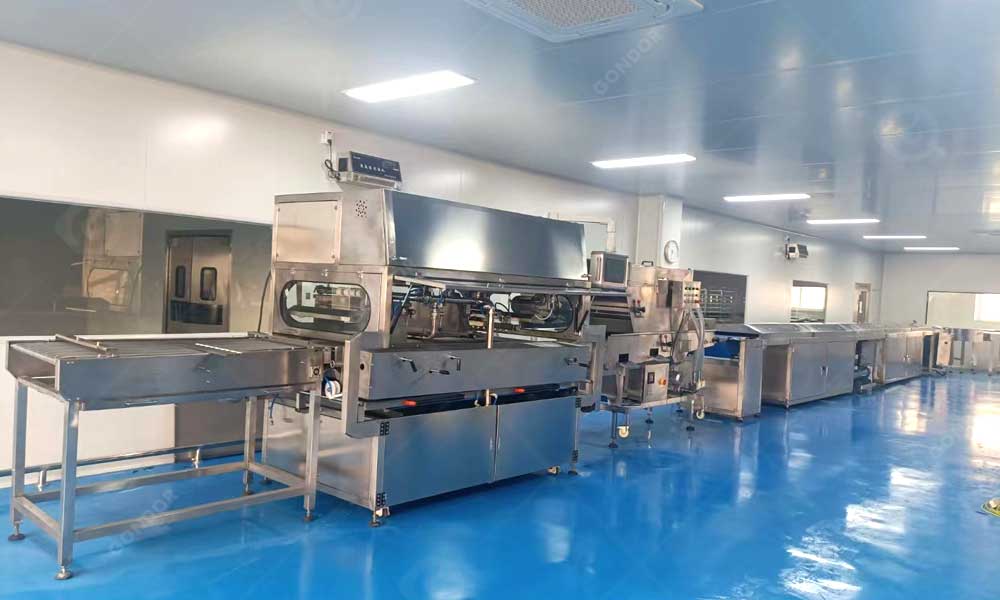
When sizing a tunnel for molded pieces or enrobed products, start with piece dimensions, coating thickness, target throughput in kg/h, and the cooling time measured in a trial. These details help determine belt width, effective cooled length, and the transfer to packaging. See the molding and cooling stages on Gondor’s chocolate making production line.
If you are planning a new line or investigating bloom on an existing one, share your product format, আউটপুট লক্ষ্য, and any available tunnel and exit temperature readings with গন্ডর মেশিনারি.