

Mass-Production Chocolate Decorating
Pastry chefs are well aware of the limitations of manual stringing: initially, the chocolate patterns are uniform and neat, but as work continues, the chocolate gradually solidifies within the piping bag, leading to hand fatigue and a rapid decline in product stability. This marks a key turning point between small-scale home production and mass-produced commercial production. This article will reengineer the standardized stringing process using a chocolate decorating machine, transforming manual procedures dependent on human experience into a stable, eficiente, and replicable industrial finishing process. As Gondor Machine, with over twenty years of experience in food machinery research and manufacturing, we have obtained ISO 9001, ISO 14001, ISO 45001, CE, BSCI, and ETL certifications. The process solutions shared below are based on practical experience on the production line.
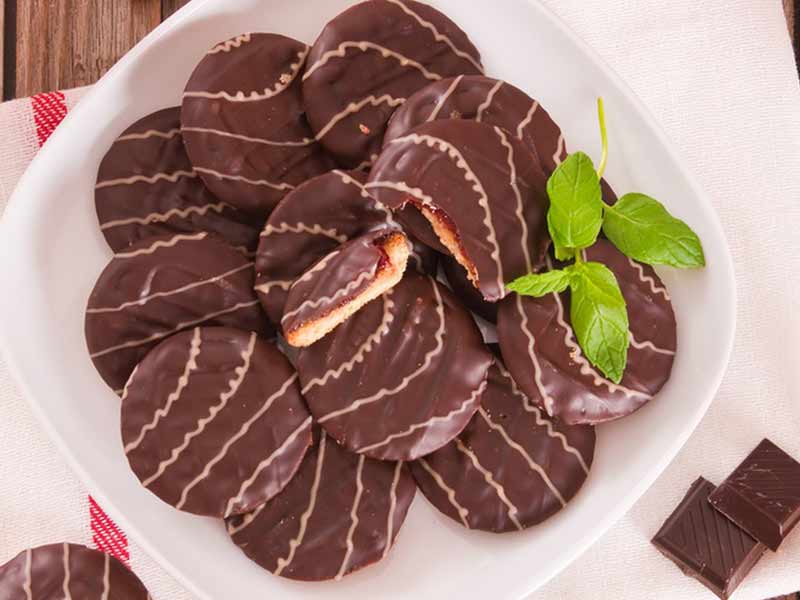
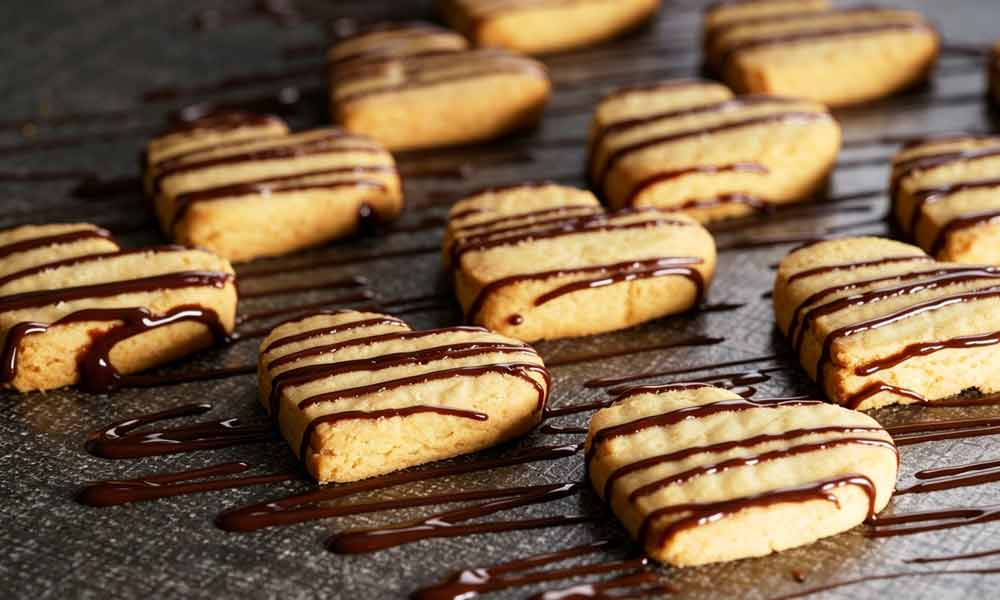
What You Need
For the base (makes about one tray):
- 60 plain wafer sheets or shortbread biscuits, fully cooled.
- Opcional: toasted nuts, frutos secos, or a sprinkle of sea salt.
For the drizzle:
- 1 kg couverture chocolate (real chocolate) or compound chocolate.
- If using real chocolate: 5–10% chopped tempered chocolate as seed, or a tempering machine.
- A pinch of neutral oil only if your chocolate runs too thick — use sparingly.
Equipo:
- A melting tank and, for real chocolate, a tempering unit.
- A chocolate enrober machine if you want a full coating first.
- The chocolate stringer decorating machine.
- A cooling tunnel to set the finish.
The chocolate choice matters more than the biscuit. Compound chocolate is forgiving and needs no tempering. Real chocolate gives a sharper snap and a glossier line, but it must be tempered before it reaches the nozzle.
The Machine Behind the Recipe
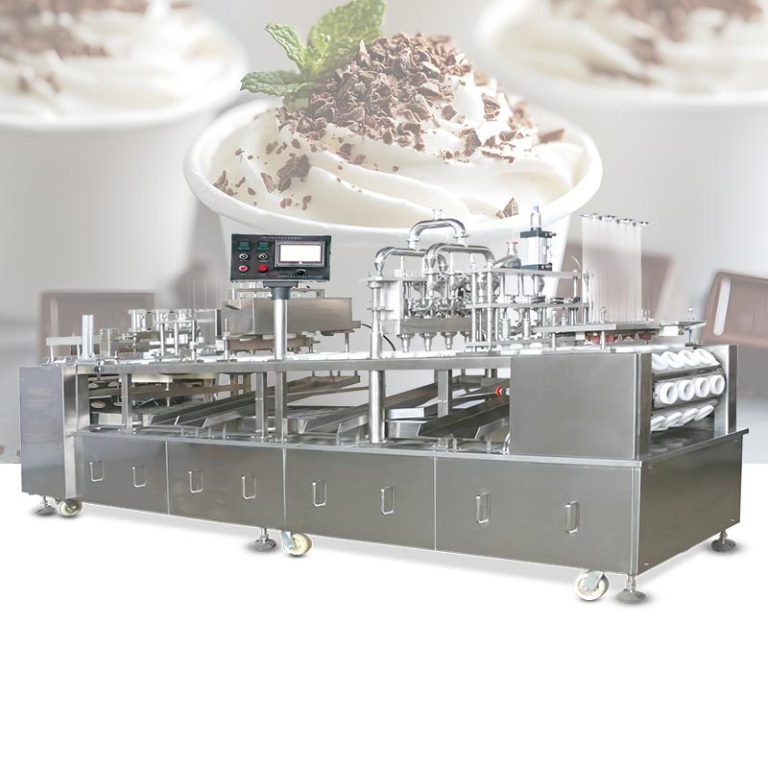
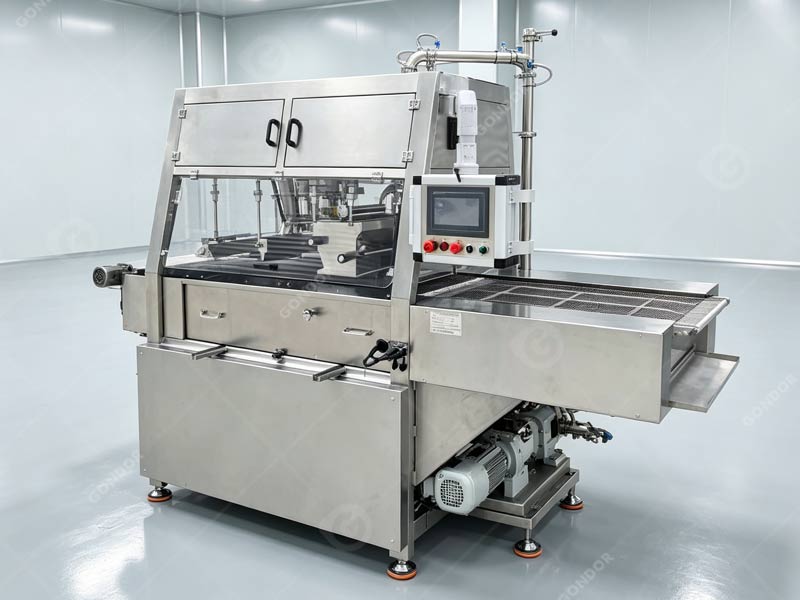
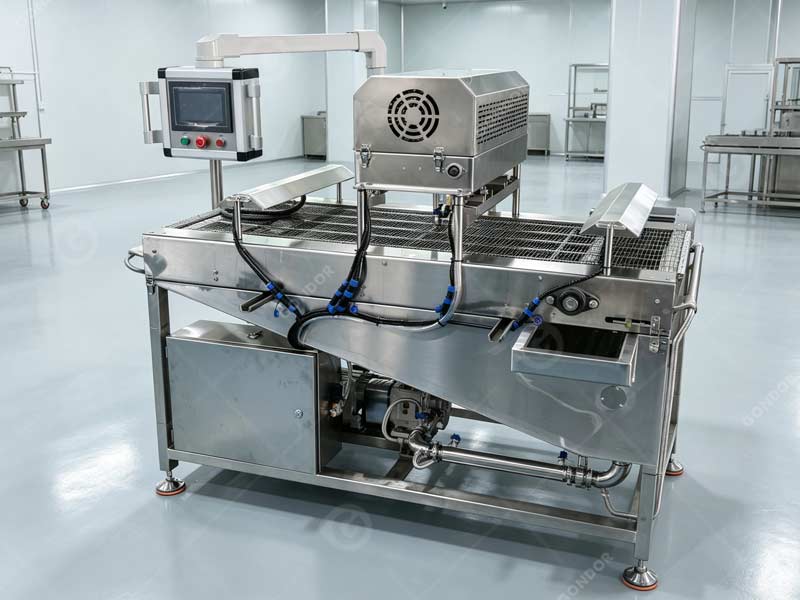
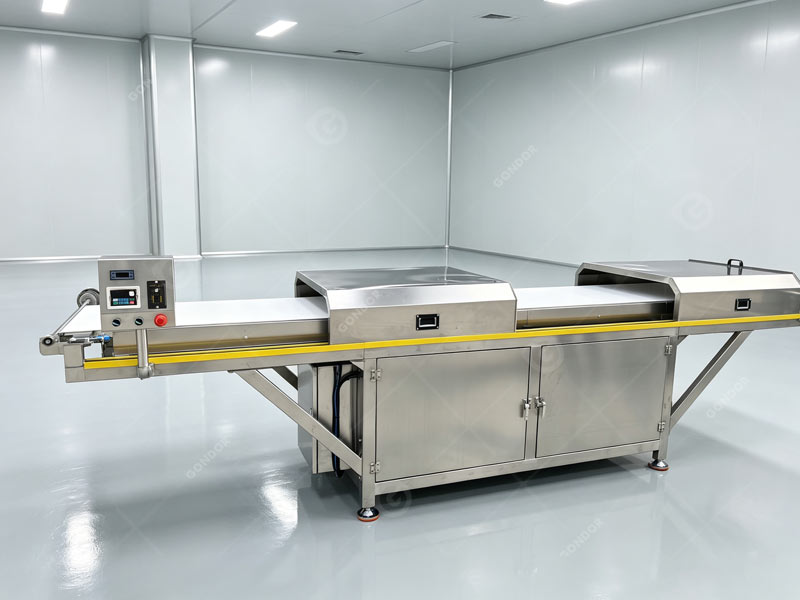
A máquina rociadora de chocolate sits in the line between the enrober and the chocolate cooling tunnel. Products move in on a mesh belt. Multiple nozzles swing across them on a servo-driven reciprocating arm, laying down pattern after pattern at the same speed as the belt.
| Spec (600 modelo) | Value |
| Decorating width | 550 milímetros |
| Chocolate output | 10–50 L/h |
| Fuerza | 7.5 kilovatios |
| Peso | 391 kilos |
| Dimensiones | 1900 × 1450 × 1800 milímetros |
| Control | Delta PLC, PID temperature control |
| Build | Acero inoxidable SUS304 de calidad alimentaria. |
Two details do most of the work. The hopper and pipes use double-jacketed heating with PID control, so chocolate stays fluid instead of crystallising in the line. A 100-mesh filter catches impurities before they reach a nozzle. Together they stop the two faults that ruin a drizzle: a blocked tip and a streaky line.
Six Steps for Chocolate Decorating Machine Operation
Melt the chocolate gently, then pour it through the filter into the heated hopper. Never load cold or lumpy chocolate. It will fight the pump from the first minute.
Real chocolate must be tempered before loading. Melt to about 45–50°C, cool to roughly 28–32°C depending on type, then hold at working temperature. Comp
Switch on the water jacket and the heated lines. Give the system time to reach a steady temperature. Rushing this step is the most common cause of a first-batch blockage.
Choose the nozzle and program the swing. Amplitude, velocidad, and position all adjust. Straight lines suit clean wafers. Waves and zigzags suit round biscuits.
Feed a few pieces through before the full tray. Check line thickness, spacing, and how the chocolate sits on the surface. Adjust flow or belt speed, not the recipe.
Run the batch. The nozzles track the belt, so every piece gets the same pattern. Move the product straight into the cooling tunnel. Let the lines set before packing.
Pattern Ideas Worth Trying
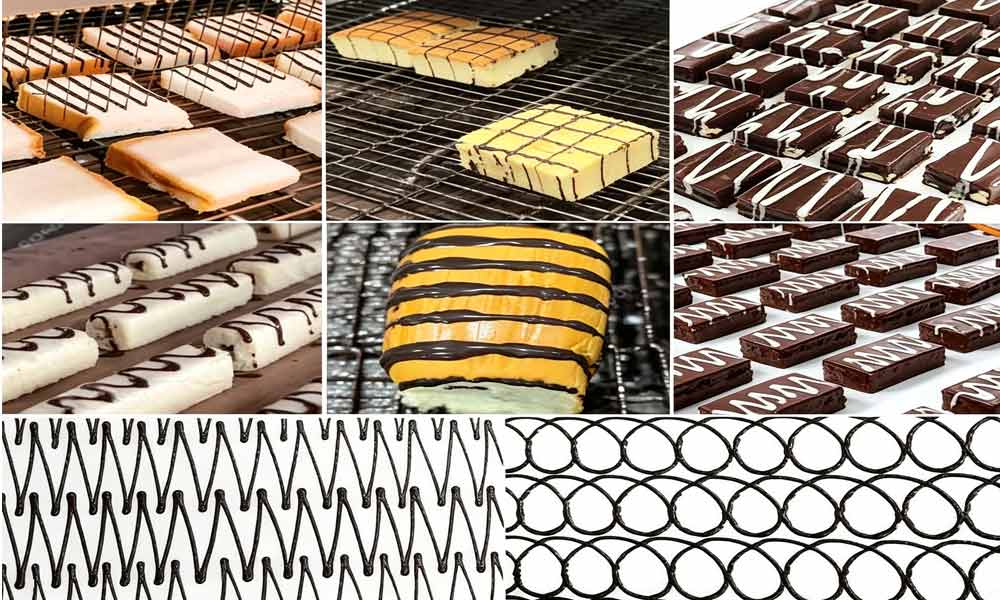
- Straight lines — thin, even stripes across a wafer. The classic.
- Zigzag — a fast back-and-forth that covers more surface with less chocolate.
- Waves — soft curves that suit cakes and brownies.
- Grid or crossing stripes — two passes at different angles. Bold and shelf-ready.
- Loops — used on cookies and chocolate pralines for a hand-finished look.
Interchangeable multi-hole nozzles make the switch quick. One machine, several products, no new purchase.
A Temperature Cheat Sheet
These are general guide figures. Your chocolate’s own spec sheet wins.
| Chocolate | Working range |
| Dark couverture | ~31–32°C |
| Milk couverture | ~29–30°C |
| White couverture | ~28–29°C |
| chocolate compuesto | ~40–45°C, hold steady |
Too hot and the line slumps. Too cool and it breaks or clogs. El precision rotor pump keeps flow steady, while a suck-back function stops drips when the nozzle pauses.
Three Major Operation Taboos
Questions Buyers Actually Ask
Turn This Recipe into Your Mass Production Line
When manual pouring reaches dozens of pieces, uneven line thickness and hand fatigue due to uneven shaping become common issues. This is the core difference between home-made and mass-produced products, but the Kryll pouring machine eliminates this gap completely. Whether you plan to produce wafers, galletas, or brownies, stable chocolate temperature, synchronized nozzle movement, and uniform conveying speed are essential for replicating recipes and achieving consistent patterns. If you are ready to scale up production, simply provide the base product dimensions, type of chocolate, and target output rate. Our engineers will design a complete pouring production line layout based on the pre-stage máquina industrial para templar chocolate, and arrange a trial run using your own chocolate and products. Don’t wait until material blockages, broken lines, or damaged packaging occur during actual production—contact us now to get a customized equipment solution and direct quotation, so that every poured product matches the sample exactly.