


Currently, in the commercial catering, ready-to-eat vegetable delivery, and large-scale food processing industries, medium and large fruits like pineapples, papayas, and cantaloupes have always been high-profit star products. However, before processing these fruits into finished products such as fruit platters, juices, and canned goods, manual peeling remains a major challenge for kitchen and processing plant managers.
Manual peeling is time-consuming and labor-intensive, and presents multiple problems. First, the operation speed is slow, resulting in high labor costs; second, uneven peeling control leads to the removal of a large amount of fruit flesh, causing a waste of up to 20% or even 30% of raw materials; third, the hard and rough texture of fruits like pineapples and cantaloupes poses a safety hazard, as employees are prone to cuts and other accidents during prolonged, repetitive mechanical operations.
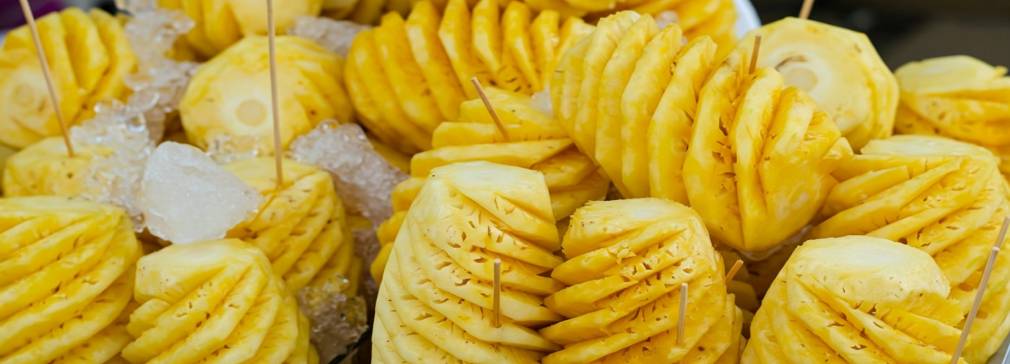
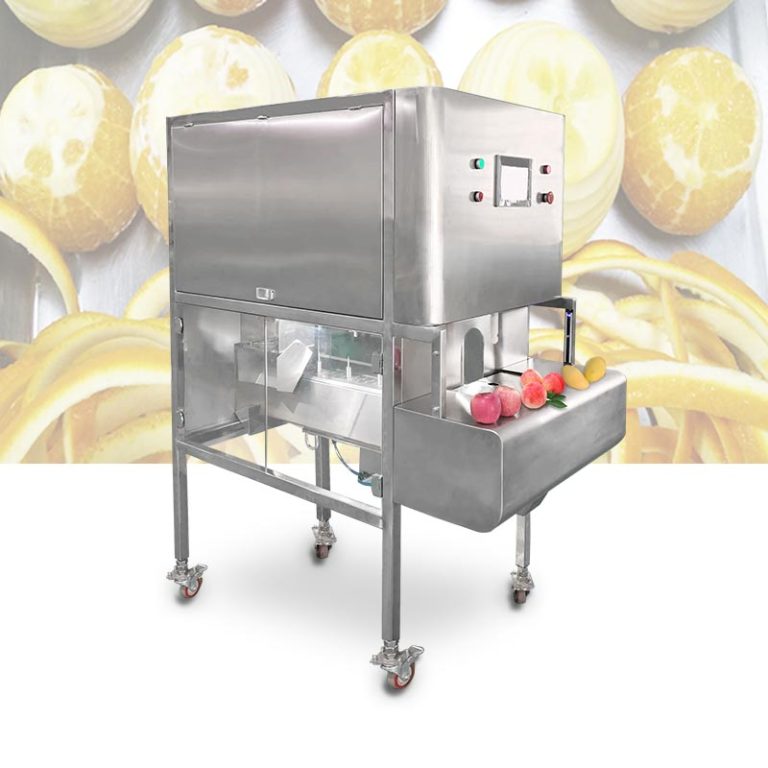
To address this common industry challenge, introducing a high-capacity pineapple peeler machine (such as the industry-leading GD series) is undoubtedly an ideal solution for modern food processing enterprises to move towards standardization. So, how does this machine make pineapple peeling so easy? The secret lies in its remarkably intuitive design—operators only need to follow four simple steps:1. wash the fruit, 2.set the parameters, 3.secure the fruit, 4.start the equipment. That’s it! The entire peeling process is completed automatically.
Next, I will provide an in-depth analysis of the core technical parameters behind this all-around Pineapple Peeler Machine, its amazing multi-functional applications, and how it can easily unleash incredible productivity in actual production through a standardized four-step operation process.
I. Why Does Your Production Line Need a Pineapple Peeler Machine?
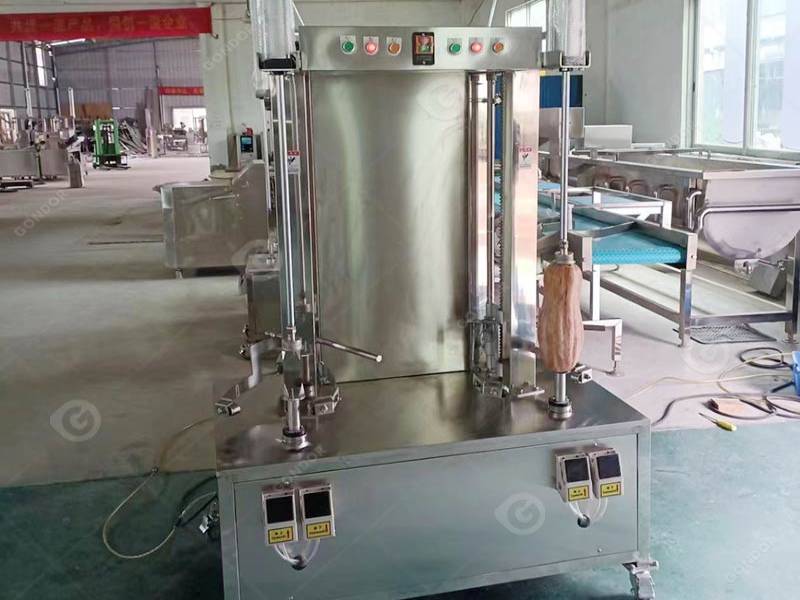
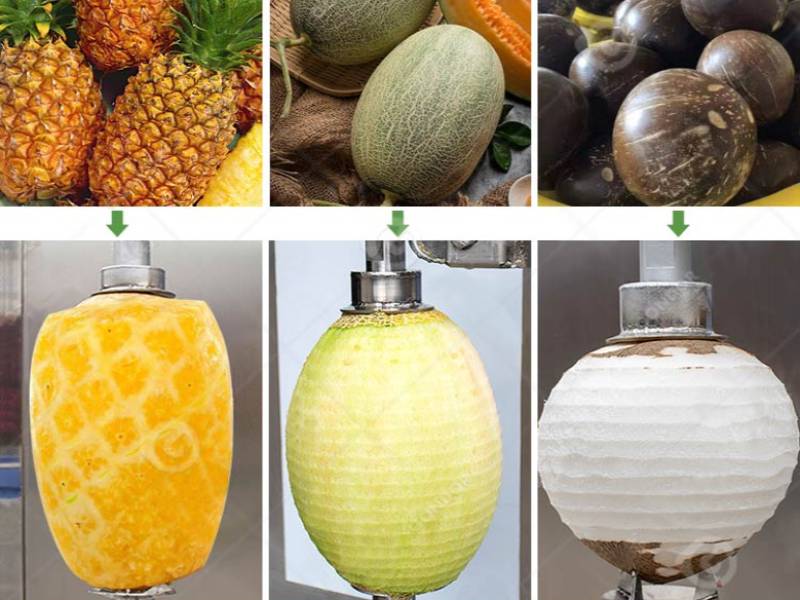
Our GD series is tailor-made for various large and medium-sized fruits and vegetables. Besides pineapples, it can also perfectly handle the peeling of papayas, cantaloupes, watermelons, winter melons, pomelos, gourds, and even large taro, greatly improving the utilization rate of the equipment.
Even more remarkably, the mechanically peeled fruit has an extremely smooth surface, resulting in a perfect appearance while maximizing the preservation of the high-sugar, high-quality flesh beneath the peel. This precision is unattainable by manual methods, saving you significant raw material costs.
II. How to Operate a Pineapple Peeling Machine?
Many on-site operators often feel overwhelmed when faced with newly introduced machinery. In fact, truly excellent industrial design should be “complex technology, simple operation.” The GD series peeling machine simplifies the peeling process to a standardized set of steps: washing, securing, and peeling. Even inexperienced new employees can get started within 5 minutes.
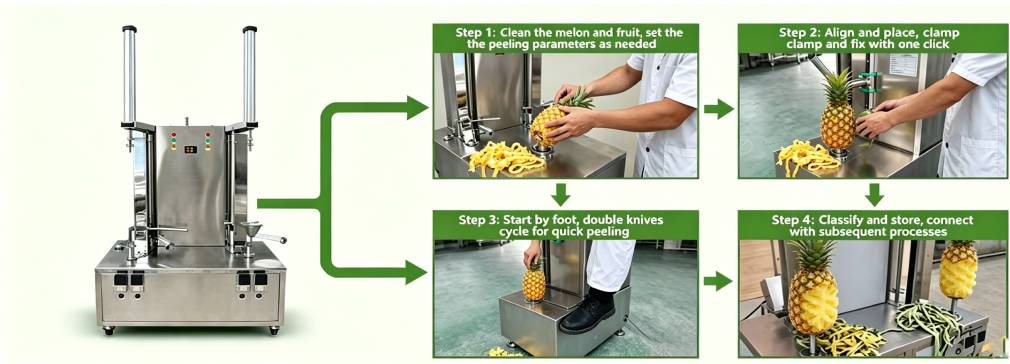
Step 1: Clean the fruits and vegetables, set the peeling parameters as needed
First, clean the fruits and vegetables to be processed. The operation panel of the equipment has been waterproofed. Staff can simply adjust the peeling thickness according to the type of fruit and the thickness of the skin.
For example, the skin of winter melons and Hami melons is relatively thin, so the knife distance should be reduced; for pomelos and pumpkins, the outer skin is thick and the surface is uneven, so the peeling thickness should be appropriately increased. The flexible adjustment method can meet the processing requirements of different fruits.
Step 2: Align and place, clamp and fix with one click
The operation design of the GD series equipment is very considerate. It is equipped with a push-button switch, and a single person can complete the loading operation. Place the washed pineapple vertically on the bottom positioning base, press the switch, and the pneumatic device will immediately firmly fix the fruit. Even if the machine is running at high speed for peeling, the fruit will not shift or fall, and the operation is more stable.
Step 3: Start by stepping, double knife cycle for rapid peeling
After the materials are fixed, step down the control pedal to start the equipment. The cylinders and travel sensors in the machine operate synchronously, relying on the double-head cyclic cutting structure, the cutting tools move up and down reciprocally, and the hard skin can be completely removed in just a few seconds. The entire process does not require manual contact with the cutting tools, which is both labor-saving and completely avoids operational hazards.
Step 4: Sort and store, connect with subsequent processes
After the peeling process is completed, the equipment will automatically stop. At this time, the flesh and the skin have automatically separated. The fruit flesh will be transported along the chute or conveyor belt to the next process for core removal, cutting into pieces, and juice extraction; the fruit skin will fall uniformly into the lower collection, keeping the production site always clean and orderly.
III. Technical Parameters and Selection Guide: How to Buy the Most Suitable Machine for You?
In equipment procurement, there is no single best machine, only the configuration most suitable for your production capacity. Choosing too small a machine will become a bottleneck in the production line; choosing too large a machine may result in idleness. To help you make an informed decision before ordering, let’s look at the core components and capacity matching matrix of the GD series.
1. Core Components Determining Machine Lifespan
As a food machinery operations expert, I strongly recommend that you focus on the following four “key components” when purchasing any peeler:
2. Production Capacity Matching Reference Table
To help your factory make accurate plans, please refer to the technical specifications of the following mainstream models:
| Technical Parameter | ||||
| Model | GD-100-1 | GD-100-2 | GD-100-22 | GD-200 |
| Capacity | 180 pcs/h | 150-200 pcs/h | 150-200 pcs/h | 150-240 pcs/h |
| Size | 600*700*1700mm | 420*590*1030mm | 420*590*1030mm | 1200*720*1800mm |
| Voltage | 380v | 220V | 220V | 380v |
| Power | 0.75kw | 0.5kw | 0.5kw | 1.5kw |
| Weight | 110kg | 55kg | 55kg | 190kg |
As can be seen from the table above, if you are a central kitchen for a chain restaurant or a large school cafeteria, the single-phase (220V) and lightweight GD-100-2 is a perfect choice with high cost-effectiveness; while if you are dealing with a 24/7, high-load industrial juice or canning production line, then the GD-200 model, equipped with a powerful 1.5kW and 380V three-phase power, is undoubtedly a production monster.
IV. Customizing Your Production Line
Undoubtedly, with rising labor costs and increasingly stringent food safety regulations, bidding farewell to traditional manual peeling and fully embracing automated fruit peeling has become an irreversible trend in the modern food processing industry.
We have been deeply involved in the research and development and manufacturing of food machinery for 25 years. For these 25 years, we have consistently adhered to independent research and development. Every machine, from the initial selection of raw materials to precision machining and final assembly and debugging, undergoes hundreds of repeated full-load tests. This gives us the confidence to guarantee product quality to our global customers.
Before you place your order, to allow our senior engineers to tailor a highly efficient and economical customized production line solution for you, we sincerely invite you to provide us with the following basic data: the specific types of materials you plan to process, your hourly capacity target, the actual floor plan of your workshop, and any special customization requirements.
Don’t let cumbersome manual peeling continue to hinder your business growth. Feel free to click the link below to contact our industry experts or apply for a free remote video demonstration online. Let us use the power of technology to build a higher efficiency barrier for your business!