


Plant directors and engineering managers make a key decision when they choose industrial freezing equipment. Demand for high-quality frozen products keeps rising, and plants must balance throughput, footprint, energy efficiency, and operating costs. Two continuous Individual Quick Freezing systems lead the market: the spiral freezing machine and the tunnel quick freezing machine.
Their mechanics, footprint, and best-fit applications differ. Match the right one to your line, and the investment holds up over the long run.
Footprint Efficiency and Plant Layout Considerations
Floor space often drives equipment selection in modern food plants. A standard spiral freezer machine uses a vertical spiral design. It carries food up a continuous vertical spiral belt tower, reaching high freezing capacity in a small footprint. Take the Gondor GD-EFSM-S300 single spiral unit: cabinet length 5600 mm, total width 4300 mm, total height 3000 mm, drum diameter 1800 mm. The double-drum GD-EFSM-D500 handles higher output with a drum diameter of 1800 mm x 2. It keeps the same 4300 mm width and 3000 mm height, but stretches the cabinet length to 11000 mm.
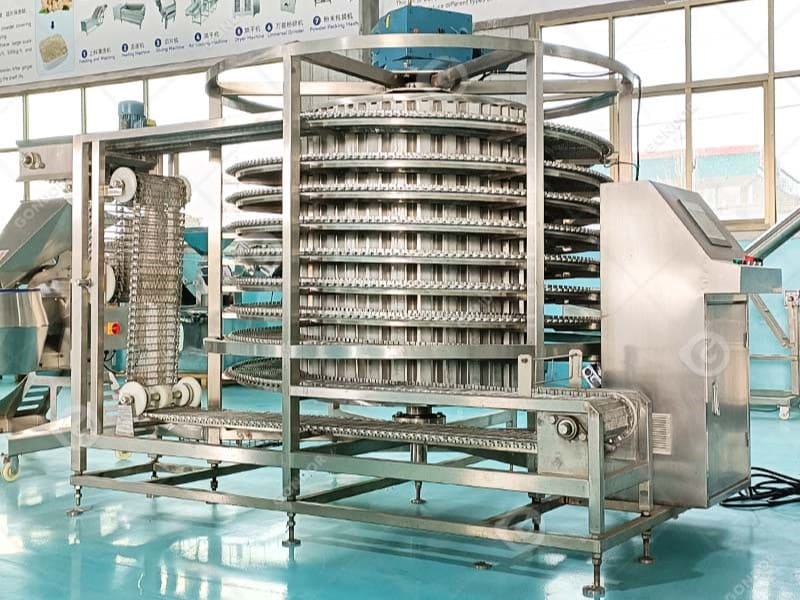
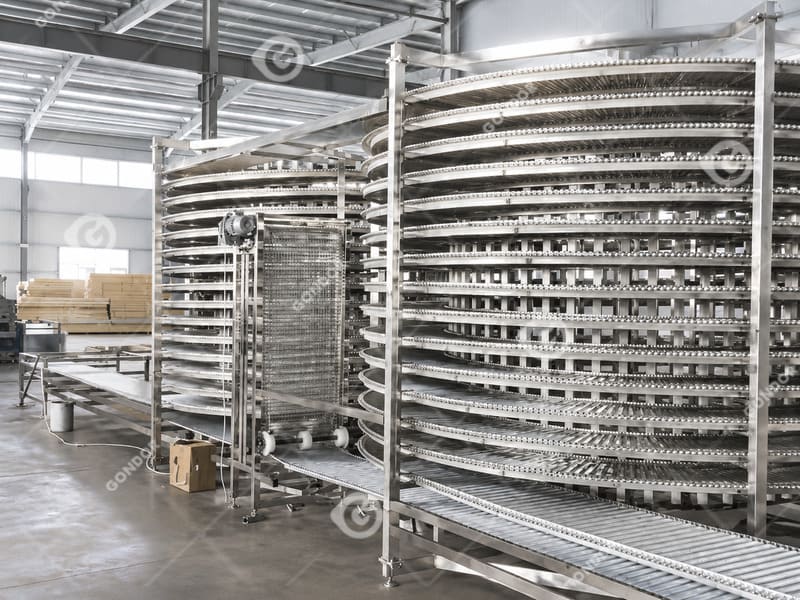
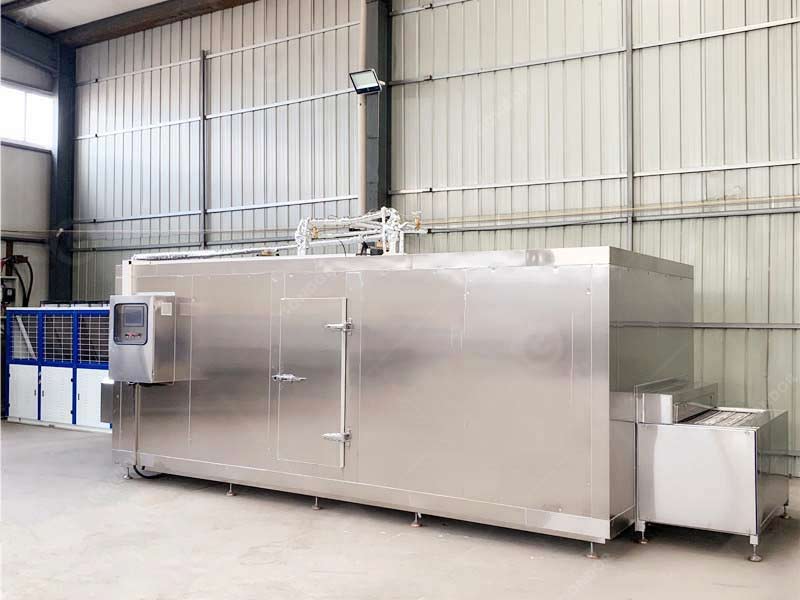
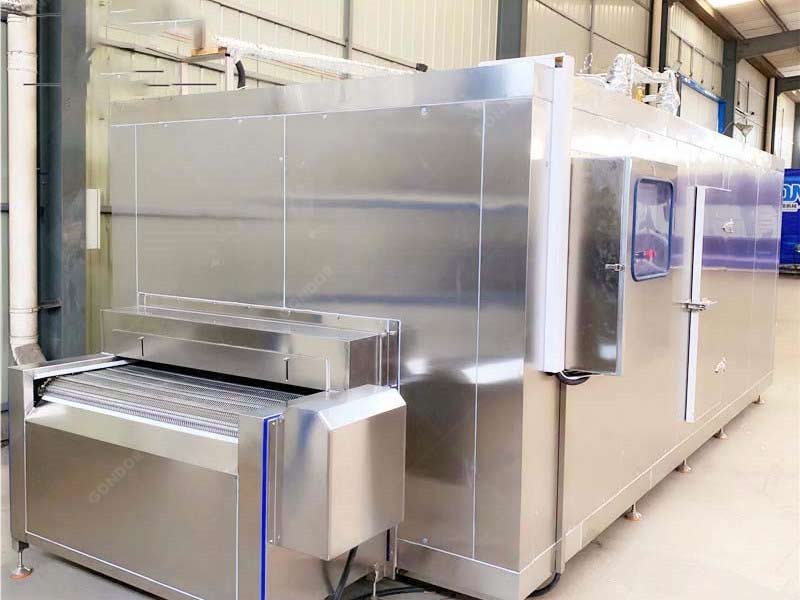
In contrast, a tunnel freezer machine runs on a linear horizontal plane. A typical industrial model, the Gondor GD-TFZM, measures 15500 mm long, 2700 mm wide, and 2500 mm high. The linear layout needs a long, straight run on the floor, yet it lets operators view the whole belt at a glance. Plants with tight floor space but high ceilings tend to pick an iqf spiral freezer machine. Plants with long, straight lines and lower ceilings often go with linear tunnel units.
Freezing Mechanisms and Airflow Dynamics
Both freezing systems use rapid heat exchange to freeze food fast, keeping cell structure intact and preserving natural freshness. Their airflow dynamics and internal structures still work in different ways.
A spiral quick-freezer uses a uniform airflow distribution system. Air moves through an open-mesh heavy-duty stainless steel belt with a synchronized drive, so cold air reaches every stacked conveyor tier evenly. The result is a steady drop in core temperature, with less product deformation and little surface adhesion. Inside the cabinet, 150 mm high-density polyurethane (PU) insulation panels hold cold loss down, helping the refrigeration system keep its thermal efficiency.
On the other hand, a tunnel quick freezing machine uses high-efficiency fans with a finned tube evaporator to push a strong horizontal or vertical cold air flow. Products travel through the insulated tunnel on a high-elasticity stainless steel wire conveyor belt. The moving cold air pulls the product surface down to a discharging temperature of -18°C, with the ambient freezing temperature set at -35°C. Freezing time inside the tunnel runs 15 to 45 minutes, depending on product thickness and density. The straight-through airflow keeps ice crystals from forming, so delicate foods suffer less cell rupture.
Product Suitability Across Food Categories
Match your product to the right conveyor mechanism, and you protect its quality, appearance, and yield.
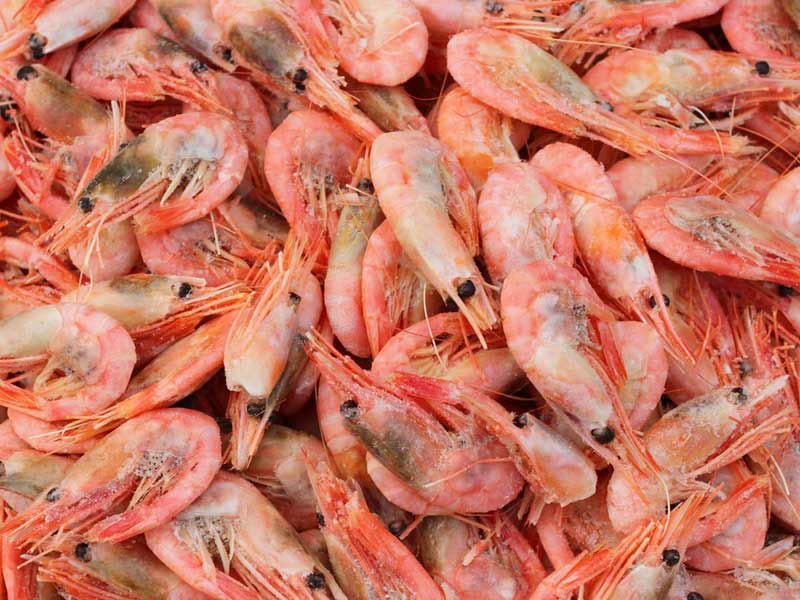


- Seafood & Aquaculture: Both systems handle seafood well, but delicate items such as shrimp, prawns, squid rings, mussels, and fish fillets get gentler treatment in an iqf spiral freezer machine. The smooth, continuous belt travel cuts clumping and keeps fragile textures intact.
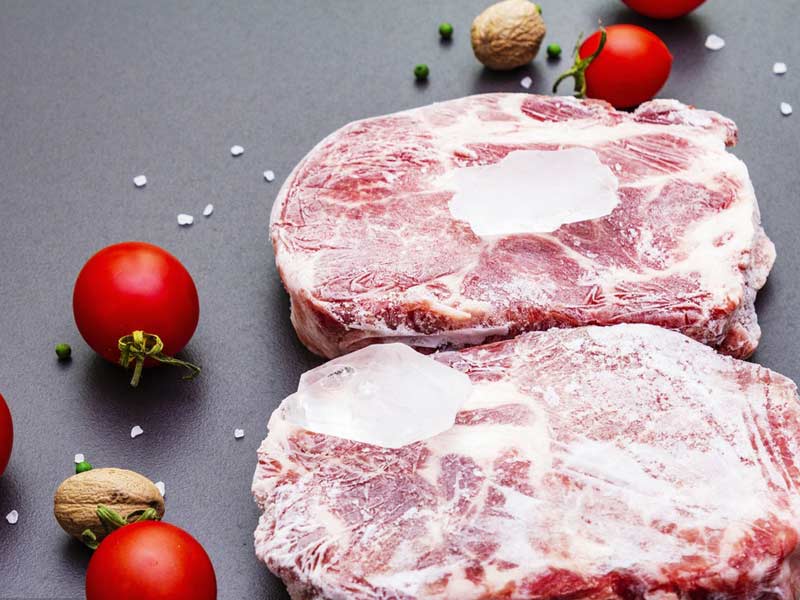
- Meat & Poultry: Heavy items like chicken nuggets, legs, wings, meatballs, burger patties, and fresh cut meat run well on both. Spiral freezers handle high-volume continuous loads, while tunnel systems suit flatter items like steaks or thin patties.
- Bakery & Dough: Frozen bread dough, semi-finished bakery items, pizza bases, tortillas, and naan bread need gentle transport to avoid shape distortion. The vertical spiral structure gives longer retention time, so yeast dough freezes evenly without surface cracking.
- Prepared Meals & Ready Foods: Dumplings, spring rolls, samosas, and frozen pizzas move through continuous spiral systems and link up with automated packaging lines.
- Fruits & Vegetables: Green peas, sweet corn, broccoli, mango cubes, and strawberries freeze fast in both setups. Quick surface freezing traps the juices and keeps the natural color.
Operational Control, Power Requirements, and Integration
Modern food plants need operation they can repeat and standardize. Both Gondor systems come with PLC touchscreen control systems, so operators set belt speed, internal temperature, and airflow parameters to match each recipe.
Energy use scales with model capacity. The single spiral freezer GD-EFSM-S300 needs a cooling capacity of 50 kW and an installed power of 13 kW. The double spiral GD-EFSM-D500 needs 90 kW of cooling capacity and 23.5 kW of installed power. Refrigeration units run on high-performance international-brand compressors for steady low-temperature operation. Spiral models also let you set the conveyor belt inlet and outlet directions to 0°, 90°, 180°, or 270°, so they fit upstream washing, blanching, or dough-forming machinery and downstream vertical or pillow packaging machines.
Practical Selection Criteria for Plant Operations
When you finalize the plant layout, weigh these operational factors:
- First, check your floor space and ceiling height. If floor area is tight, a spiral freezing machine packs the most belt length into a small footprint.
- Second, look at your target output. Spiral systems scale from 200 kg/h to over 10,000 kg/h for high-capacity continuous runs.
- Third, plan for sanitation and maintenance. Both builds use food-grade stainless steel construction with multi-function maintenance doors, so a daily rinse with mild food-grade detergent stays simple and hygienic.
A spiral unit fits plants with limited floor space and high ceilings that still need large continuous capacity. A tunnel unit suits long, straight lines with lower ceilings and gives easy belt inspection. Get these factors right, and your continuous IQF production line will run with high thermal efficiency and stay reliable over time.
Gondor builds both spiral and tunnel freezers, so you can weigh them on one quote instead of sourcing from separate suppliers. Tell us your product, available floor space, and target output, and our engineers will size the right model and walk you through installation. Reach out today and let’s get your freezing line right.