


If you’re buying equipment for a food factory or central kitchen, start with the product you plan to sell. A kitchen producing chilled beef meatballs for local restaurants has different equipment needs from a factory packing individually frozen fish balls for retail. The size of each meatball, the cooking method, and the required output all affect the line layout and price. These frequently asked questions will help you compare configurations and give suppliers the information they need to prepare a quote.
1. What machines are included in an automatic meatball production line?
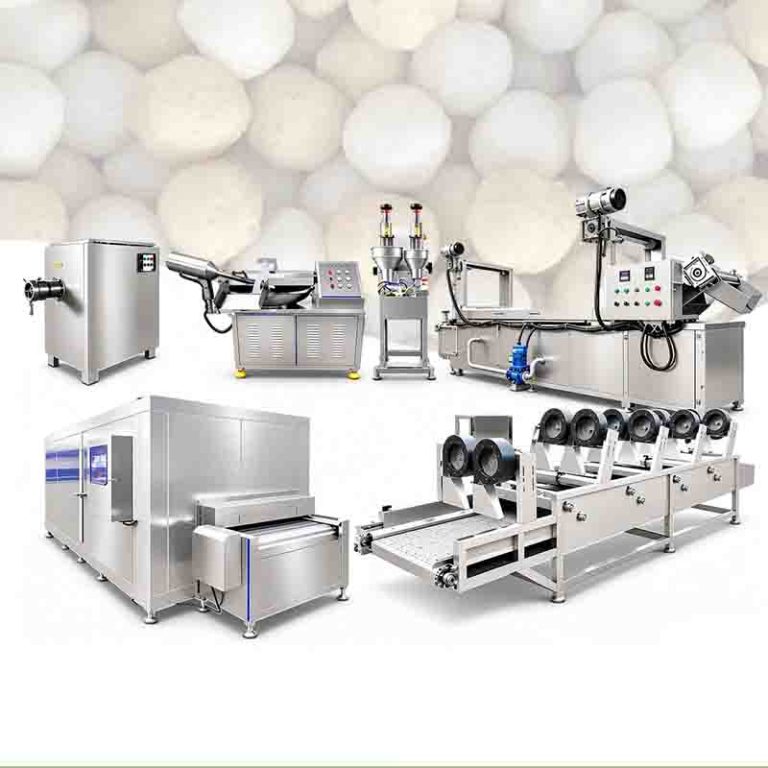
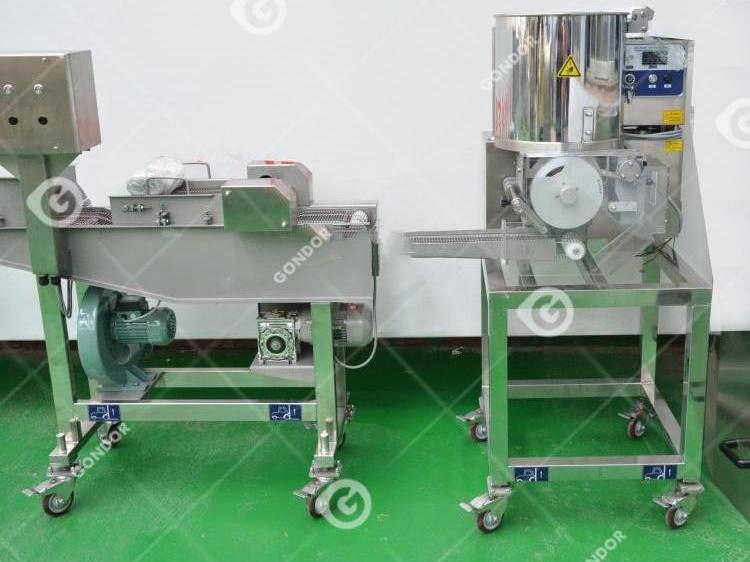
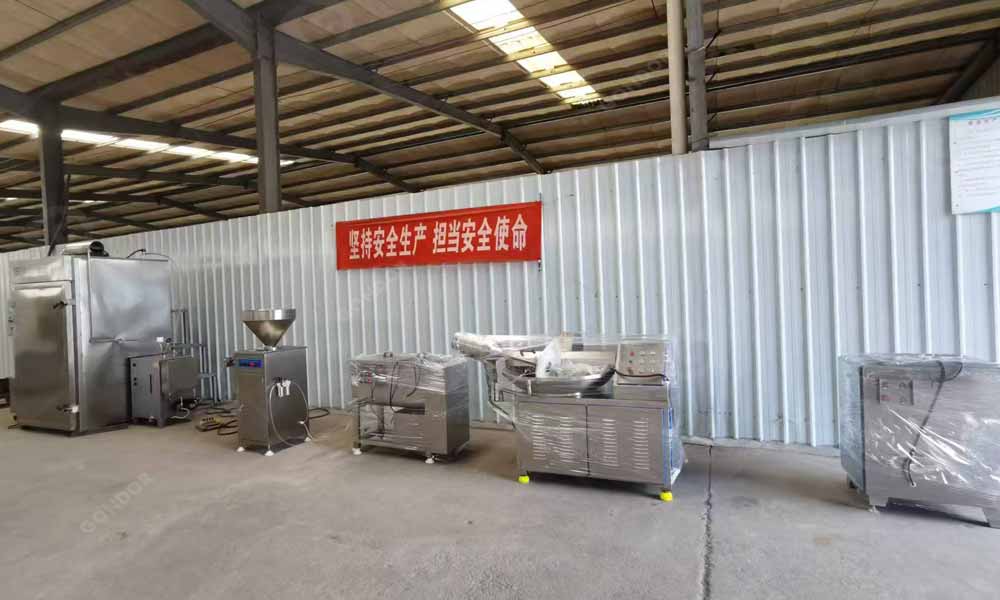
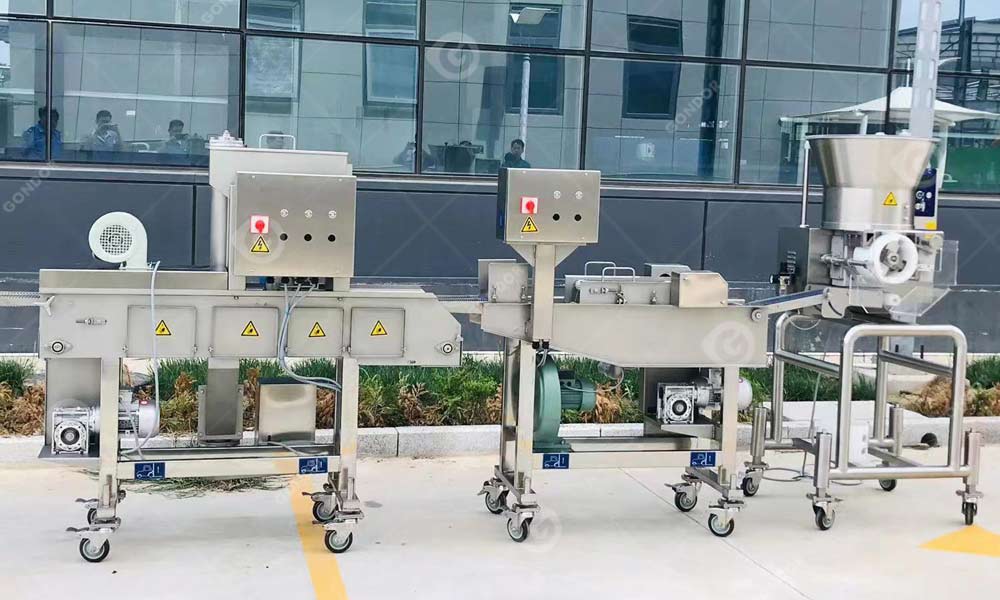
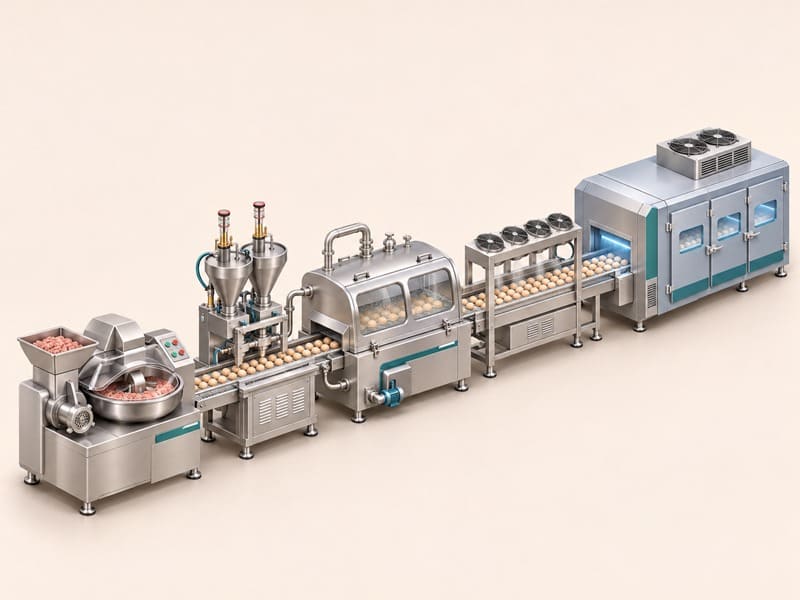
A typical line includes a meat grinder, a bowl cutter, and a meatball making machine. The grinder prepares the mince, the bowl cutter develops the mixture to the required texture, and the former portions it into balls. From there, the equipment depends on the finished product. A line for cooked frozen meatballs may also include a fryer or blancher, a cooling and surface-drying unit, and a tunnel freezer. If you already have equipment in place, share its capacity and discharge height so the supplier can plan how the new stations will connect.
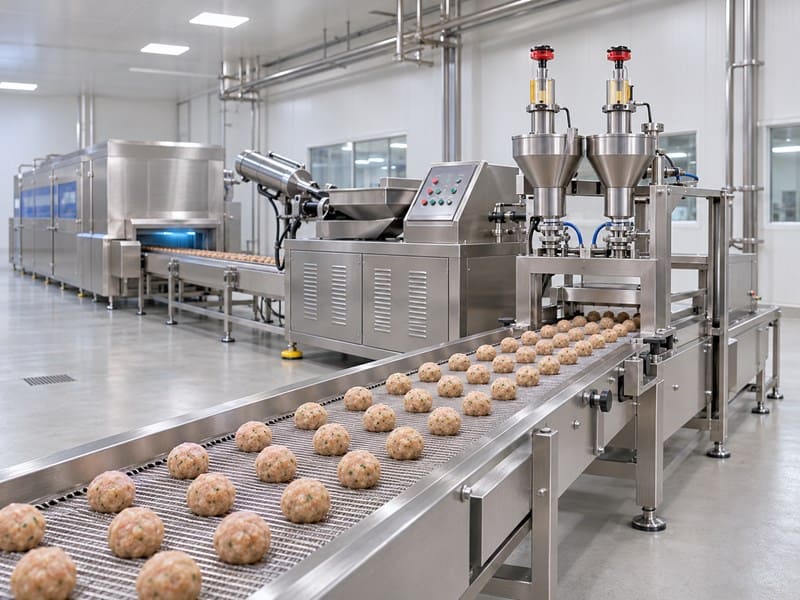
2. How many kilograms of meatballs can the line produce per hour?
A forming machine’s speed is usually stated in pieces per minute. Converting that figure to kilograms per hour requires a target piece weight. For example, Gondor lists a reference former at about 280 pieces per minute. At 15 grams per piece, that works out to 252 kg/h of theoretical forming output. The same reference configuration lists a freezer rated at 100 kg/h, so the freezer can limit finished output in that setup. Ask the supplier to quote the expected output at the final stage you need, whether that’s cooking, freezing, or packaging.
3. What meatball sizes can the forming machine make?
Gondor lists a reference diameter range of 10–28 mm, with custom sizes available. Specify both the diameter and the target weight per piece, since recipes with different densities can produce different weights at the same diameter. If you sell bags with a fixed piece count, include the acceptable weight variation in your request. For factories that make several sizes, ask which molds are included, how long a size change takes, and what forming speed to expect with each mold. Explore the Gondor commercial meatball forming machine
4. Can the same line make beef, chicken, fish, and stuffed meatballs?
A production line can be configured for beef, pork, chicken, or fish balls. A coarse beef mixture and a smooth fish paste can feed and hold their shape differently, so it’s worth testing each recipe you plan to run regularly. Stuffed meatballs require a forming setup designed for center-filled products. For those products, provide the target weight of the outer layer and filling, along with the type of filling. During a trial, check how consistently the filling stays centered, whether the outer layer seals, and how the meatballs hold up after cooking.
5. Should I choose a continuous fryer or a hot-water blancher?
Choose the cooking method based on the appearance, flavor, and texture you want. A continuous fryer suits products with a browned surface and fried flavor. A hot-water blancher is an option for non-fried products, including many fish balls and hot pot meatballs. If you already have a product on the market, send a sample or describe the finish you need. Ask for the expected cooking-stage output using your recipe and piece size so you can check whether the cooker will keep pace with the rest of the line.
6. Can a frozen meatball production line make IQF meatballs?
Yes. A line can be configured with cooling and an individual quick-freezing (IQF) tunnel. IQF is useful for retail bags and foodservice packs where customers want to pour out or portion individual pieces. To size the tunnel, give the supplier your largest meatball diameter, the temperature at which the product enters the freezer, the required discharge temperature, and your target output in kg/h. During a trial, check the temperature of the finished product and how readily the meatballs separate after bagging. Explore the Gondor IQF tunnel freezer
7. Can I add automatic weighing and bagging?
Yes. Share your packaging format, target pack weight, and desired line output before choosing a packaging machine. For example, a line producing 200 kg/h needs to fill about 400 bags per hour for 500 g packs, or 200 bags per hour for 1 kg packs, before allowing for stops. If you also sell trays or bulk foodservice bags, list each format in the request. Ask the supplier to show where weighing, filling, and sealing fit in the layout and to list the packaging components in the quote.
8. How much floor space and power does the line need?
Gondor lists a reference equipment size of 10,000 × 990 × 1,900 mm and a power figure of 125 kW. The installed layout and electrical requirements depend on the stations you select. Share your available floor dimensions, door openings, electrical voltage, frequency, and phase. Ask for a drawing that shows the equipment footprint, service clearances, and utility connections. If you’re fitting the line into an existing room, mark fixed features such as columns, drains, and cold-room doors so the supplier can account for them in the layout.
9. How much does an industrial meatball production line cost?
The price depends on your target output and how far you want to automate the process. A quote for grinding and forming will cover fewer stations than a quote that includes cooking, cooling, freezing, and bagging. To compare prices, ask each supplier to quote against the same product size, finished output, and equipment scope. Request separate figures for molds, optional machines, freight, installation, and commissioning. If your plant already has a cooker or freezer, provide its model and rated capacity so the supplier can quote the equipment and connections you need.
10. What should I confirm about delivery, installation, and spare parts?
Ask for a timeline that covers manufacture, any factory trial, dispatch, and commissioning. If you’re importing the line, confirm the shipping terms, what your team needs to prepare before installation, and how operator training will be delivered. Gondor lists a one-year warranty for its reference equipment. Ask when coverage starts and which parts and services it includes. For a line that will run multiple shifts, it’s also useful to get a price list and delivery estimates for wear parts such as forming blades, seals, and conveyor belts.
11. What information do I need to get a meatball production line quote?
Send your product type, target diameter and weight per piece, required finished output, and whether the product will be sold raw, cooked, chilled, or frozen. Include your preferred cooking method, packaging format, available floor space, electrical supply, and destination country. If you plan to make several products, identify the one you expect to run most often and the largest size you want to produce. With that information, you can request a proposed layout, an itemized quote, and an output estimate based on your products.
View the Gondor meatball production line and request a quote