

In the food processing industry, the pasteurization process directly impacts product safety, stability, and subsequent sales compliance. This is especially true for dairy, beverage, liquid food, and some blended product manufacturers. Choosing a suitable pasteurization machine is not just about purchasing equipment; it’s about laying the foundation for standardized and sustainable operations throughout the entire production process.
Sensei Teknik is a technology-driven company based in Turkey. Mr. Sensei, the purchasing manager and a senior employee, faced the critical task of upgrading his factory’s dairy/concentrated juice processing line. He began communicating with us in November 2025 regarding the purchase of a pasteurization machine.
Unlike many clients who close deals quickly, this client’s procurement cycle was relatively long. The entire project, from initial contact and needs confirmation to solution evaluation, culminated in the purchase of a 1000L pasteurization machine in February 2026.
Core Challenges: Balancing Efficiency and Viability in Large-Capacity Production
Through four months of in-depth communication, we identified three key technical challenges facing Sensei Teknik:
Stability and Hygiene Standards of Pasteurization Machines
When purchasing a pasteurization machine, customers are often not just buying a “heating device,” but rather seeking a reliable solution for food heat treatment.
Whether the final product being processed is dairy products, beverages, sauces, or other liquid foods, pasteurization equipment needs to address the following issues:
- Stability of temperature control
- Controllability of the sterilization process
- Ease of cleaning the equipment structure
- Suitability for long-term continuous use
- Facilitation for subsequent product quality management
Turkey Pasteurization Solution
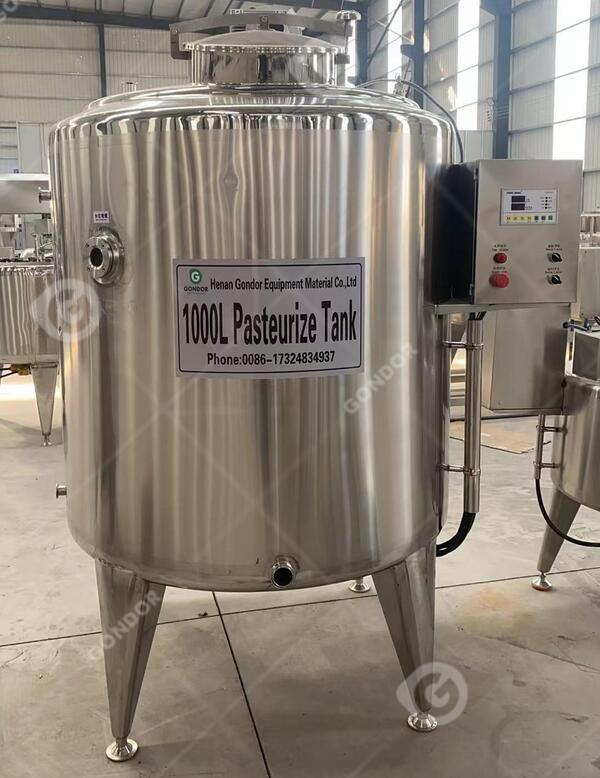
For this client from Turkey, we didn’t adopt a passive approach of “quick quotes and waiting for a response.” Instead, we continuously communicated with them, following their procurement schedule, and helped them gradually clarify their equipment needs. We provided more than just a 1000L pasteurizer; we offered a complete fluid temperature control management solution.
By precisely calculating the circulation rate of the heat transfer oil/hot water, we ensured that the temperature difference within the tank was controlled within $\pm 0.5$°C. This is crucial for clients who require strict adherence to “Low Temperature Long Time (LTLT)” or “High Temperature Short Time (HTST)” processes.
Supporting Clients’ Long-Term Purchasing Decisions with Equipment Solutions
Pasteurization equipment is a typical process equipment; clients need to consider not only their immediate needs but also its future usability after actual production.
Therefore, we always focus our communication on whether the equipment is truly suitable for the client’s project, rather than simply showcasing product selling points.
In February 2026, the end customer officially placed an order for a 1000L pasteurizer, indicating that after multiple rounds of evaluation, the customer had a clear understanding of the equipment solution and the feasibility of cooperation.
Customer Testimonial
“Starting in late 2025, we consulted with several global suppliers. We chose them because of their patience and professionalism throughout the months-long communication process. The temperature control of the 1000-liter unit is extremely stable, which is exactly the precision that Sensei Teknik strives for.” — Mr. Sensei
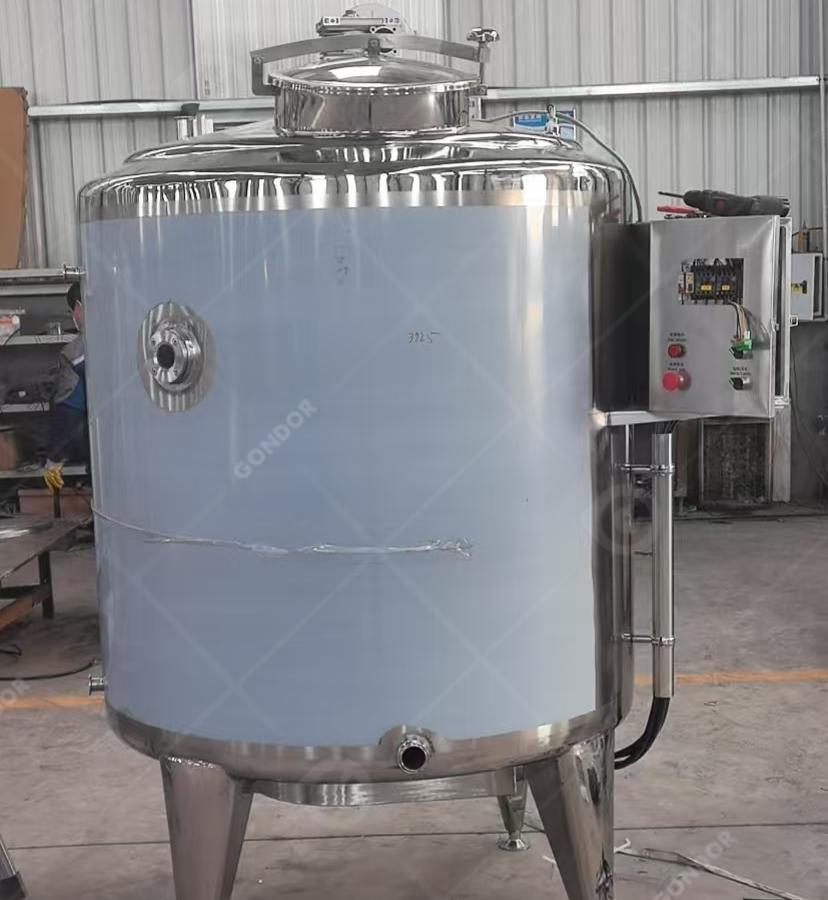
Three Key Dimensions for Selecting a Large-Capacity Pasteurizer Machine
As an industry expert with over 20 years of experience, Gondor recommends focusing on the following when purchasing this type of heavy-duty food processing machinery:
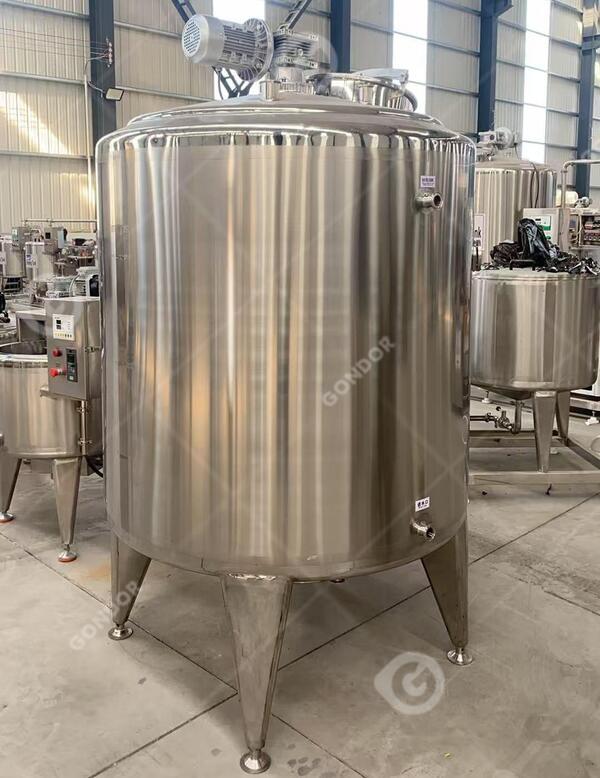
- Mixing System Power and Type: Equipment with a capacity of 1000L or more must be equipped with variable frequency agitation to prevent high-viscosity materials from scorching on the heating walls and to ensure efficient heat exchange.
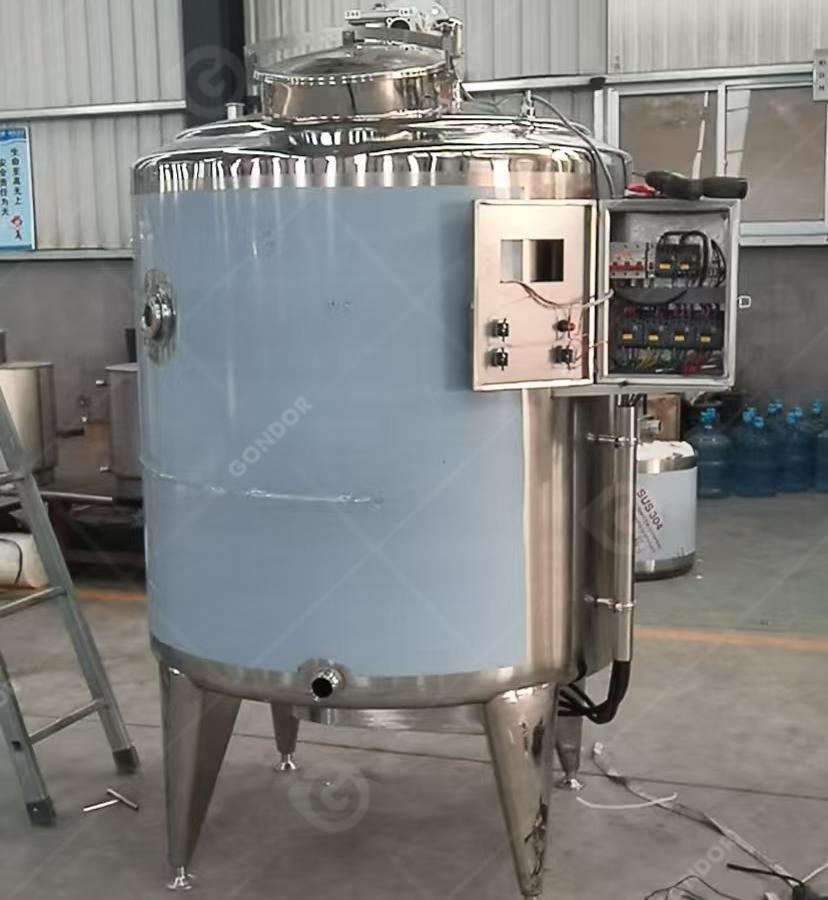
- Necessity of PLC Automation: For large-capacity production, manual control carries extremely high risks. It is recommended to configure a PLC touchscreen with PID control to achieve full temperature profile traceability.
- Spare Parts Support and After-Sales Response:In international procurement, the supplier’s ability to respond quickly (e.g., 24-hour technical support) is more important than the initial purchase cost.