

Recently, a client from South Korea shared the good news that receiving our machinery had led to a dramatic increase in their factory’s production capacity. This is not merely a successful equipment export case; it serves as a guide for automation transformation decisions for all food processing companies facing “production bottlenecks.”
Project Background: The “Sweet Problem” Behind Business Expansion
Several months ago, we received an inquiry from a South Korean bakery owner (whom we’ll refer to as Mr. H to protect his privacy). Mr. H’s factory primarily produces daily-use pasta and baked goods that are extremely popular locally. As their market grew, their order volume surged over the past six months. However, the increase in orders did not bring the expected high profits; instead, it plunged them into a production crisis.
Mr. H urgently needed a reliable automated dough dividing and rounding solution, but he was filled with concerns about cross-border procurement of large machinery—a common pain point shared by all overseas buyers.
Challenges: The “Dual Barriers of Trust and Technology” in Cross-Border Procurement
During our initial discussions with Mr. H, we quickly identified several key challenges he was facing. These challenges were not only his own difficulties but also obstacles we had to overcome in providing our services:
- Extremely high precision is required for technical compatibility: Food processing machinery is not a standardized digital product. Dough moisture content, gluten strength, and target weight ranges (Mr. H requires precision down to specific grams) all directly impact the machine’s performance. If the parameters are mismatched, the machine will be nothing more than a pile of scrap metal once delivered.
- The “Trust Black Box” of Cross-Border Procurement: Separated by thousands of kilometers of ocean, the client cannot visit the factory in person to test the equipment. How can we prove the quality of our machines? How can we ensure the security of funds after payment? These are issues that cause him extreme concern.
- Complex International Logistics, Installation, and After-Sales Service: From factory shipment, container loading at the port, and ocean freight (e.g., to Mombasa Port in Africa or major ports in Southeast Asia), through customs clearance and final factory commissioning, a mistake at any point in this lengthy chain can bring the project to a standstill.
Solution: A “Four-Step” Strategy to Break Down Barriers Through Expertise
To completely address Mr. H’s concerns and ensure the equipment would integrate seamlessly into his production line, we initiated a standardized, in-depth service process.
Step 1: Needs Analysis and Customized Selection
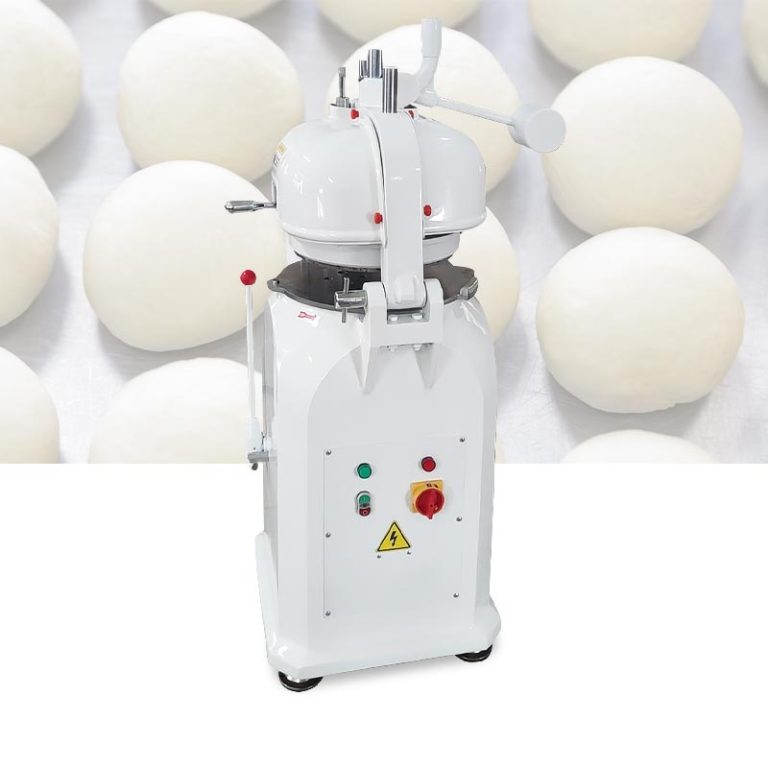
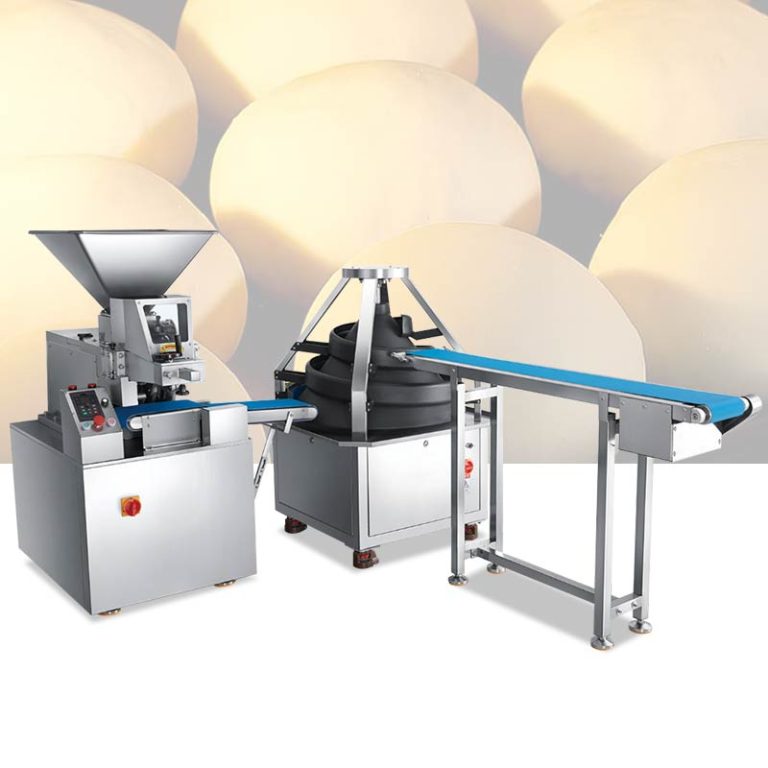
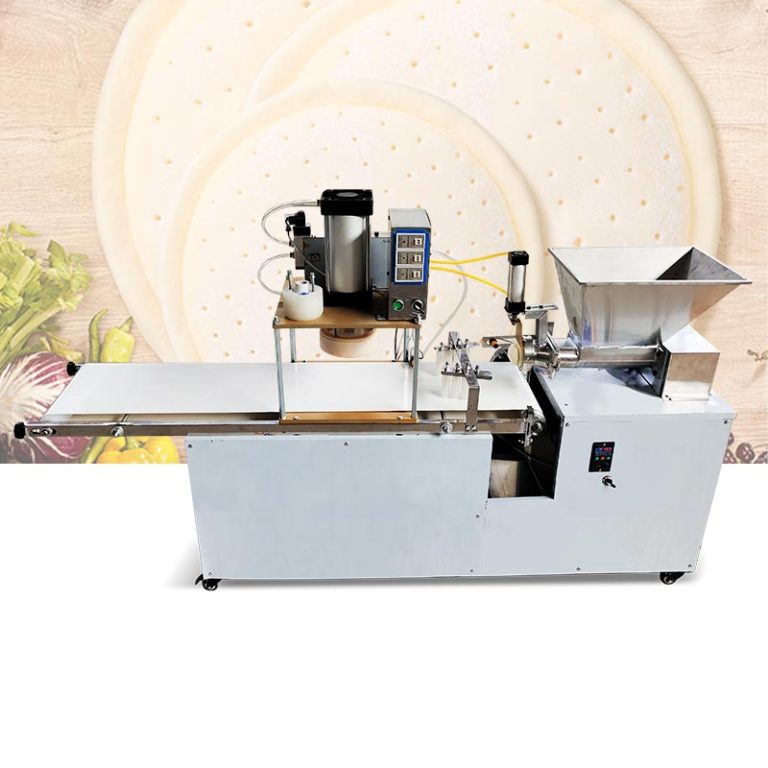
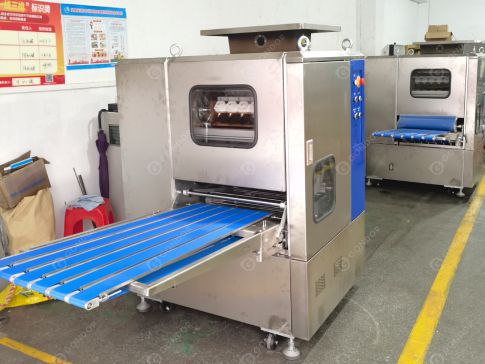
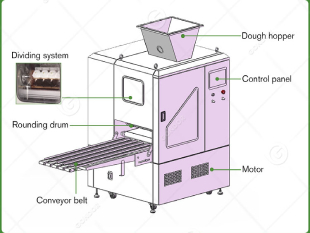
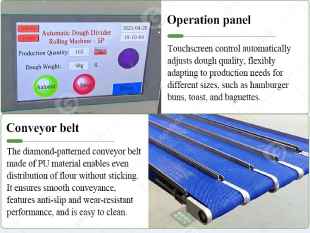
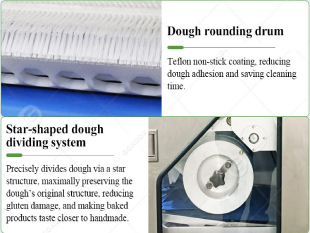
Rather than rushing to provide a quote, we asked Mr. H to record a detailed video of their current manual dough-making process and inquired in detail about the water-to-flour ratio in their dough. Since the physical properties of the dough directly determine whether we should recommend a cutting-type or extrusion-type machine, our technical engineers, after evaluation, recommended the automatic dough divider rounder (304 stainless steel high-spec version). Technical Rationale: This model employs bionic flexible extrusion technology, which ensures precise portion weight (with an error margin of ±1 gram) while minimizing damage to the dough’s gluten network. This guarantees that the final product’s texture is indistinguishable from handmade dough.
Step 2: Transparent Video Demonstration and “Cloud Factory Inspection”
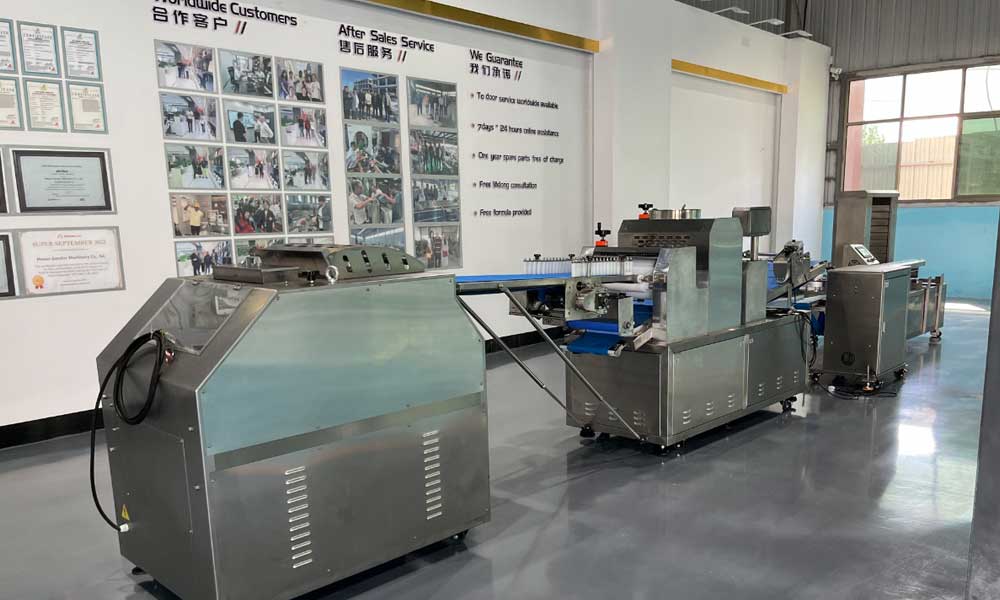
To address the “trust black box” issue, we conducted a 20-minute live demonstration in the workshop using dough similar to the client’s recipe and sent the unedited video directly to Mr. H via a messaging app. Furthermore, via video call, we demonstrated the machine’s core components: the pure copper core motor, food-grade Teflon non-stick coating components, and the intuitive control panel. This “seeing is believing” approach instantly established a solid foundation of trust.
Step 3: Rigorous Contract and After-Sales Service
After confirming the price (which included the machine cost and highly cost-effective shipping fees), both parties signed a formal pro forma invoice. Mr. H successfully paid the deposit. During the subsequent preparation period, our frontline sales staff acted as “project managers,” regularly sending Mr. H progress photos of the equipment’s assembly and polishing.
Step 4: Industrial-Grade Packaging and International Logistics
The harsh conditions of ocean transport—high salinity and humidity—can easily cause equipment to rust and become damaged. We used fully enclosed, fumigation-free wooden crates for packaging, securing the contents with multiple layers of moisture-proof stretch film and shock-absorbing foam. Immediately after shipment, we sent the client a draft set of customs clearance documents—including the Bill of Lading, Packing List, and Commercial Invoice—for confirmation, ensuring seamless customs clearance at the destination port.
Results: The Data and Video Speak for Themselves
After nearly a month of sea transport, the equipment arrived safely at Mr. H’s factory. With our remote video guidance, Mr. H completed the power-up and commissioning of the equipment in less than two hours.
The Stunning Before-and-After Comparison:
Soaring Production Capacity: Output surged from 500 dough pieces per hour processed manually to 3,000 per hour—a sixfold increase in production capacity.
Drastic Reduction in Labor Costs: The forming station, which previously required four skilled workers, now needs only one general operator to handle feeding and receiving materials.
Product Consistency: Product weight standardization has reached over 99%, significantly improving heat distribution during baking and the final appearance of the finished products.
Expert Advice: 3 Golden Rules for Food Companies When Purchasing Automated Equipment

Conclusion
The journey from artisanal workshops to modern smart manufacturing is a path fraught with challenges yet brimming with opportunities. Mr. H’s successful transformation demonstrates that choosing a professional supplier who not only understands machinery but also possesses deep expertise in food processing is key to minimizing investment risks and maximizing profits.
If your current production line is facing challenges such as high labor costs or production capacity that cannot meet order demands, or if you have any questions about importing high-quality food processing equipment, please feel free to contact our technical team at any time. We look forward to leveraging our professional expertise to tailor a customized automation solution for you.